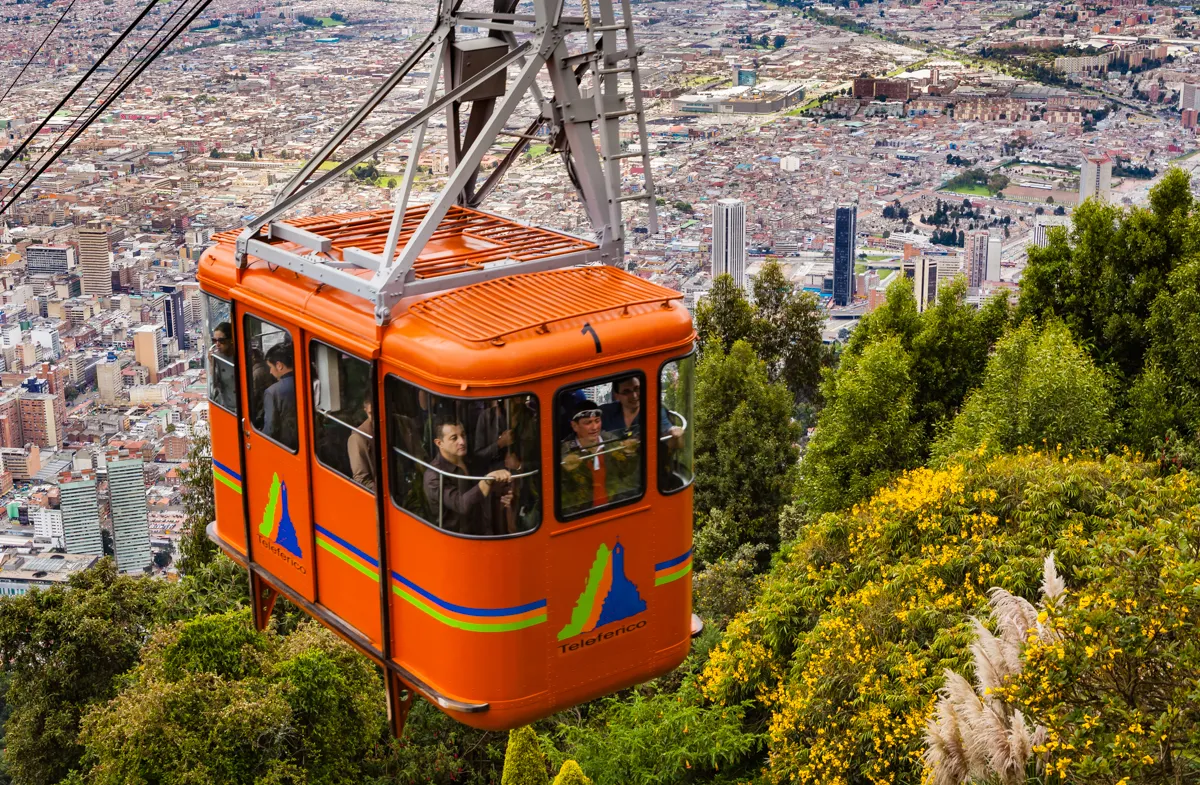
Monserrate and Usaquén City Tour – Panoramic Views and Colonial Charm
Tour Highlights
- Ascend Monserrate by cable car or funicular for panoramic views over Bogotá
- Visit the hilltop church shrine, a pilgrimage site revered by Bogotanos
- Explore Usaquén, a bohemian neighbourhood of cobblestone streets and galleries
- Browse the weekend antique and craft market in Usaquén's historic plaza
Tour code
COBOG-MOU01
Duration
~5 hours
Start
Hotel pickup included
Languages
English & Spanish
Note
Subject to weather
Ascend to the Heavens: Monserrate Peak
Embark on an unforgettable journey in a city tour to the heart of Bogotá’s spiritual and natural wonder. Monserrate Peak, towering at 3,152 meters (10,341 feet) above mean sea level, has been a sacred site since pre-Colombian times. It is actually located within Bogotá city. As you glide upwards in a modern cable car, watch the sprawling city shrink beneath you, giving way to panoramic vistas that stretch across the Sabana de Bogotá. This is a city tour designed to give you the best sights of the Andes capital.
Sabana de Bogotá
As you ascend Monserrate, you’re not just climbing a mountain – you’re travelling through millions of years of the Earth’s history. The Sabana de Bogotá, the high plateau on which Bogotá sits, holds a fascinating secret: it was once submerged beneath an ancient marine environment known as Lake Humboldt. What is today the Altiplano Cundiboycense was once the bottom of Lake Humboldt.
This fact accounts for the flatness of the topography. The vast Altiplano (High Plateau) allows for the seemingly endless expansion of the capital city. It is also the reason why it is a city of almost 10 million people. The only limiting factor is water resources, which in normal years, in the rainiest country in the world, is quite adequate; but when El Niño breaks, it is a different story.Mano’s TipWhen you board your cable car for Monserrate, position yourself on the side away from the mountain. You will be rewarded with the best views of the City as the cable car moves upwards
Mano’s Tip:
When you board your cable car for Monserrate, position yourself on the side away from the mountain. You will be rewarded with the best views of the City as the cable car moves upwards!
This unusual city tour, combines both the Andes peak of Monserrate and the location of Usaquén. Panoramic views and colonial charm.
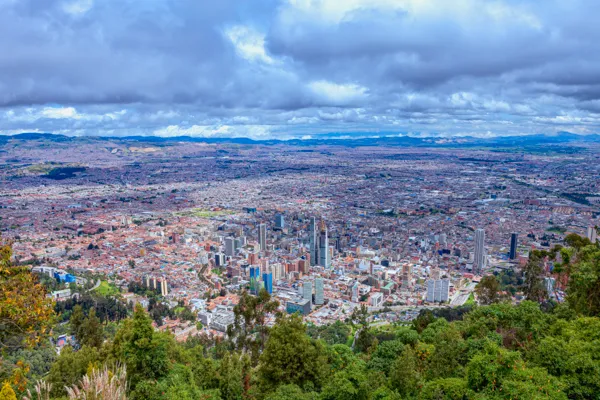 View From Monserrate - Bogotá, Colombia © Mano Chandra Dhas
As you gaze downwards from Monserrate’s summit, try to imagine the landscape transformed. Where you now see the urban sprawl and distant mountains, picture a shimmering expanse of water stretching to the horizon. A very large lake. The Lake Humboldt.
A Spiritual Journey Above the Clouds
The name “Monserrate” comes from the Montserrat mountain in Catalonia, Spain, home to the famous Black Madonna. In the 17th century, the Brotherhood of Vera Cruz built a small chapel on the peak, dedicated to Our Lady of Monserrate. This marked the beginning of the mountain’s transformation into a major pilgrimage site.
The Fallen Lord of Monserrate
The Stations of the Cross line the Southern path to the sanctuary, each a work of art that invites reflection. These sculptures, depicting Christ’s journey to crucifixion, were created by Master Julio Abril in the 1950s and add to the site’s spiritual ambience.
At the heart of Monserrate’s spiritual significance lies the Sanctuary of the Fallen Lord, home to a remarkable statue that has captivated pilgrims for centuries. The statue depicts Jesus Christ after being taken down from the cross, sculpted as a black man (after the Black Virgin of Monserrat in Spain) - a unique representation in Latin American religious art.
The black Christ of Monserrate holds deep significance for the people of Bogotá and beyond. It represents hope, resilience, and the inclusive nature of faith. Many believers climb the mountain on foot, as an act of devotion, or to seek miracles.
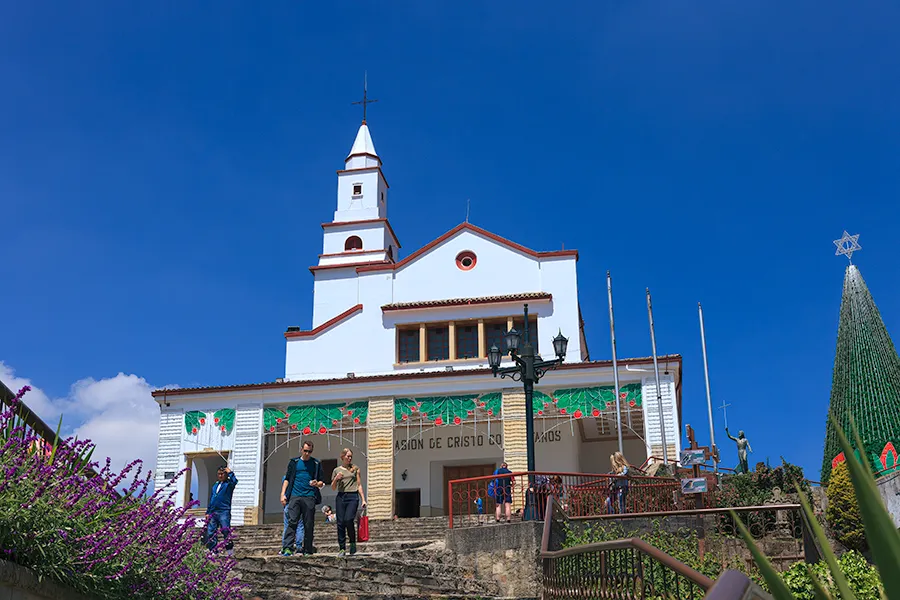 The Basilica of the Fallen Lord of Monserrate © Mano Chandra Dhas
A Feast for the Senses
As you explore the summit on your tour, you’ll be treated to more than just spiritual wonders. The unrivalled views offer a perspective of Bogotá that few get to witness. On clear days, you can see the city sprawl for miles, in fact as far as the eye can see, with the Eastern Andes forming a majestic backdrop like sentinels of rock. From the heights of Monserrate, you can clearly see the difference between the well-to-do North and the less privileged South. The disparity of wealth is very clear.
At over 10,000 feet above mean sea level, there could potentially be a lot of low clouds. They can prevent the best views of the Monserrate tour. If that happens, we’d recommend you spend a little time in one of the restaurants and then come back to your views. The clouds would most often have moved. You can continue to gaze at the vast expanse that is the capital city of Colombia.
The summit also has several upmarket restaurants. Your tour schedule may not permit a lengthy meal but you could enjoy a cup of Colombian coffee with a Palito de Queso (a cheese bread), in one of them, if your tour guide can spare the time.
Before descending, take time to browse the artisan shops. Here, you’ll find unique souvenirs, from religious artefacts to traditional Colombian crafts, each telling a story of local artistry and serving as a perfect memento of your journey to the clouds.
Usaquén: Where History Meets Colonial Charm
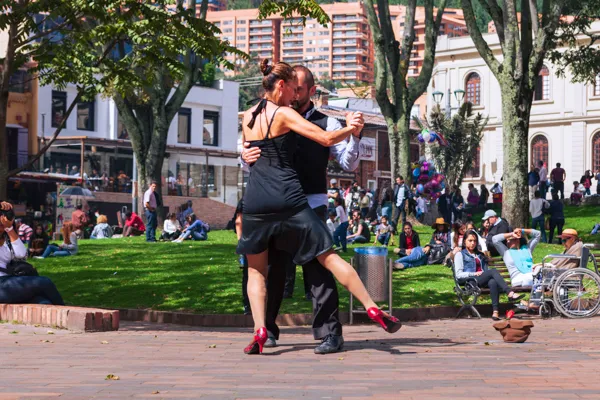 Tango Dancers on Plaza Usaquen © Mano Chandra Dhas
A Neighbourhood Steeped in Time
After descending from Monserrate, our tour takes a delightful turn Northward to Usaquén. This picturesque district feels like stepping into a living museum, where layers of history unfold before your eyes. From colonial conflicts to modern-day charm, The Usaquén tour tells a story of resilience, cultural fusion, and urban evolution.
The Muisca Legacy and Spanish Conquest
The name “Usaquén” itself is a window into the area’s rich past. Derived from the Muisca language, it means “Land of the Sun” or, some say, “Lord of the Sun.” Long before the Spanish arrival, this region was home to the Muisca civilisation, one of the most advanced indigenous cultures in pre-Colombian South America.
In the early 16th century, Spanish conquistadors, led by Gonzalo Jiménez de Quesada, arrived in the region. The encounter between the Muisca and the Spanish was fraught with conflict. Legend has it that a fierce battle took place in Usaquén, where the indigenous people, led by their cacique (chief), fought valiantly against the invaders. Despite their resistance, the Spanish eventually prevailed, forever altering the course of Usaquén’s history. The arms of the Muisca were no match for the weapons of the colonialists.
From Indigenous Territory to Colonial Outpost
Following the Spanish conquest, Usaquén was transformed into a colonial settlement. The Spanish established haciendas and built a central square with a church, following the urban planning principles common in the New World colonies. The Church of Santa Bárbara de Usaquén, constructed in 1665 continues to dominate Plaza Usaquén and remains a testament to the colonial period.
Usaquén became a strategically important outpost, serving as a rest stop for travellers between Bogotá and the northern regions. This role as a waypoint contributed to its development and the blending of indigenous and Spanish cultures that would come to define the area.
A Neighbourhood Reflecting the Colonial Culture
Today, Usaquén retains much of its colonial architecture, with some cobblestoned streets and well-preserved buildings whispering tales of bygone eras. The town square, once the site of colonial administration, is now a bustling hub of activity, surrounded by popular restaurants, cafes, and artisan shops.
A Culinary Destination with Historical Flair
For food enthusiasts, the neighbourhood is a treasure trove of gourmet delights. Speciality restaurants and cafes offer local treats that trace their origins to indigenous, international and Spanish culinary traditions. From Ajiaco, a soup with pre-Columbian roots, to Spanish-influenced pastries, your taste buds will embark on their own historical journey.
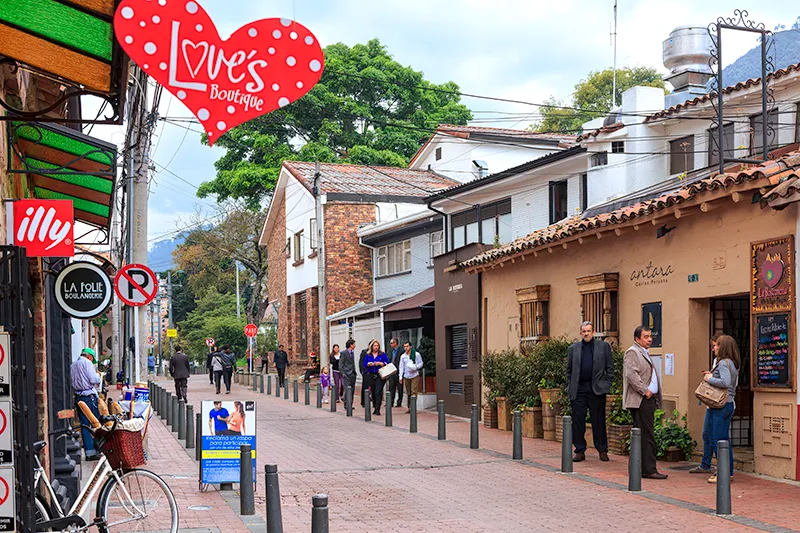 Restaurants and Cafes on Carrera 6A in Usaquén, Bogotá © Mano Chandra Dhas
If your visit happens to fall on a Sunday, you’re in for a special treat. The popular Usaquén flea market comes to life, filling the streets with even more artisans, performers, and food vendors. This weekly event echoes the ancient markets of the Muisca people, albeit with a modern twist.
Coffee Culture at Its Finest
No visit to Colombia is complete without savouring its world-famous coffee, and Usaquén boasts some of Bogotá’s best cafés. As you sip on a perfectly brewed cup, remember that you’re partaking in a tradition that spans centuries. Coffee cultivation, introduced by the Spanish, became integral to Colombian culture and economy, with indigenous farming techniques contributing to its renowned quality.
Take a moment to relax and reflect on your day’s adventures, from the spiritual heights of Monserrate to the historical depths of Usaquén. The rich aroma and complex flavours of Colombian coffee provide the perfect finale to your tour, leaving you with a lasting impression of Bogotá’s diverse charms and intricate history.
Mano’s Tip:
While I’d recommend the Flea Market on a Sunday, it is not an ideal day to go up to Monserrate which is excessively crowded with pilgrims and worshippers. If you can only do this tour on a Sunday I’d recommend you do Usaquén and Quinta de Bolívar. Do Monserrate on a different day.
What to Bring
-
To make the most of your tour, we recommend you bring:
-
Comfortable walking shoes
-
Warm jacket or sweater (it can be chilly at Monserrate’s altitude)
-
Sun protection (hat, sunglasses, sunscreen)
-
Camera
-
Cash for souvenirs and personal expenses
Please note that Monserrate can be crowded on weekends and holidays. It is best avoided during those days.
Summarised Itinerary
- 1
Monserrate, ascent by cable car
Rise to 3,152 metres above sea level for sweeping views over the vast capital city. Visit the church at the summit, a beloved pilgrimage site.
- 2
Descent and transfer to Usaquén
Return to the city and head to Bogotá's most charming neighbourhood, once a separate colonial town, now absorbed into the city but retaining its own identity.
- 3
Usaquén walking tour
Explore cobblestone streets, stop at galleries, visit the weekend antique market at the main plaza, and try local food at one of the neighbourhood's acclaimed restaurants.
- 4
Tour closes
Your guide bids you farewell in Usaquén's main plaza.
Please note: the order of stops and the timings shown are approximate and may change on the day for your safety and the best experience. See our Tour Terms & Conditions.
What's Included
- English-speaking certified guide
- Cable car or funicular ticket to Monserrate
Not Included
- Meals and drinks
- Gratuities
- Transport to/from the first meeting point
Frequently Asked Questions
Have a more general question about travelling with us? Visit our FAQs →
Let's plan your journey
Tell us what inspires you, and together we'll explore a journey that's just right for you.
Tour code:COBOG-MOU01
Available on request
No commitment required. We'll get back to you within 24 hours.