India Tours: Golden Triangle, Temples & Himalayas
Ancient temples, Mughal monuments, and the Himalayas
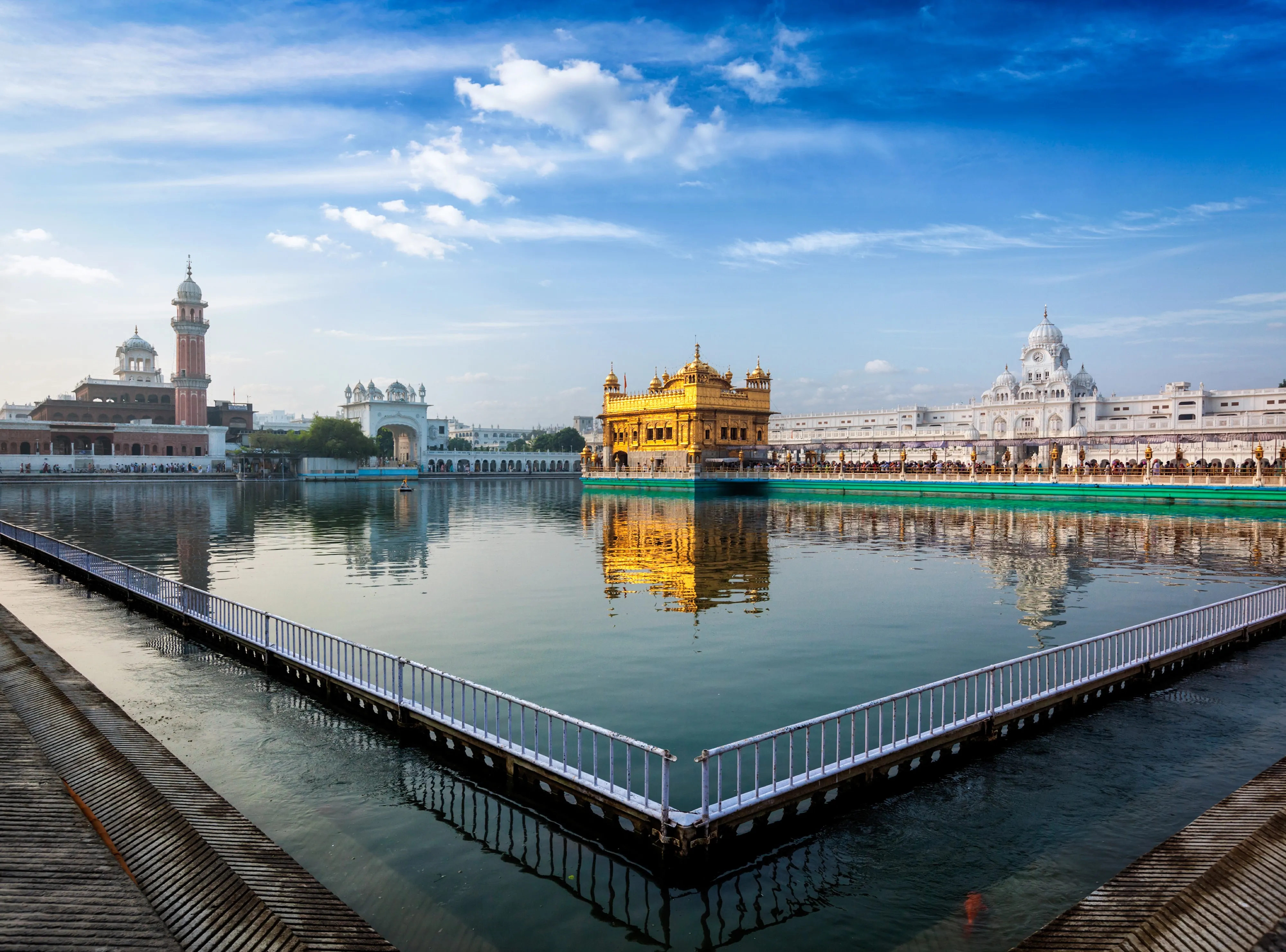
India rewards the traveller who slows down. India is not so much a country as a subcontinent: twenty-eight states, twenty-two official languages, climates that range from the Thar Desert in Rajasthan to the Himalayan snow line in Kashmir, the backwaters of Kerala in the south, and the tea estates of Assam in the east. For first-time visitors, the scale alone can be daunting. The temptation is to try to see everything in one trip. The reward is in the opposite: seeing less, in more depth, with someone who knows the ground.
Most journeys to India begin in Delhi, the political capital and the practical entry point for the Golden Triangle. From there, careful extensions can take you east to the Ganges, north into the Himalayas, further into Rajasthan, or south into Kerala. Each direction is, in effect, its own country.
The Golden Triangle
The Golden Triangle is India’s best-known itinerary, and deservedly so. It links Delhi, Agra, and Jaipur, three cities that together carry a thousand years of North Indian history and most of the country’s most photographed monuments. For most travellers this will be their introduction to India.
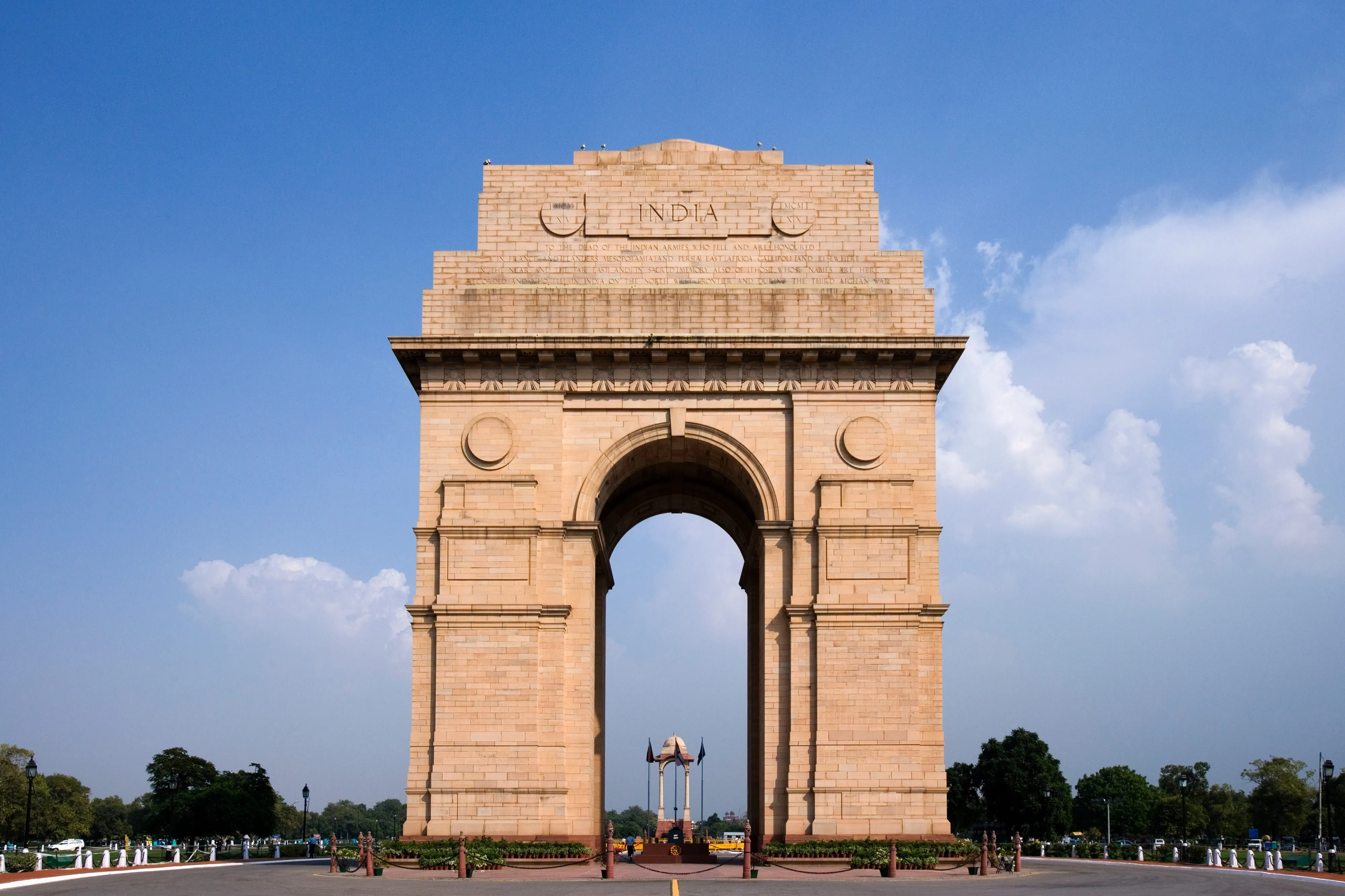
Delhi, treated as both Old and New, is a city where the past and the present are inextricably intertwined. Everyday Indians go about their lives on motorcycles and in cars, quite oblivious to the Mughal tombs, colonial avenues, and ancient stepwells they pass each day. They have become used to their heritage. A good guide changes that, and turns the city back into the layered place it actually is.
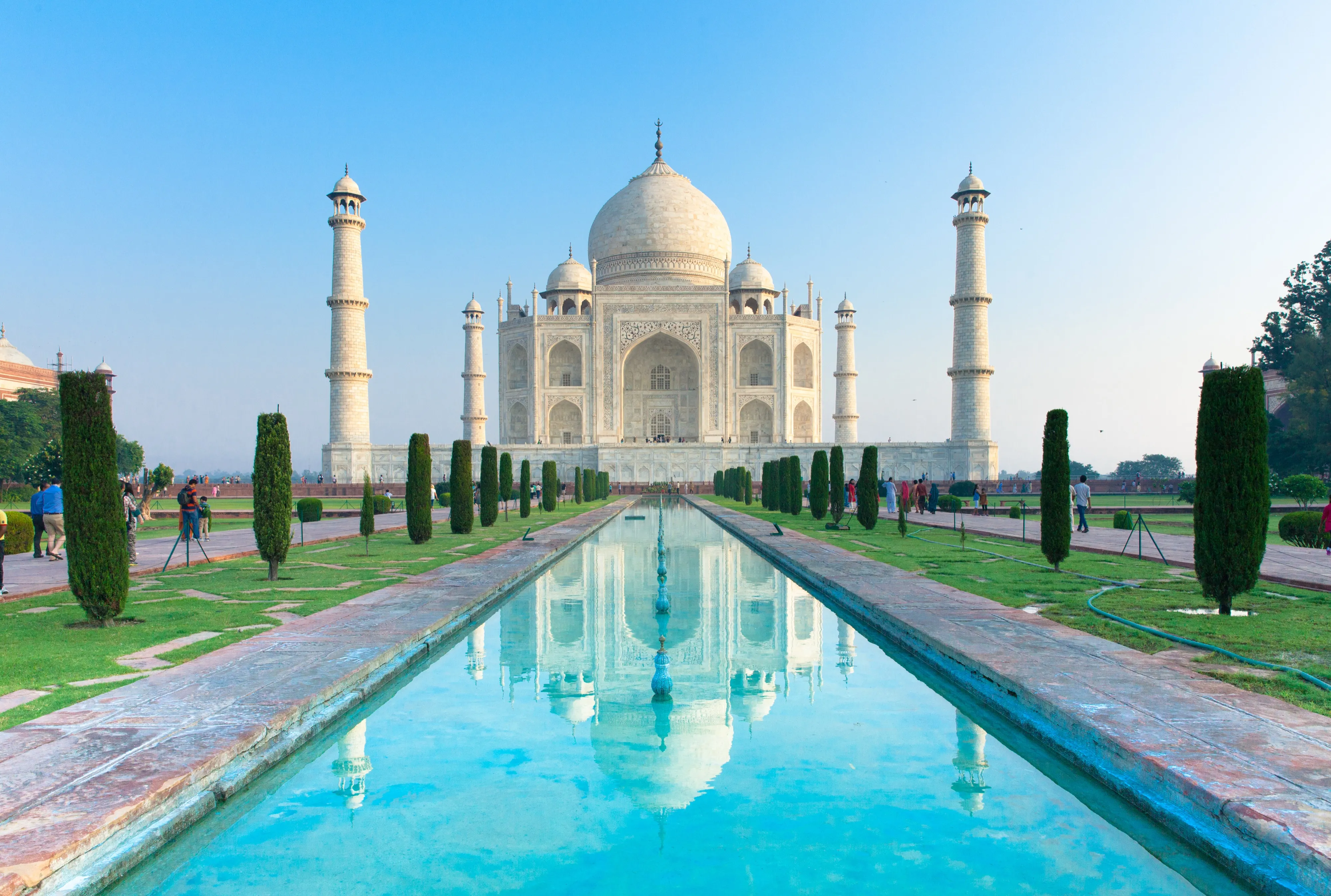
Agra has the Taj Mahal, of course, and it is one of those rare cases where a monument lives up to every photograph. When you set eyes on the Taj for the first time, it is something close to a goosebumps moment. There is not another building like it in the world. The Indian Nobel Laureate Rabindranath Tagore called it “a teardrop on the cheek of eternity”. It is, in fact, a tomb: the place where the Empress Mumtaz Mahal and the Emperor Shah Jehan rest side by side.
If your trip can be timed to a full moon, the Taj can be seen in both daylight and moonlight, which is a different building each time. The Agra Fort, a short drive away, is the other half of Agra’s story. It is where Aurangzeb imprisoned his father, Shah Jehan, who built the Taj, for the last eight years of his life. From a window in the fort, the old emperor could look out across the river to the tomb he had built for his wife.
Jaipur completes the triangle. Founded in 1727 by Maharaja Sawai Jai Singh II, it was India’s first planned city, laid out in a strict nine-block grid and later painted pink in 1876 to welcome the visiting Prince of Wales. The City Palace, the Hawa Mahal, and the Amber Fort sit within easy reach of one another; further out, the eighteenth-century Jantar Mantar observatory still tells time by sun and shadow.
Beyond the Triangle
The Golden Triangle works best as the spine of a longer trip, with worthwhile extensions added one or two cities at a time. Each extension turns the classic seven-day route into a different trip, and The Golden Triangle, Four Ways sets out how to choose between them.
Khajuraho and Varanasi carry the route east. Khajuraho’s tenth- and eleventh-century Chandela temples are among the finest stone carving in the country. Varanasi, the city of Shiva on the Ganges, is held to be one of the oldest continually inhabited cities in the world, with cremation ghats that have run without break for as long as anyone has counted.
Ranthambore turns the journey south for a wildlife pause: a former royal hunting ground that is now run as a tiger reserve, where the ruined fort and the lakes hold a healthy population of resident tigers.
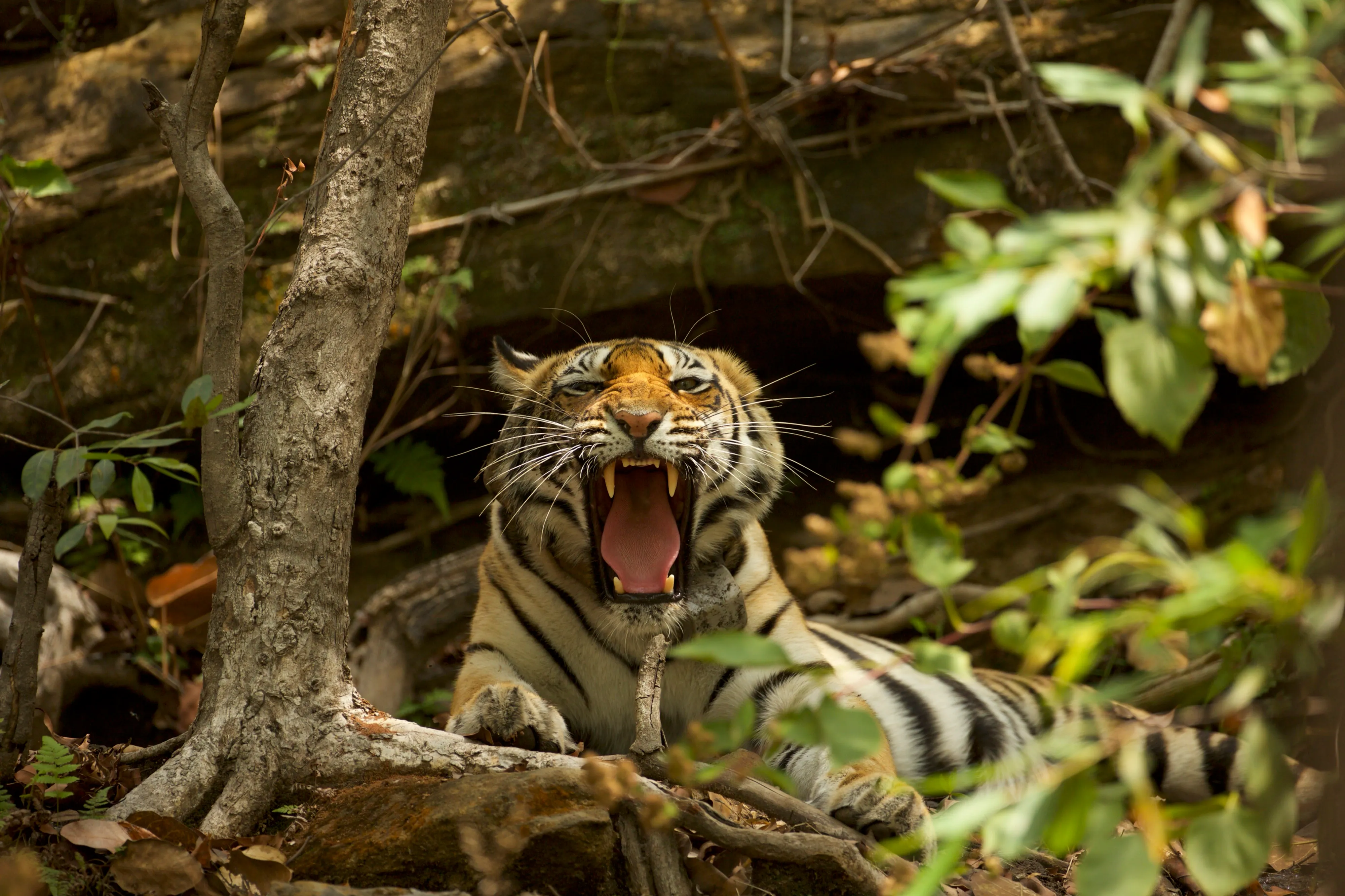 Ranthambore, the wildlife extension south of the Golden Triangle.
Udaipur, the city of lakes, is the gentler companion to Jaipur. The City Palace runs along Lake Pichola, Jag Mandir and Jag Niwas sit on islands in it, and the surrounding Aravalli hills give the whole basin its peculiar light.
Deeper into the Mughal and Nawabi past
For travellers who already know the basics, two directions lead deeper out of Delhi. East lies the Nawabi past: beyond Agra, the old courts of Awadh at Lucknow and the ancient seat of the Ramayana at Ayodhya, the lesser-visited cities that lead on to Varanasi. North lies Kashmir, where Srinagar and Gulmarg, the houseboats on Dal Lake, and the alpine meadows below Apharwat are an India entirely apart from the plains. Both begin in Delhi, the hub from which the north and the Mughal east are most easily reached.
The Himalayan approaches
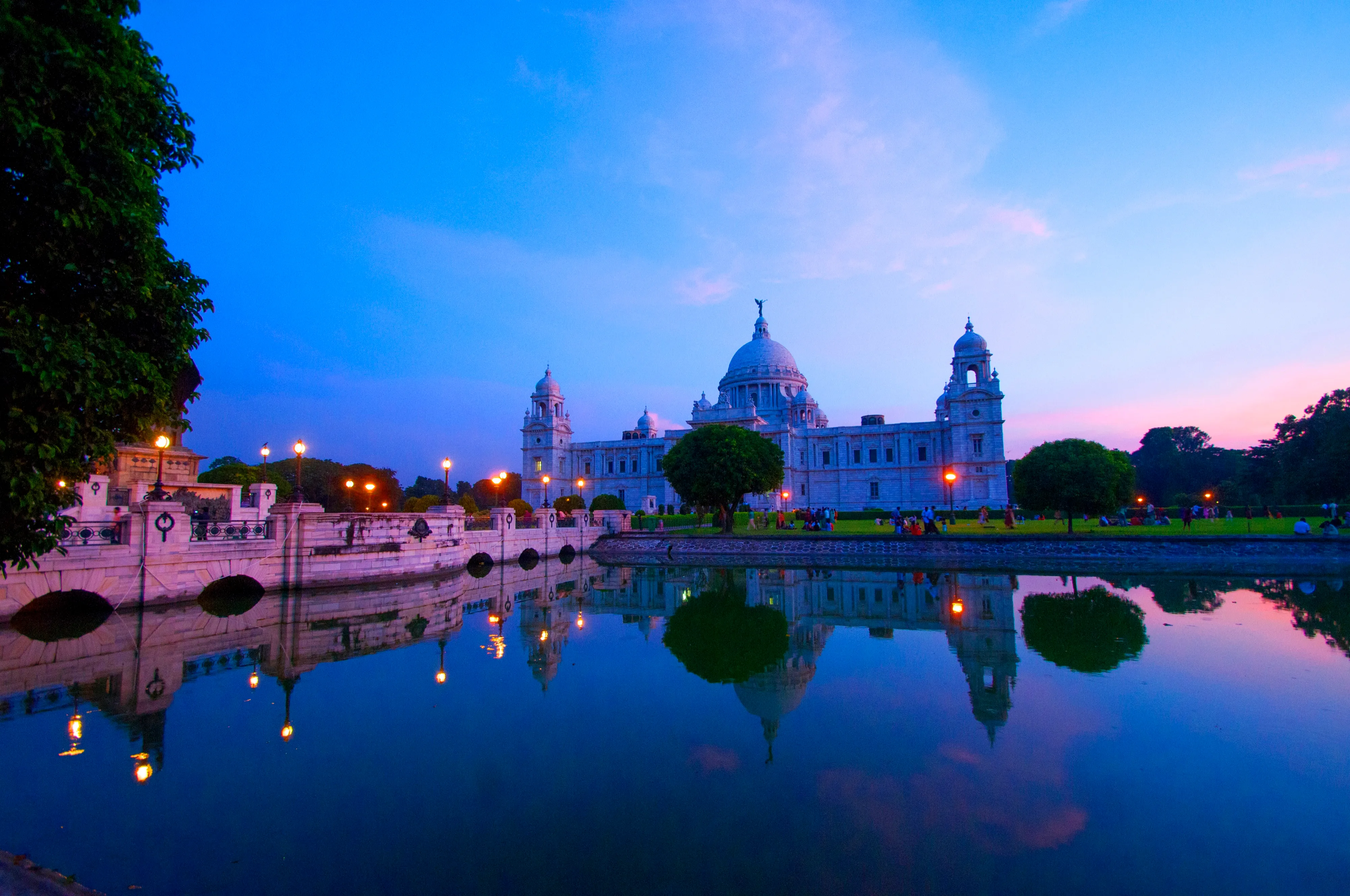
The Indian Himalayas run nearly the full width of the country, and there are several ways in. From Amritsar and the Golden Temple, the road climbs through the tea gardens of Palampur to the old colonial hill station of Shimla, the summer capital of British India. Further east, Kolkata, the cultural capital of the east, opens the other approach: up into Darjeeling and Sikkim, the small Himalayan state where Tibetan, Nepali, and Indian cultures meet against a backdrop of Kanchenjunga.
Kerala, in the south
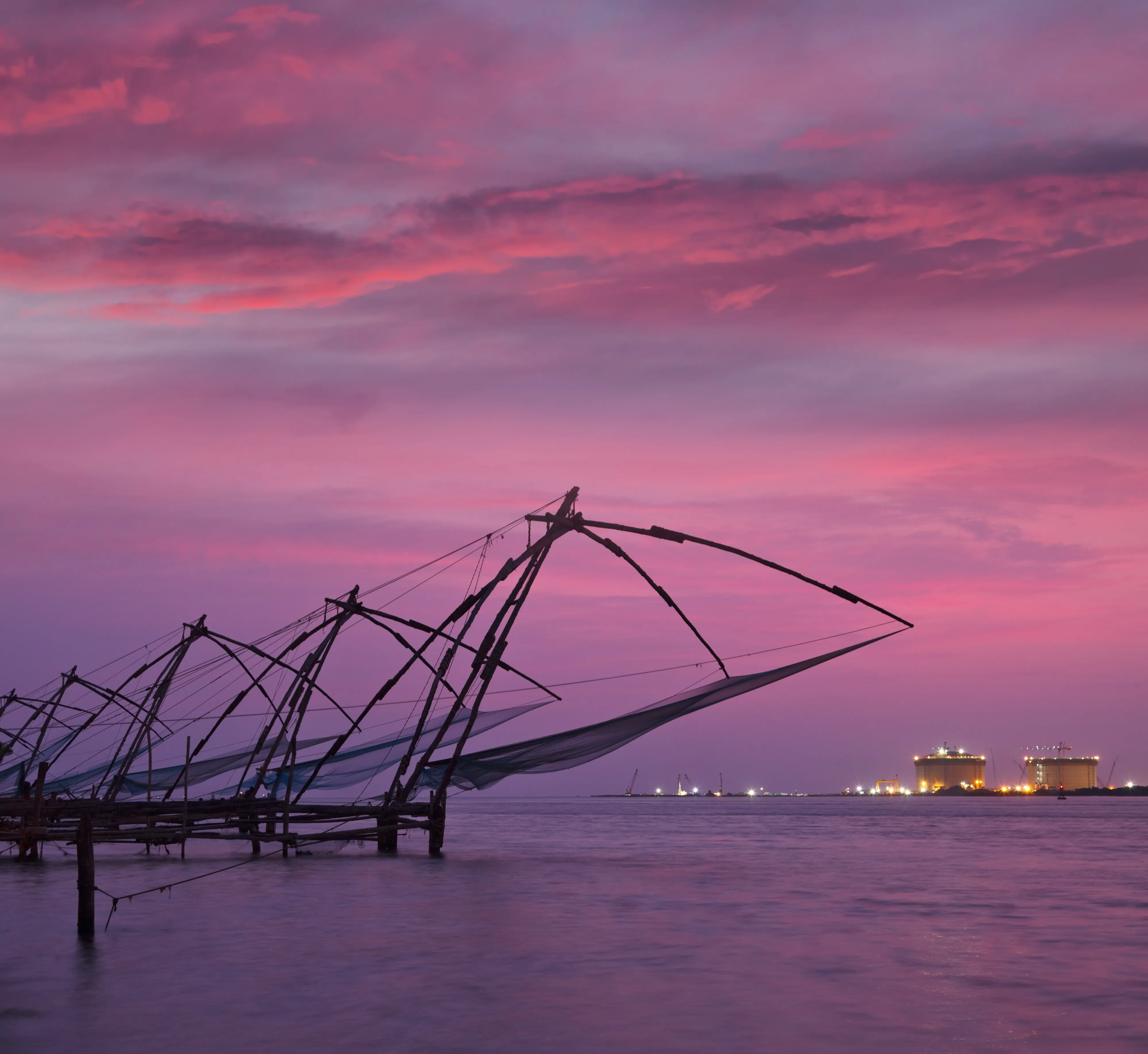
Kerala stands apart from the North Indian route, and rewards a trip of its own. From Kochi, the historic Malabar port where Chinese fishing nets still line the harbour and the old Jewish quarter survives intact, the state opens into the backwaters at Alleppey and the spice forests of the Western Ghats. The pace in Kerala is the opposite of the North: slow, green, and largely on water.
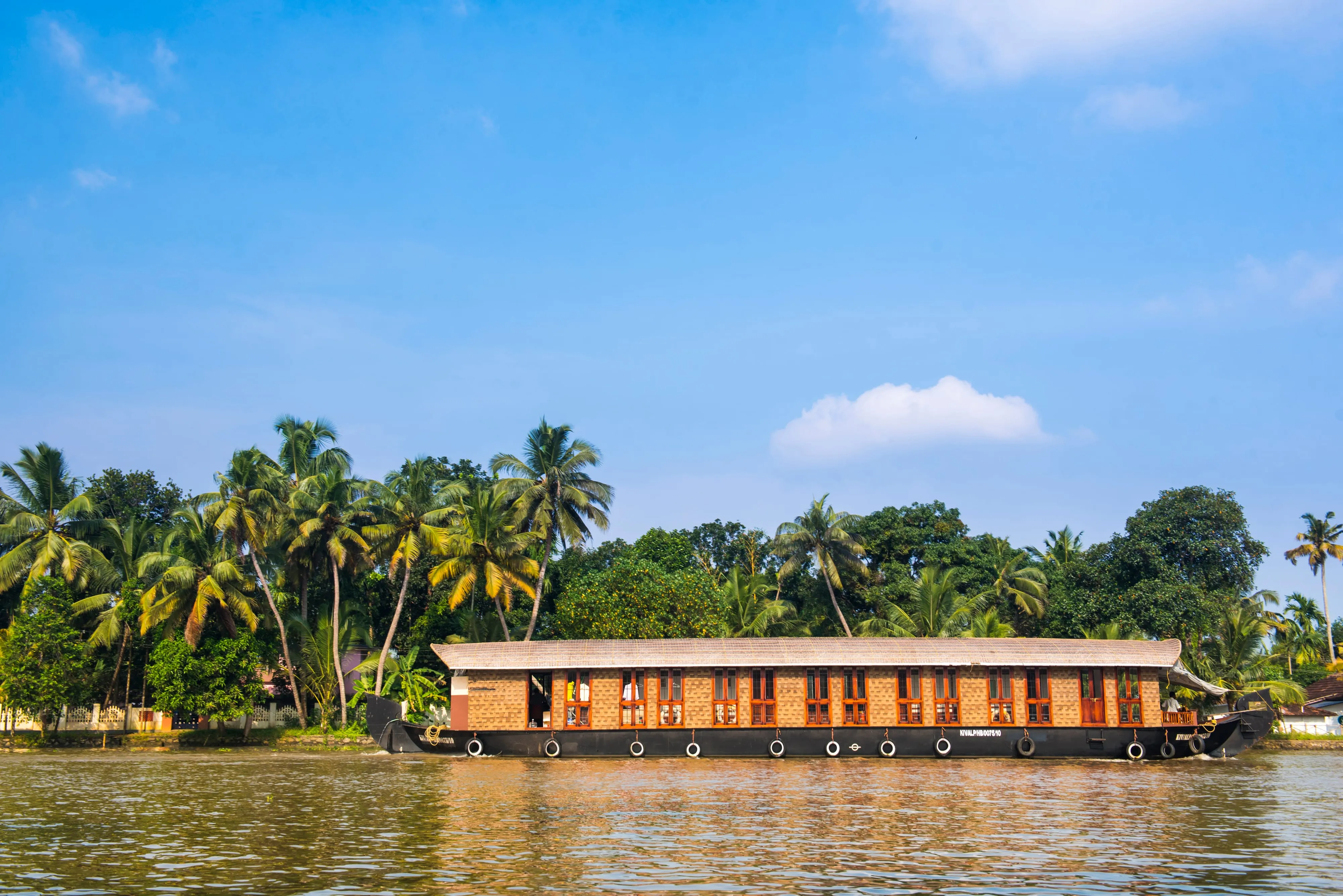 The Kerala backwaters, a different pace from the Golden Triangle.
When to come
The best season for most of India is October through March, when cool, dry weather makes daytime sightseeing comfortable. December and January are the coolest months in the North; in Kerala and the South, the temperature stays warm year-round, with the southwest monsoon arriving in June. The Himalayan routes are best taken between April and October, when the high meadows are open. Whatever the season, bookings should be made several months in advance: India’s hotels, trains, and monument permits work on quotas, and the best of them disappear early.
Mano has worked with trusted partner operators across India over many years, and the tours offered here are drawn from that network. Itineraries can be private or, where appropriate, run as small groups. The first question is always the same: how long do you have, and what do you want to come home with.
Before you travel: visas and entry
Most visitors to India need a visa, and for many nationalities this is now a straightforward online e-Visa. The eligible-country list and the rules change from time to time, so apply only through the Government of India’s official portal, and ignore the many look-alike sites that charge a premium for the same thing.
Frequently Asked Questions
Let's plan your journey
Tell us what inspires you, and together we'll explore a journey that's just right for you.
No commitment required. We'll get back to you within 24 hours.