Colombia Tours: Bogotá, Medellín & Cartagena
Where emerald mountains meet Caribbean coast
Colombia rewards the traveller who slows down. The country has spent the last two decades quietly rebuilding its relationship with the outside world, and what visitors find now is a place that is confident, hospitable, and far more accessible than its reputation suggests. Flights connect easily, the tourism infrastructure has matured, and the welcome is genuine. For travellers who have already seen the obvious places, Colombia offers something rarer: a country that still surprises.
Three cities, three distinct worlds
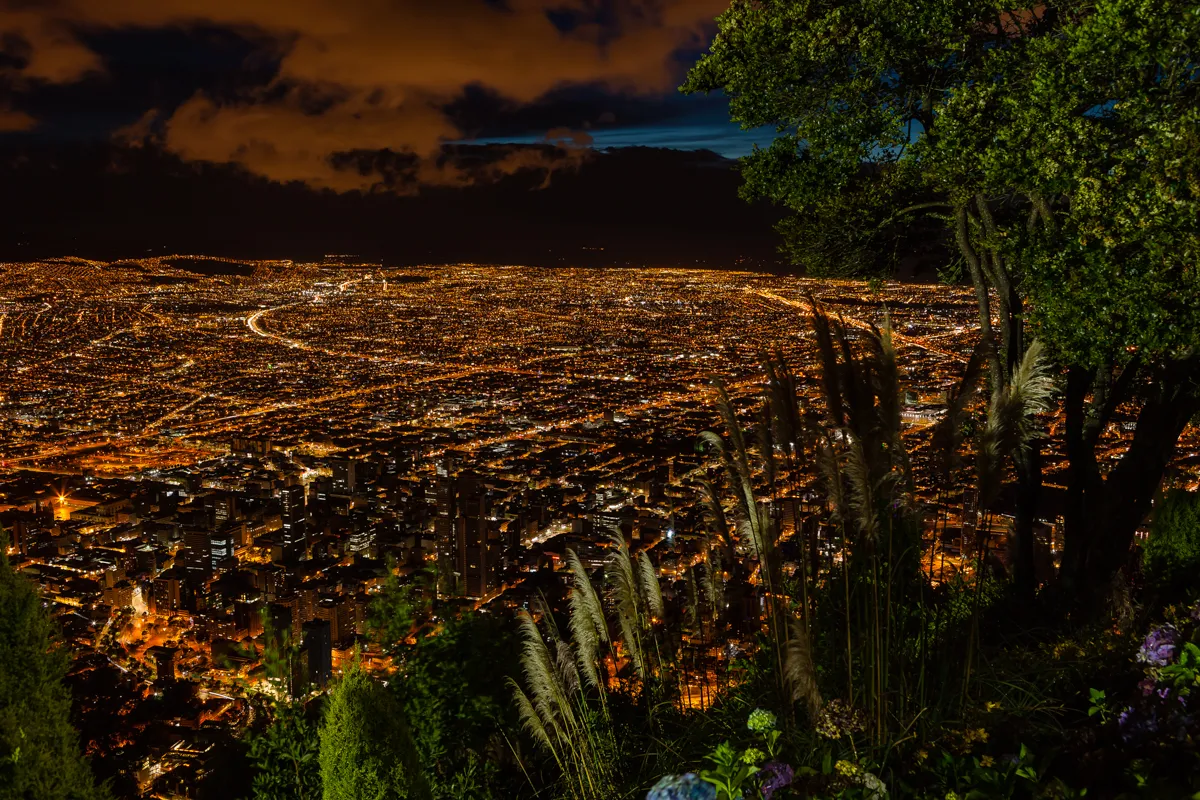
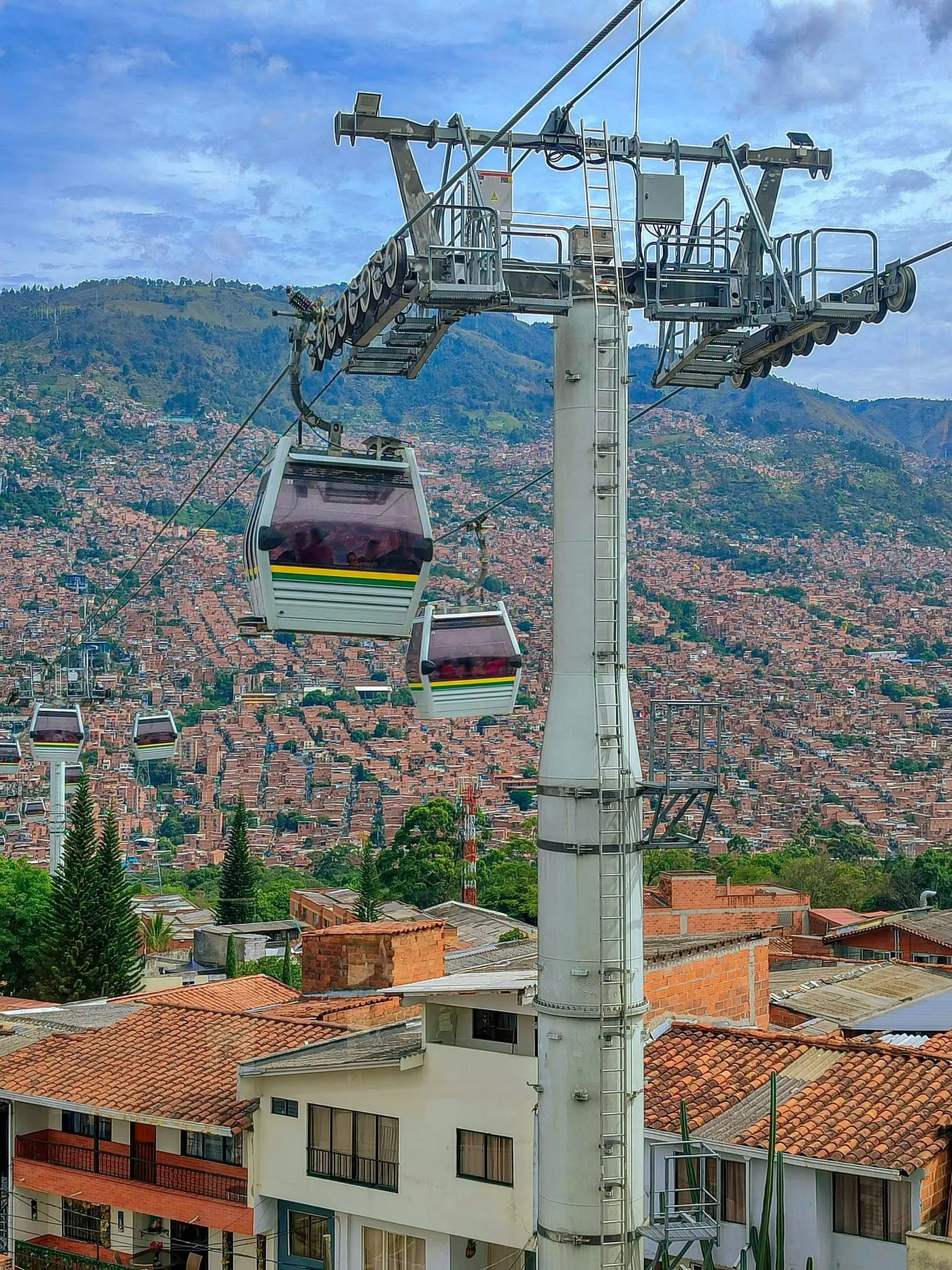
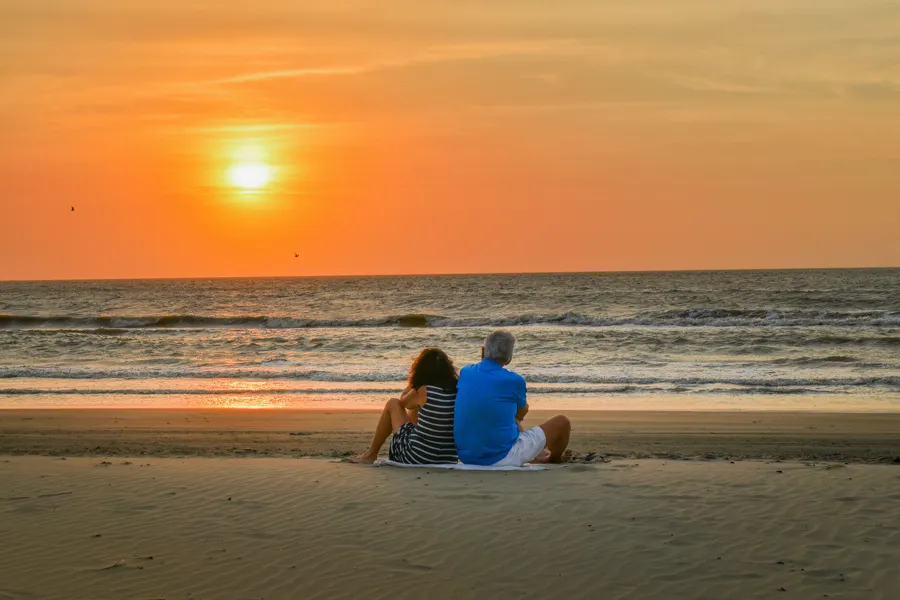
A short trip through Colombia is really a trip through three distinct climates, geographies, and temperaments. Bogotá sits high in the Andes at 8,660 feet, cool, with brilliant blue skies that can turn grey with no notice, and steeped in colonial history, with the country’s best museums and an old quarter that repays days rather than hours; Three Days in Bogotá sets out what that time actually looks like. Medellín occupies the Aburrá Valley at a gentler altitude, where the climate holds at spring all year and the city’s recent reinvention is visible in the cable cars climbing the hillsides. Cartagena, on the Caribbean coast, is older than either, walled, hot, and shaped by Spanish and Afro-Caribbean currents that meet in its music, food, and architecture. Each city deserves three or four nights in its own right, and Where to Go in Colombia After Bogotá works through how the three fit together into a single trip.
When to come
Colombia is a year-round destination, sitting on the equator, where the seasons are defined by rainfall rather than temperature. December through March are generally the driest months across the country, though each region has its own pattern. Bogotá stays cool, whatever the calendar says; Medellín stays mild, and Cartagena stays warm. Travellers worried about altitude in Bogotá should plan a quiet first day to acclimatise.
A culture that meets you halfway
Colombians are, almost without exception, warm to visitors. The old habit of greeting strangers on the street still holds, particularly outside the largest cities, and curiosity about travellers tends to outweigh any language barrier. Spanish is the working language; English is increasingly common in tourism settings but should not be assumed elsewhere. Local guides are bilingual, which removes the friction without removing the contact.
The country comes alive in its festivals
Colombians take their celebrations seriously, and the calendar is full of them. On the Caribbean coast, the Barranquilla Carnival is among the largest carnival celebrations in the world, recognised by UNESCO, and for four days the city gives itself over entirely to costume, brass, and dance. Inland, smaller Andean towns hold their own festivals, where families bring out traditional dress and folk dances passed down through generations. Much of this sits a little outside the three-city circuit, but it explains something essential about the place: Colombia is a country that would always rather dance.
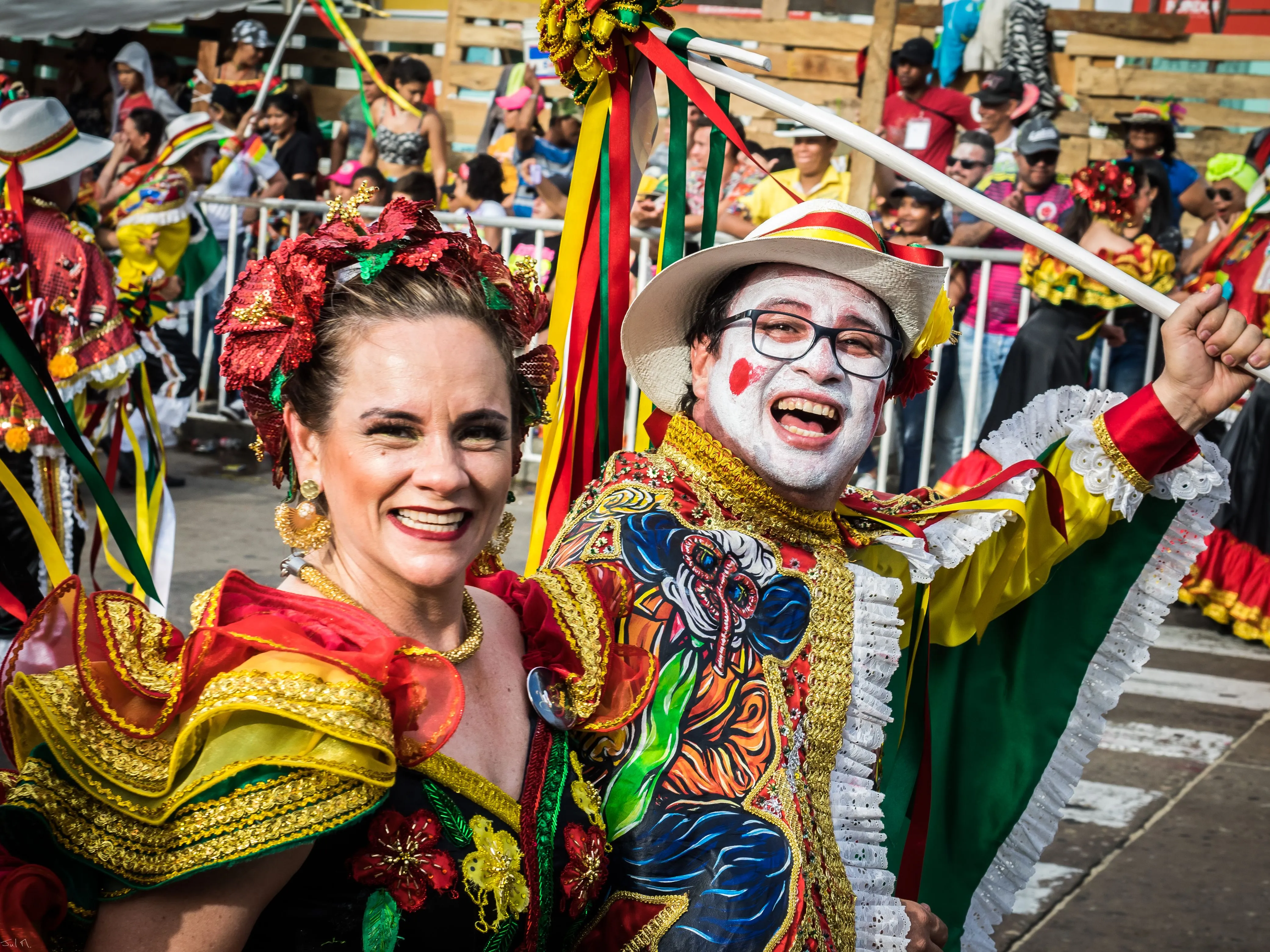 The Barranquilla Carnival, one of the largest carnival celebrations in the world
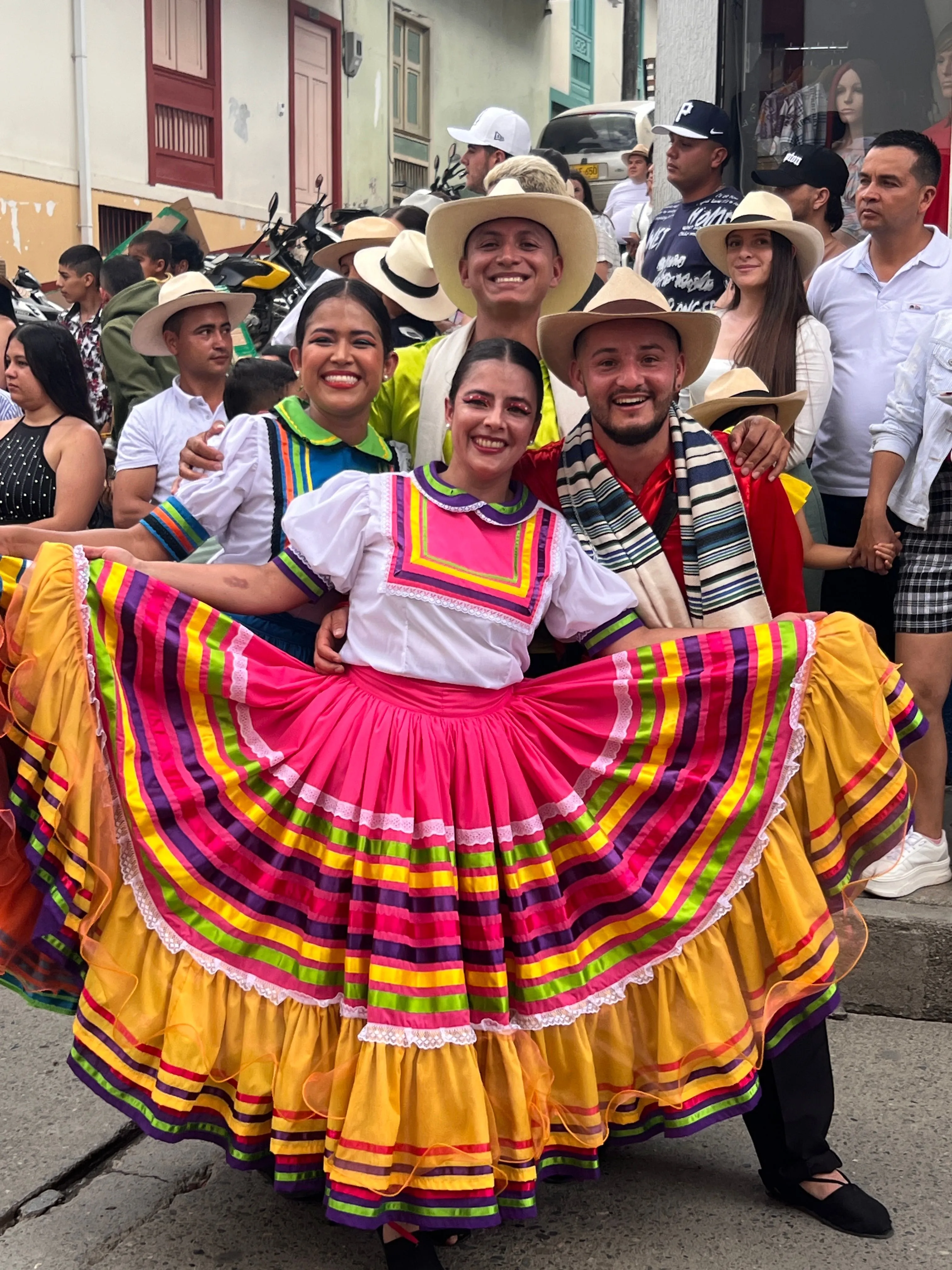 Traditional folk dance at a festival in a Colombian Andean town
What the country is known for, beyond the obvious
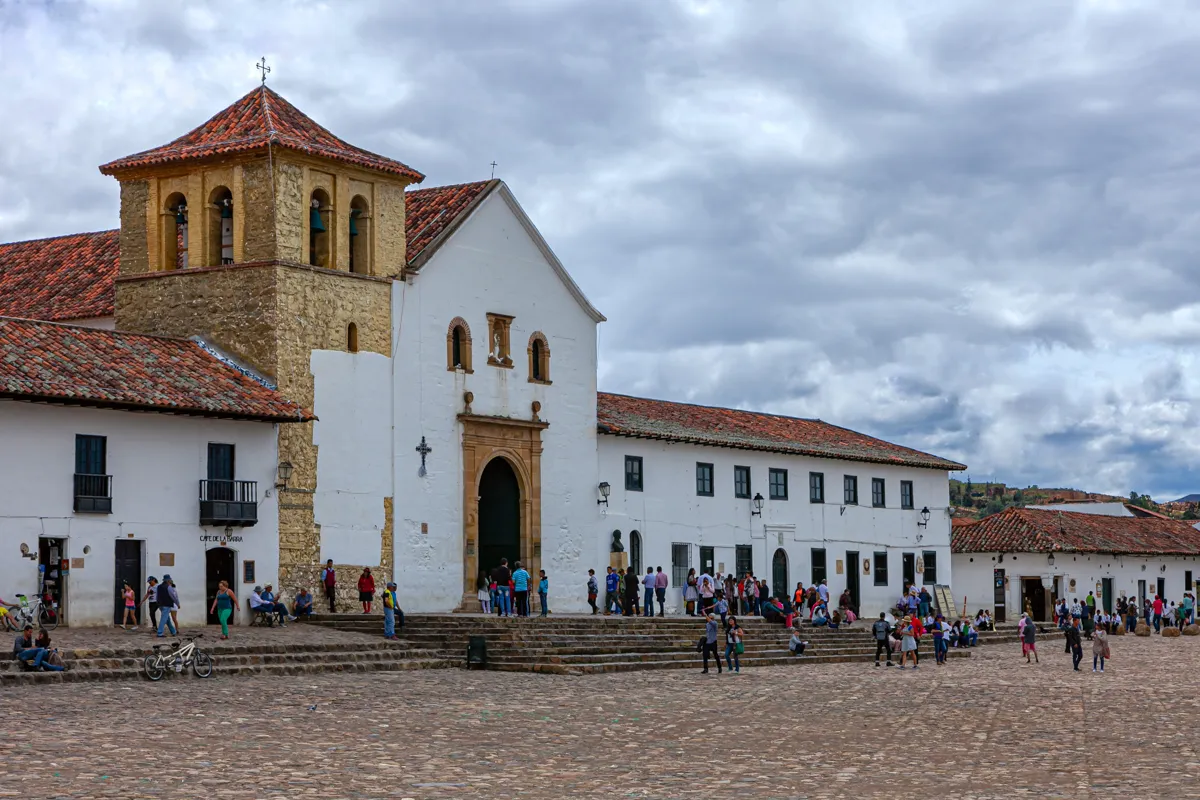
Colombia holds more bird species than any other country on earth, a fact that draws serious birders but also rewards casual visitors who keep their eyes up. The coffee region, reachable from Medellín, is one of the most beautiful agricultural landscapes in South America. The colonial towns of the Boyacá highlands, north of Bogotá, are among the best-preserved in the Americas, and the same stretch of country holds Guatavita, the sacred lake at the heart of the El Dorado legend. None of this requires hard travel, only a willingness to spend time.
Mano has worked with trusted partner operators in each of the three cities, and the tours offered here are drawn from that network. Itineraries can be private or, where appropriate, run as small groups.
Before you travel: visas and entry
Citizens of many countries, including the United Kingdom, the United States, and most of Europe, can enter Colombia visa-free for tourism, usually for up to 90 days. Whatever your nationality, you will need to complete the online Check-Mig form shortly before you fly in and out of the country. Requirements change, so confirm your own status with the official sources before you travel.
Frequently Asked Questions
Let's plan your journey
Tell us what inspires you, and together we'll explore a journey that's just right for you.
No commitment required. We'll get back to you within 24 hours.