Amritsar Tours - The Golden Temple and the Himalayan Foothills
The spiritual heart of Sikhism and the gateway to Himachal Pradesh
Tours in Amritsar
Amritsar is unlike any other city in India. Founded in 1577 by the fourth Sikh Guru, Guru Ram Das, it has been the spiritual capital of the Sikh faith for more than four centuries. The Golden Temple at its centre is not merely a religious site, it is an active, living community, open to all visitors of any faith or background, serving free meals to tens of thousands of people every day in one of the largest community kitchens in the world.
But Amritsar is also a city marked by some of the most significant and painful events in modern Indian history: the massacre at Jallianwala Bagh in 1919, and the catastrophe of the 1947 Partition, when the newly drawn border between India and Pakistan passed just 28 kilometres from the city centre. Beyond the city, the Punjab plains give way to the Himalayan foothills of Himachal Pradesh, and Amritsar is the natural place to begin that climb.
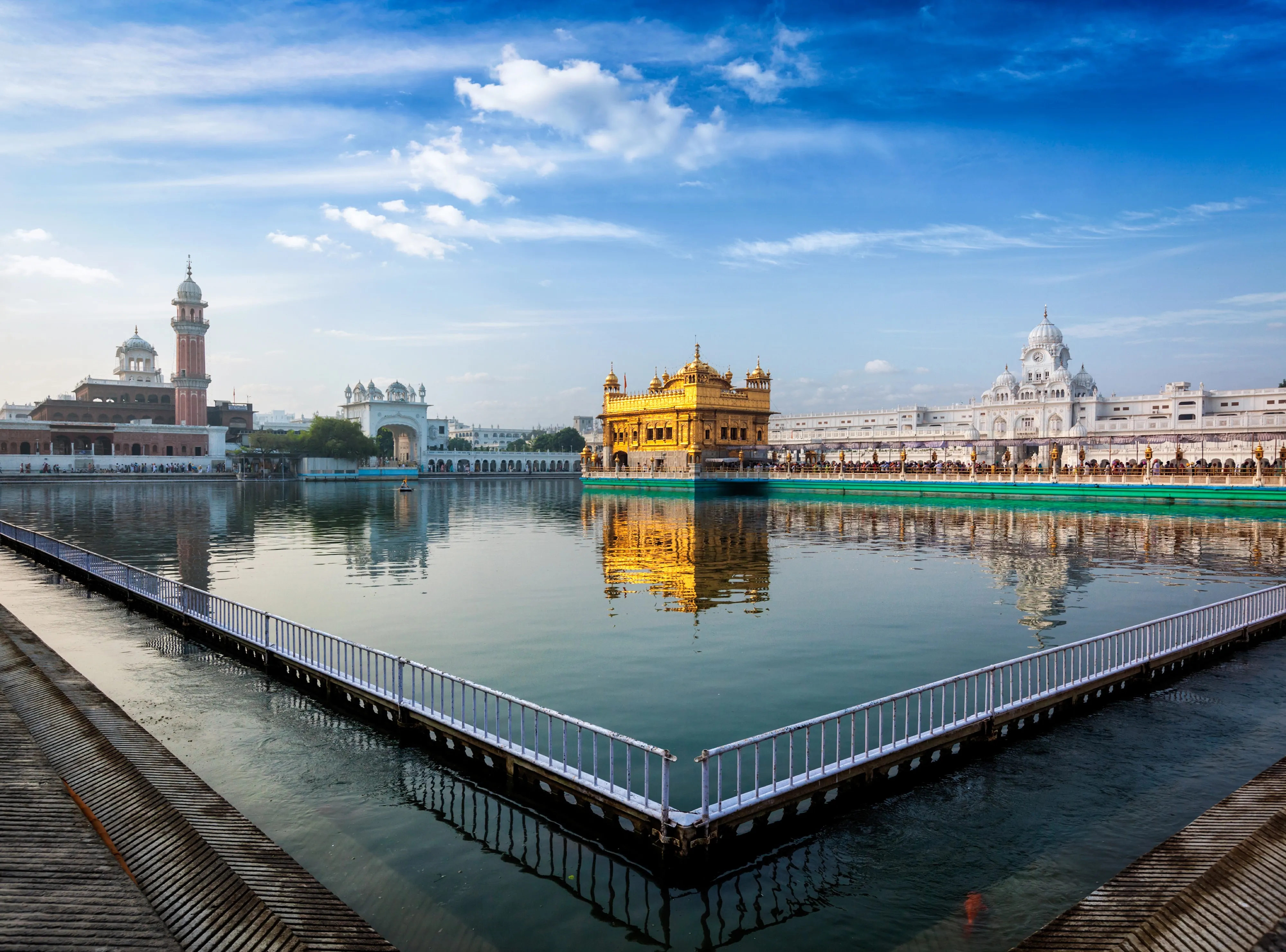
The Golden Temple
There are places of worship in the world that are merely beautiful, and there are places that do something more. The Harmandir Sahib, the Golden Temple, belongs to the second category. The central shrine, its upper storeys covered in 750 kilograms of gold leaf, sits on a platform in the middle of the Amrit Sarovar (the Pool of Nectar, from which the city takes its name), connected to the marble causeway by which pilgrims and visitors approach. The sound of kirtan, sacred Sikh music, plays continuously, 24 hours a day, every day of the year.
The langar, the community kitchen of the Golden Temple, is one of the most extraordinary institutions in India. Up to 100,000 people are fed free of charge every day, regardless of religion, caste, nationality, or background. Volunteers work continuously in the kitchen, and visitors are not only welcome to eat but invited to help, rolling and baking the chapattis, washing the steel trays, or simply witnessing the extraordinary efficiency and warmth of the operation.
Jallianwala Bagh and the Partition Museum
Amritsar is a city that takes its history seriously, and two sites in particular demand time and attention.
Jallianwala Bagh is the walled garden where, on 13 April 1919, the day of the Sikh festival of Baisakhi, British troops under General Reginald Dyer opened fire on a crowd of unarmed civilians, killing hundreds. The garden is now a memorial, and the bullet marks preserved in the walls carry a weight that no description adequately prepares you for.
The Partition Museum, opened in 2017 and one of the finest museums of its kind in the world, documents the events of 1947 through personal testimonies, photographs, and artefacts. It tells the story of the ten million people who were displaced by the drawing of the border, and the one million who did not survive it. For any visitor trying to understand modern India and Pakistan, this museum is essential.
The Wagah Border Ceremony
Every day at sunset, the Wagah border post, 28 kilometres from Amritsar, is the scene of one of the most theatrical spectacles in South Asia. The lowering of the flags and closing of the border gate is performed jointly by the Indian Border Security Force and the Pakistani Rangers in an elaborate display of ceremonial drill, high kicks, fierce expressions, and mutual defiance that has somehow become a beloved ritual on both sides of the fence. Thousands of spectators gather in the grandstands on each side, and the atmosphere is more festival than formality.
Gateway to Himachal Pradesh
Amritsar’s position makes it the natural starting point for journeys into the Himalayan foothills. A few hours’ drive into Himachal Pradesh brings you to the Kangra Valley, a landscape of tea gardens, apple orchards, and terraced fields below the snow-covered Dhauladhar range. The town of Palampur, known as the Tea Capital of North India, produces some of India’s most distinctive teas in gardens that have been cultivated since the British established them in the 19th century.
Nearby Dharamshala has been the seat of the Tibetan government-in-exile since 1960. The Dalai Lama’s personal monastery, the Namgyal Monastery, and the Norbulingka Institute, which exists to preserve Tibetan artistic traditions, make this one of the most significant centres of Tibetan culture outside Tibet itself.
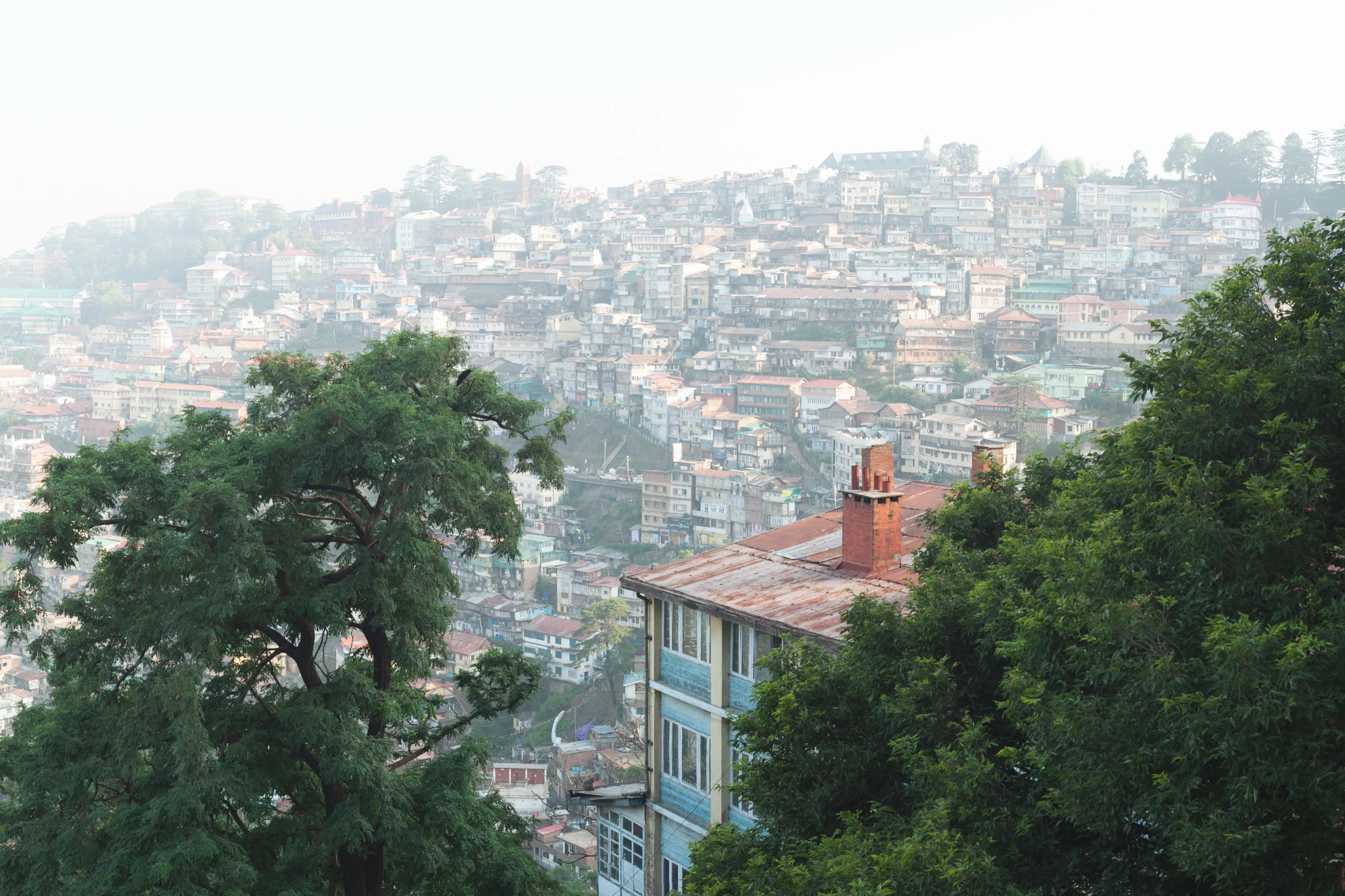
Further into the hills, Shimla, the former summer capital of British India, offers colonial architecture, mountain air, and a ride on the Kalka–Shimla Railway: a UNESCO World Heritage mountain line that has been running since 1903, threading through 102 tunnels on its way down from the hills.
Planning Your Visit
The comfortable season runs October to March, with the detail in the panel above. Whatever the month, the Golden Temple is at its most affecting in the early morning and at night, when the illuminated shrine lies mirrored in the still water of the pool, so it is worth planning to be there at both ends of the day.
Amritsar’s Sri Guru Ram Dass Jee International Airport receives flights from major Indian cities and several international destinations, including direct connections from the United Kingdom.
Know before you go
- Altitude
- ≈770 ft, Punjab plains
- Climate
- Hot, semi-arid
- Best months
- October to March
- Avoid
- Summer (40°C+); monsoon Jul to Sep
- Known for
- The Golden Temple, Sikh heritage, Partition history
Let's plan your journey
Tell us what inspires you, and together we'll explore a journey that's just right for you.
No commitment required. We'll get back to you within 24 hours.