Kochi Tours - Kerala's Gateway to Backwaters and Spice Country
Where the Arabian Sea meets four centuries of trading history
Tours in Kochi
Kochi, also known as Cochin, has been one of the great trading ports of Asia for more than five centuries. Arab merchants were here before the Portuguese arrived in 1503; the Dutch displaced the Portuguese in 1663; the British took over from the Dutch in 1795. Each left buildings, customs, and communities behind, and the result is a city whose oldest quarter feels like nowhere else in India, layered, unhurried, and quietly extraordinary. It is also the gateway to the wider state, where the backwaters, the spice hills, and the long Malabar beaches each ask for time of their own.
Fort Kochi: Four Centuries in a Few City Blocks
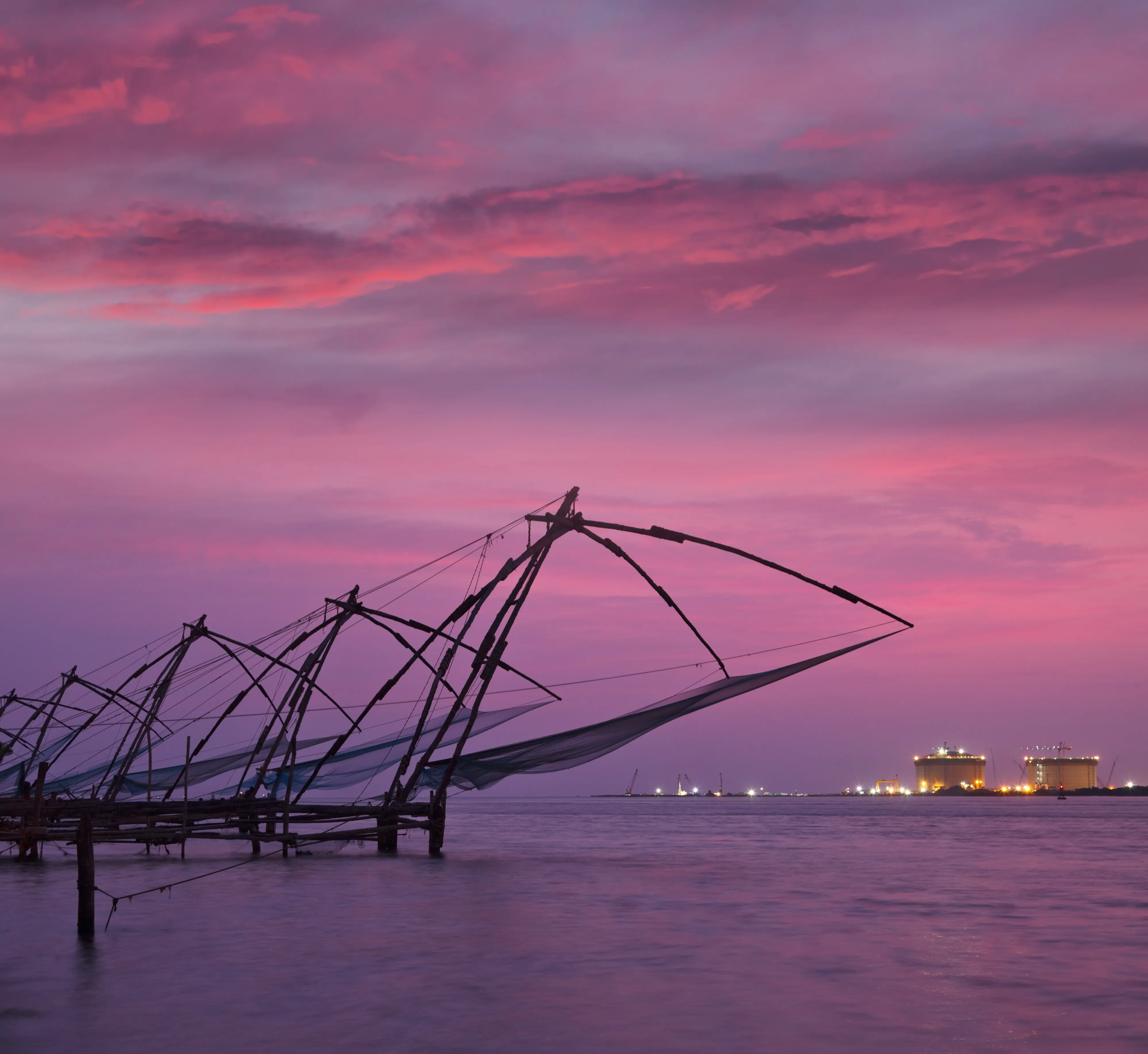
The old quarter of Fort Kochi is among the most atmospheric urban neighbourhoods in India. Within a few minutes’ walk you will find the Chinese fishing nets, vast cantilevered structures that have stood on the harbour’s edge since the 14th century, operated by teams of fishermen who lower and raise them on a tidal schedule that has not changed in generations. Nearby, St. Francis Church, built by the Portuguese in 1503, is the oldest European-built church in India; Vasco da Gama was buried here before his remains were returned to Lisbon. The Dutch Palace (Mattancherry Palace) was built by the Portuguese and presented to the Raja of Cochin in 1555; its murals depicting scenes from the Ramayana are among the finest examples of Kerala mural painting in existence.
The Jew Town quarter of Mattancherry is one of the most unusual places in India. The Pardesi Synagogue, built in 1568 and the oldest active synagogue in the Commonwealth, stands at the end of a street lined with antique dealers and spice warehouses. The Jewish community of Kochi, the Malabar Jews, is believed to have arrived as early as the 1st century AD, and their story is one of the most remarkable in the history of the Jewish diaspora.
The Kerala Backwaters
The backwaters are what make Kerala unlike anywhere else in India. South of Kochi, a 900-kilometre network of lagoons, canals, rivers, and lakes runs parallel to the Arabian Sea coast, separated from it by narrow strips of coconut-covered land. The backwater villages have their own rhythm and economy, fishing, coir-making, rice farming, largely unchanged by the pace of the cities.
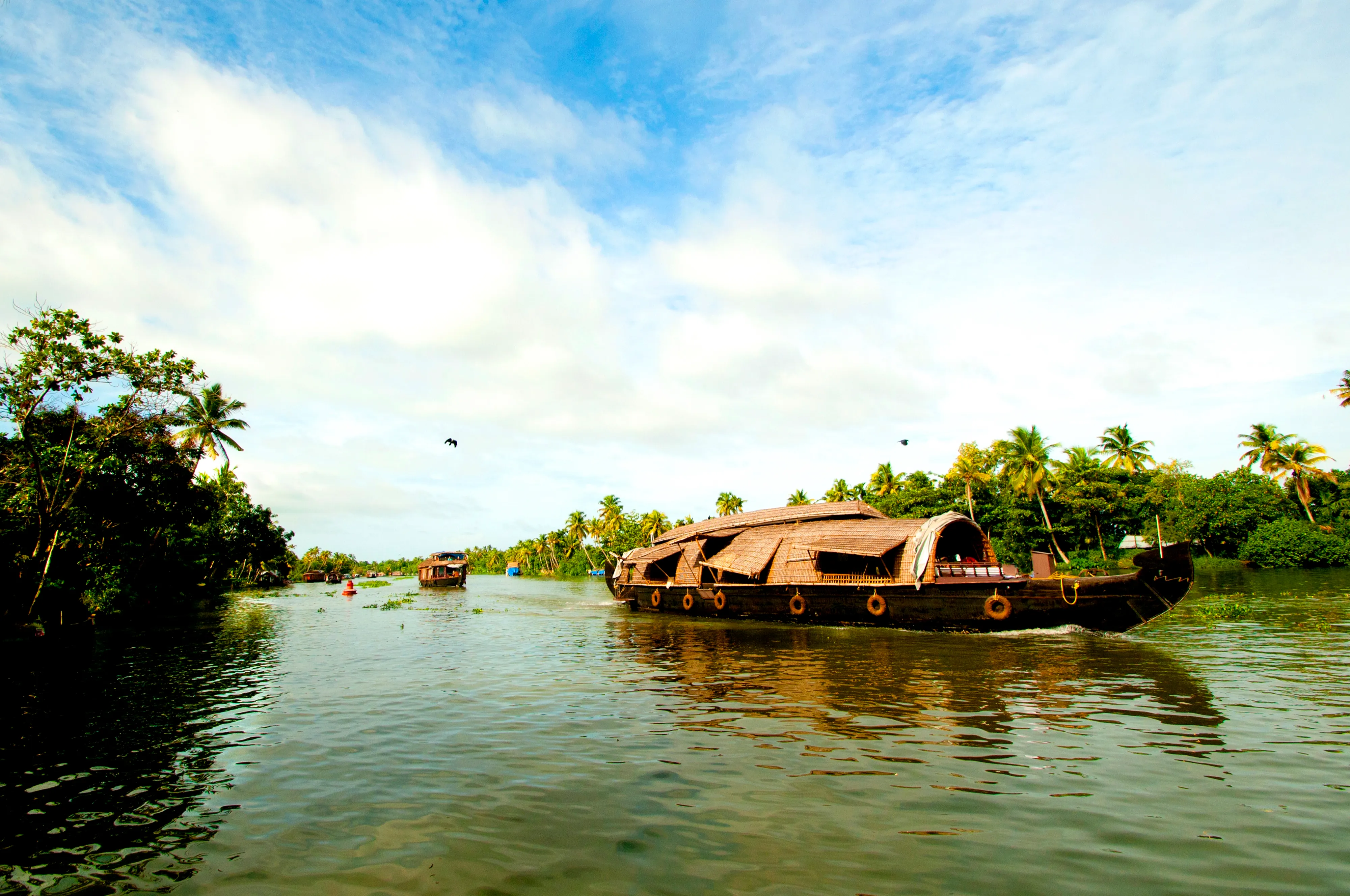
The traditional way to experience the backwaters is from the water itself: on a Kettuvallam, the traditional rice barge that has been converted into a houseboat. An overnight journey through the canals of Alleppey, watching the light change over the paddy fields, eating fresh fish cooked on board, and sleeping to the sound of frogs, is among the defining travel experiences in India.
Spice Country: Thekkady and the Cardamom Hills
An hour’s drive east of Kochi begins the climb into the Western Ghats, one of the world’s eight biodiversity hotspots. At Thekkady, in the Cardamom Hills at nearly 900 metres, the air smells of pepper, cardamom, and cinnamon. Kerala grows more than 95% of India’s cardamom and the majority of its black pepper, and a visit to a working spice plantation here is a genuinely vivid experience.
The Periyar Wildlife Sanctuary surrounds the reservoir at Thekkady’s centre. A boat ride on the lake offers the best chance to see elephants, sambar deer, and, with luck, tigers and leopards at the water’s edge.
Kathakali: Kerala’s Classical Dance Theatre
No visit to Kerala is complete without an encounter with Kathakali, the classical dance form unique to this state. Performers spend years mastering the elaborate hand gestures, facial expressions, and eye movements that tell stories from the Hindu epics. The make-up alone takes several hours to apply, building up a face that is more mask than face, coded in colours that an informed audience can read like a text. Evening performances at Kathakali centres in Kochi offer visitors the chance to watch both the make-up process and the performance itself.
Planning Your Visit
The dry winter months are the easy choice for the backwaters, wildlife, and beaches, as the panel above lays out. But Kerala is one of the rare places where the monsoon is a reason to come rather than a reason to stay away: from June the backwaters swell, the hills turn an electric green, and the spice gardens are at their most fragrant. Kerala’s Ayurvedic wellness retreats consider the monsoon the best season for treatment, and many visitors time their trip to it.
Kochi International Airport receives direct international flights from the Gulf states, South-East Asia, and several European cities, in addition to connections from all major Indian airports.
Know before you go
- Altitude
- Sea level, Arabian Sea coast
- Climate
- Tropical, hot and humid
- Best months
- October to February (driest)
- Monsoon
- June to September
- Known for
- Spice-trade heritage, Kerala backwaters, Kathakali dance
Let's plan your journey
Tell us what inspires you, and together we'll explore a journey that's just right for you.
No commitment required. We'll get back to you within 24 hours.