Lima Tours - Pacific Coast Capital and Gateway to the Andes
Pacific coast capital and gateway to the Andes
Tours in Lima
 5 days / 4 nights
 PELIM-CMP01
Private Guided Cusco and Machu Picchu Tour – 5 Days in the Heart of the Inca Empire
Available on request
 Half day (4 hours)
 PELIM-LCT01
Lima City Tour - Walk the UNESCO Historic Centre
Available on request
 Half day (4 hours)
 PELIM-PCC01
Peruvian Cooking Class in Lima - Market Visit and Hands-On Lesson
Available on request
 Half day (4 hours)
 PELIM-PAC01
Pachacamac Inca Pyramids Tour - Pre-Inca Archaeology from Lima
Available on request
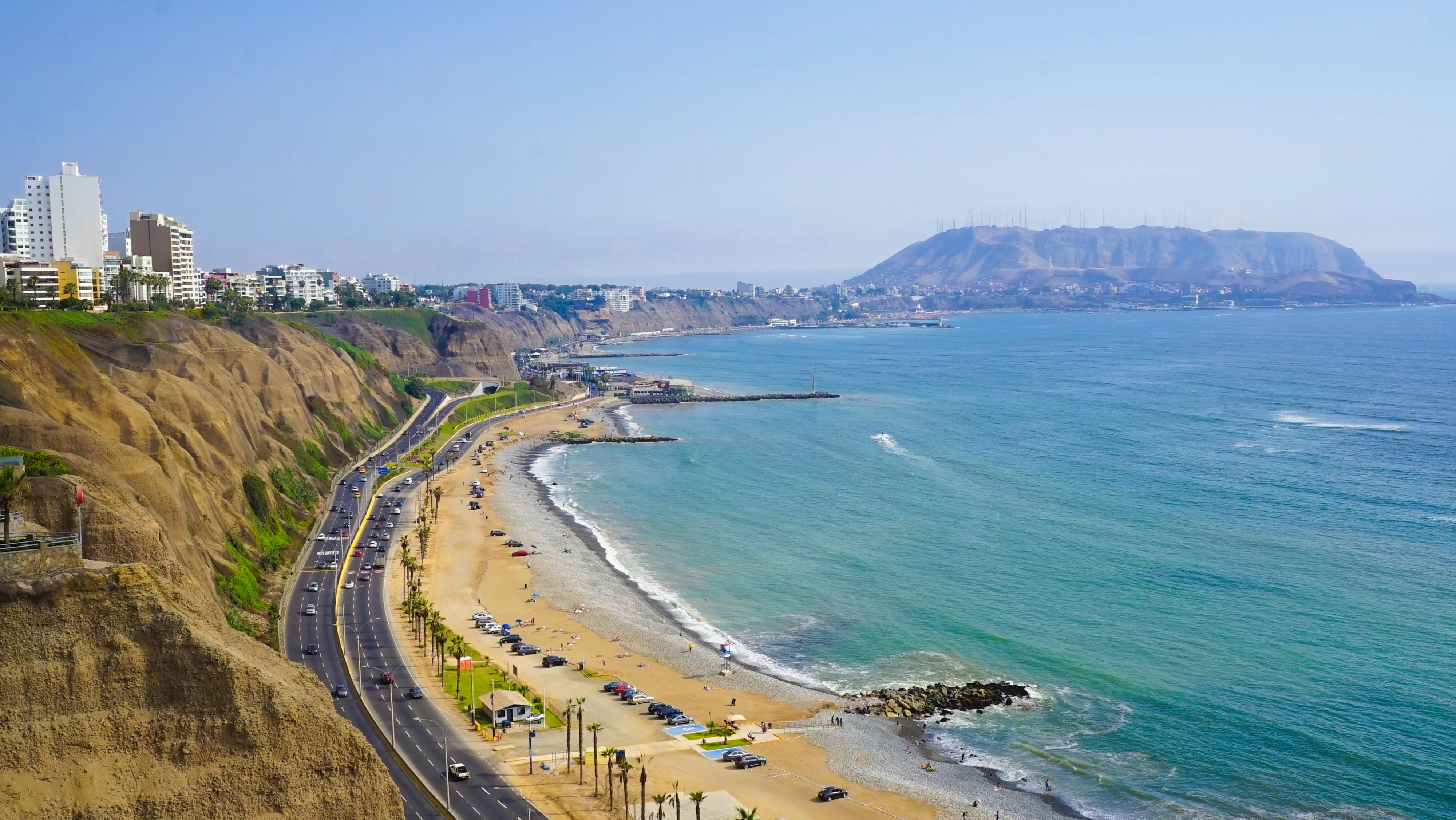
Lima sits on the Pacific coast at sea level, which makes it a useful first stop before ascending into the Andes. Most international flights into Peru land here, and a domestic connection to Cusco takes just over an hour. Many travellers pass through quickly, but Lima rewards a day or two of its own: the historic centre is a UNESCO World Heritage Site, Miraflores has some of the best restaurants in South America, and the Larco Museum holds one of the finest collections of pre-Columbian gold and ceramics in the world.
The historic centre
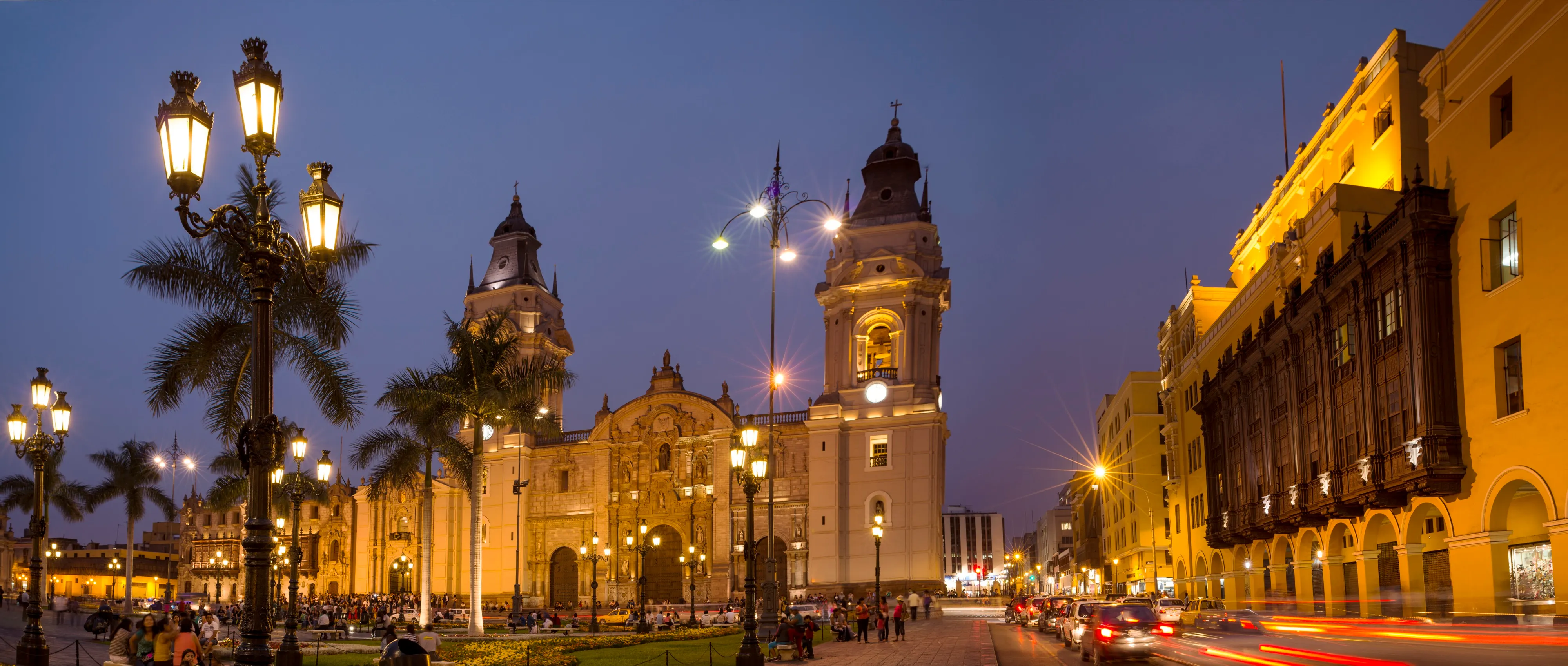
Lima was founded by Francisco Pizarro in 1535 as the City of Kings, and for nearly three centuries was the capital of the Spanish Viceroyalty of Peru, the seat from which Spanish power reached across the continent. The historic centre has been a UNESCO World Heritage Site since 1991. Within a few square kilometres are baroque churches, colonial palaces, the country’s oldest university, and the catacombs of San Francisco, which hold the remains of an estimated 25,000 colonial-era burials. A morning on foot in the old city is the simplest way to make sense of the country before climbing into the Andes.
Pachacamac and the pre-Inca coast
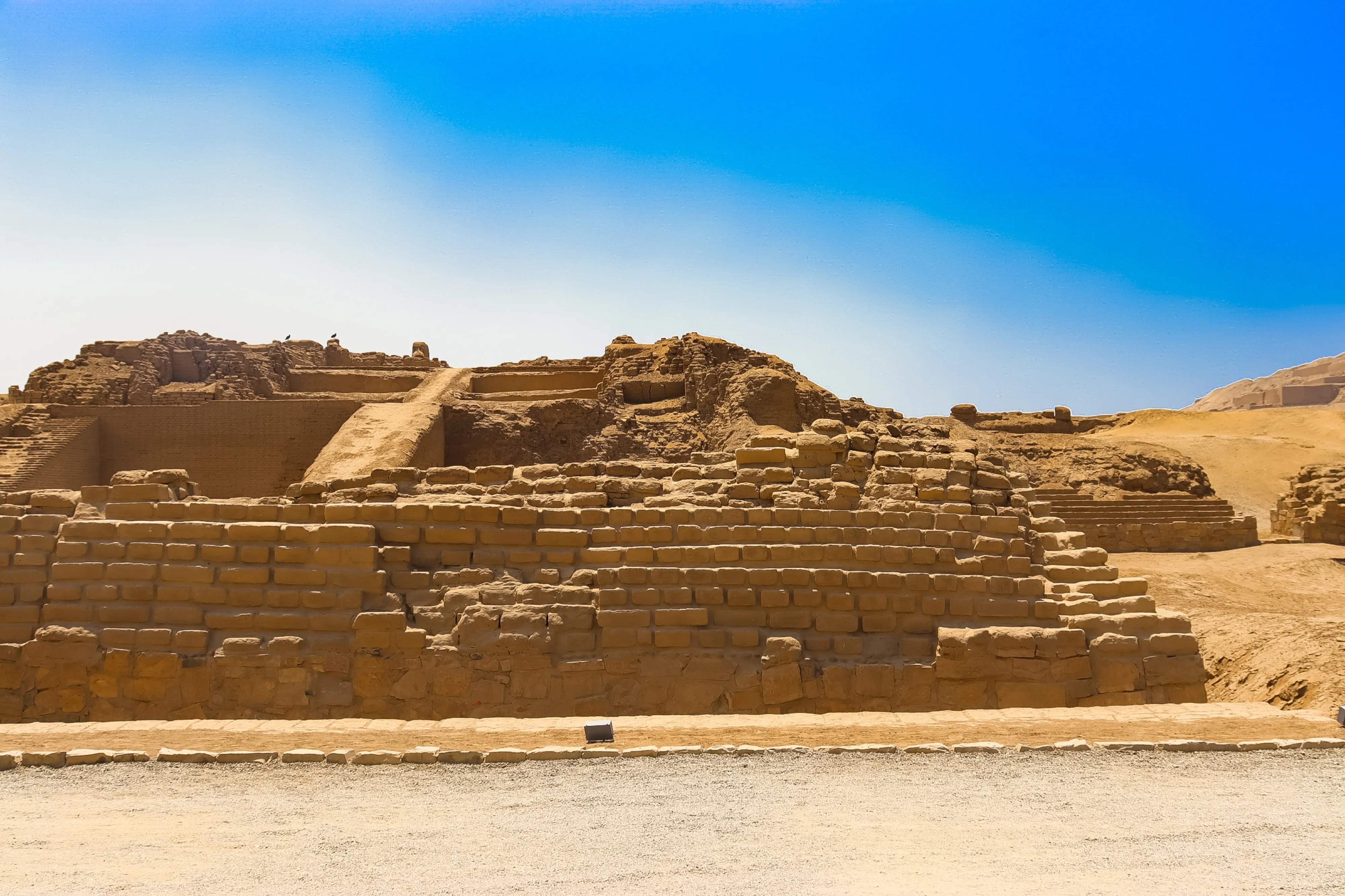
About thirty kilometres south of Lima, on the edge of the last green valley before the desert, lies Pachacamac: an active religious site for more than a thousand years before the Spanish arrived, and the most important oracle in the central Andes. Pilgrims came from as far north as Ecuador and as far south as Chile to consult the wooden figure of the god Pachacamac at the centre of the site. The Incas reached the coast in the fifteenth century and absorbed the older cult rather than replacing it, adding a Temple of the Sun and a House of the Chosen Women alongside the existing pyramids. A morning at Pachacamac, in chronological order from the earliest cultures up to the Inca additions, is the best preparation for the highland sites at Cusco and Machu Picchu.
A cuisine worth a day of its own
Peruvian food is one of the great cuisines of the world, and Lima is its capital. Three of its restaurants are ranked among the best in the world, but the soul of the cooking is in the markets and the dishes that everyone eats: ceviche, lomo saltado, causa, ají de gallina. A morning spent in a working market with a Peruvian chef, choosing ingredients and then cooking the dishes yourself, is one of the most direct ways into the culture.
The journey to Cusco
Cusco sits at 11,150 feet in the Peruvian Andes, and the altitude is something most visitors need to respect on arrival. The city was the capital of Tawantinsuyu, the Inca empire that stretched from present-day Colombia to central Chile, and the Spanish colonial city built on top of it has never fully disguised what lies beneath. Perfectly fitted Inca stonework still forms the foundations and lower walls of streets and buildings across the historic centre, set without mortar and undisturbed by five centuries of earthquakes.
The Sacred Valley, thirty kilometres north of Cusco at a gentler altitude of around 9,186 feet, was the agricultural heartland of the empire. Pisac and Ollantaytambo are the two major sites: Pisac for the sweeping terraced hillside above the Sunday market; Ollantaytambo for the best-preserved Inca town in Peru, its street grid still intact and inhabited, with a sun temple above it whose monolithic stone blocks were transported from a quarry across the valley.
Machu Picchu
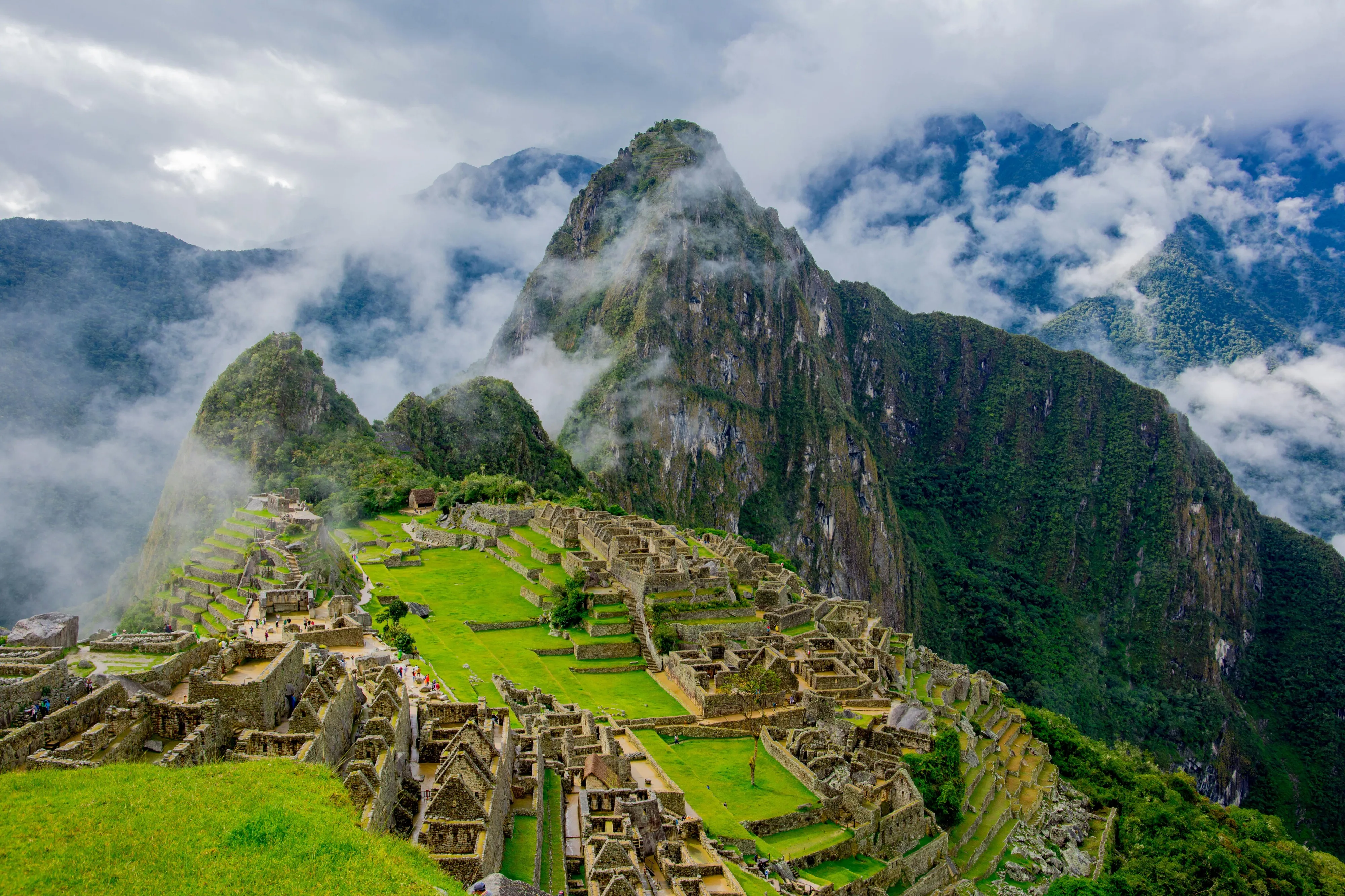
The citadel sits at 7,972 feet on a narrow ridge above a horseshoe bend in the Urubamba River, surrounded on three sides by forested slopes that drop a thousand metres to the river below. It was built in the mid-fifteenth century as a royal estate and abandoned within a century, which is why it survived largely intact. The approach by train from Ollantaytambo follows the river through a deepening canyon until the valley closes entirely. The site takes several hours to explore properly; the agricultural terraces, the Temple of the Three Windows, and the Intihuatana stone are the centres of gravity.
Entry to Machu Picchu must be booked well in advance. The site operates on timed entry circuits, and tickets sell out weeks ahead during high season. Tour bookings through Coromandel Tours include all ticket arrangements.
Practical notes
The seasons are in the panel above; two judgement calls are worth adding. The wet months are not a write-off, as Machu Picchu in morning mist can be atmospheric rather than disappointing. And if crowds matter to you, sidestep the Easter and Inti Raymi (June solstice) periods, when the highlands are at their busiest. The one piece of advice that is not negotiable is the altitude: give Cusco at least one full, gentle day before anything strenuous. We go into this in more detail in how to plan the first days so the height works for you rather than against you.
Know before you go
- Altitude
- Lima at sea level; Cusco 11,150 ft
- Climate
- Mild coast; cold, thin air in the Andes
- Best months
- May to October (driest, clearest)
- Altitude care
- Allow a full day in Cusco before exertion
- Known for
- Cuisine, colonial Lima, gateway to Machu Picchu
Let's plan your journey
Tell us what inspires you, and together we'll explore a journey that's just right for you.
No commitment required. We'll get back to you within 24 hours.