Colombia is one of the few countries that asks a traveller to recalibrate several times in a single trip. The Andes run down its spine, holding cool, high-altitude cities like Bogotá at over 8,600 feet. Drop to the Caribbean coast and the air turns tropical and salt-heavy around Cartagena’s walls. Between the two sits the coffee region and the eternal spring of the Medellín valley. The geography does the work that brochures usually claim to do: the contrast is real, and it is constant.
These five experiences were chosen to cover all three of those worlds. Bogotá supplies the cool, formal, museum-rich capital and a day trip into the salt mines beneath the savanna. Cartagena delivers the heat and the colonial Caribbean. Medellín offers the most quietly remarkable urban story in Latin America, and an easy reach into the lake country at Guatapé. They range from half-day walks to full-day expeditions, and from contemplative to physically demanding, on purpose.
This is not a ranking. None of these is better than the others, and a sensible first visit would not try to fit all five into one itinerary. Colombia changes quickly, rewards a slower pace, and tends to pull people back for a second trip. Treat what follows as a map of the moods on offer rather than a checklist.
1. Bogotá City Centre Walking Tour
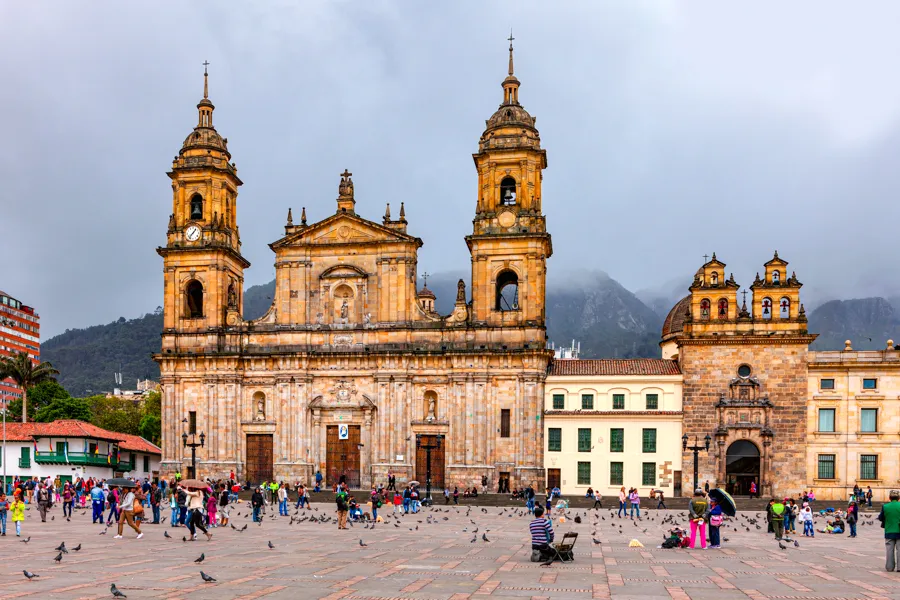 Plaza Bolívar, Bogotá: the colonial centre of the capital, flanked by the Cathedral, Congress, and the Supreme Court.
This is a 4.5-hour walk through La Candelaria, Bogotá’s oldest neighbourhood, founded in 1538. It is the most efficient way to read the capital, because everything that matters historically sits within a few cobblestone streets of itself. You begin in the narrow lanes around the Chorro de Quevedo, the spot traditionally held to be the birthplace of the city, pass through the funnel-shaped Calle del Embudo, and follow the Eje Ambiental, the Environmental Axis, which traces the buried course of the old Río San Francisco. Plaza Bolívar anchors the whole thing, with the Catedral Primada, the Capitolio Nacional, the Palacio de Justicia, and the Liévano Palace that houses the Mayor’s office standing on its four sides.
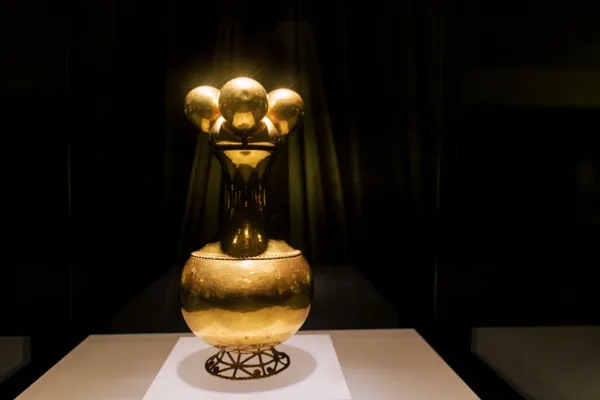 The 1,800-year-old Poporo Quimbaya at the Museo del Oro: the pièce de résistance of the world’s largest collection of pre-Columbian gold.
What lifts this tour above a simple orientation walk is its two museums. The Botero Museum holds the entire collection Fernando Botero donated to the country, including works he acquired by Picasso, Monet, Dalí, Degas, and Renoir, so it doubles as Bogotá’s window onto European modernism. The Museo del Oro, with more than 55,000 pieces, is the largest collection of pre-Columbian gold in the world, and the Muisca Raft displayed there is the object that gave rise to the legend of El Dorado. One honest caution on logistics: the Gold Museum closes on Mondays and the Botero Museum closes on Tuesdays, so the day you choose matters, and the cobblestones are genuinely uneven, which makes comfortable walking shoes less a suggestion than a requirement.
The full route and timings are set out on the Bogotá city tour page.
2. The Salt Cathedral at Zipaquirá
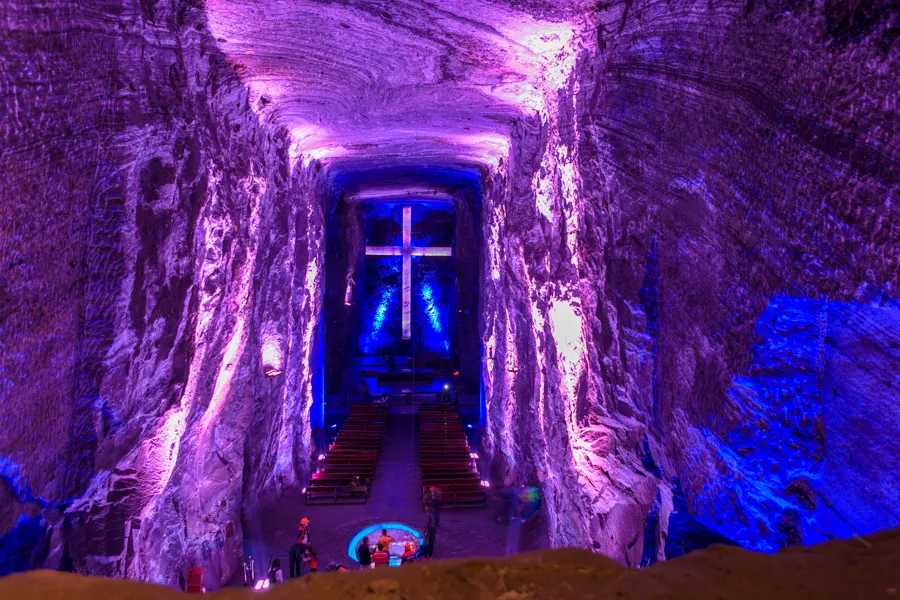 Inside the Salt Cathedral: a monumental cross carved from halite, 180 metres underground.
Forty kilometres north of Bogotá, about an hour’s drive, the savanna gives way to a full-day excursion of seven to eight hours built around something genuinely unusual. The Salt Cathedral is carved 180 metres underground into ancient halite mines that were sacred to the indigenous Muisca long before any church stood there. It is worth being clear about what it actually is: not a themed attraction with a religious name, but a fully functioning Roman Catholic church. The Stations of the Cross are rendered as salt sculptures through a sequence of LED-lit chambers, leading to the monumental cross hewn from the rock itself.
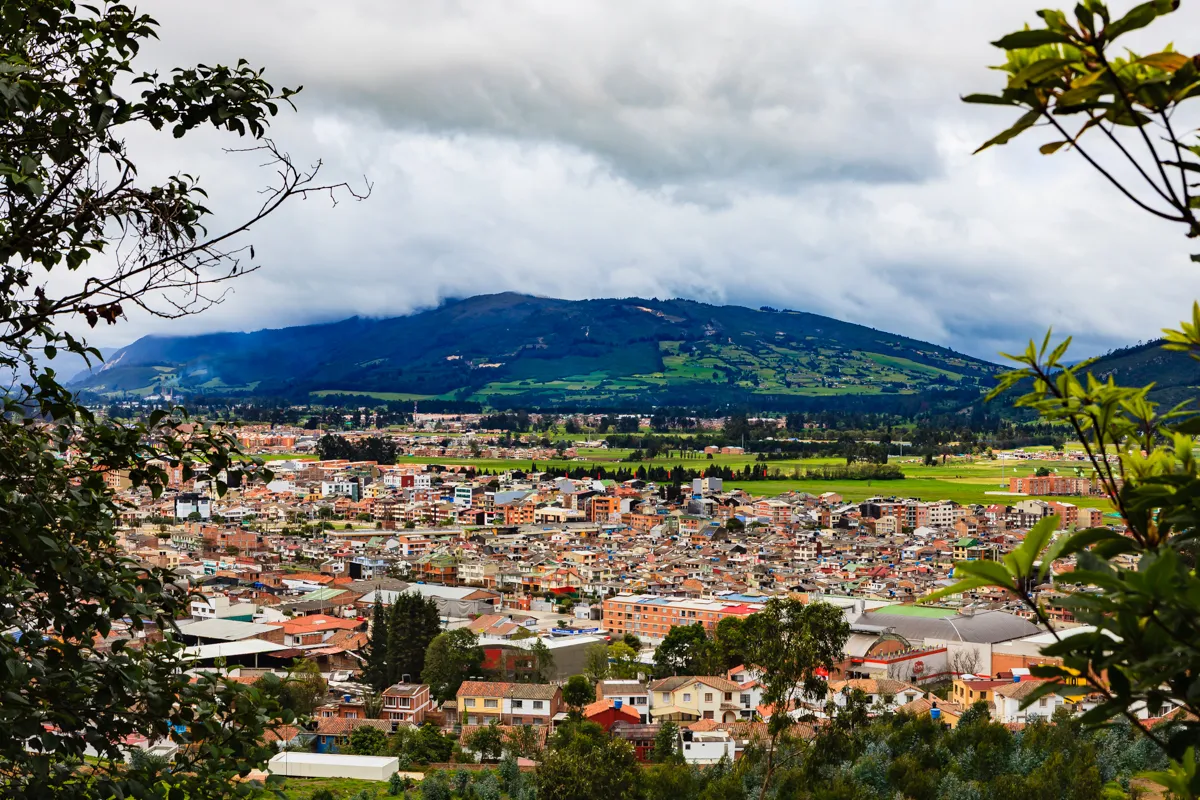 The colonial streets of Zipaquirá: whitewashed walls and terracotta rooftiles above ground, after the underground world below.
The day does not end at the mine entrance. The colonial town of Zipaquirá above ground is a pleasant counterweight, with its Plaza Mayor, the Cathedral of Our Lady of the Rosary, and artisan stalls, all whitewashed walls and terracotta tiles after the dark of the chambers below. The practical notes are simple but real: the temperature inside holds at around 14°C regardless of the weather outside, so bring a layer you can carry, and the cooler underground air surprises people who have just left a warm plaza. Hotel pickup and entry to the Salt Cathedral are both included in the price, which removes the usual friction of getting there independently. Details and departure arrangements are on the Salt Cathedral tour page.
3. Cartagena Walking Tour, the UNESCO Walled City
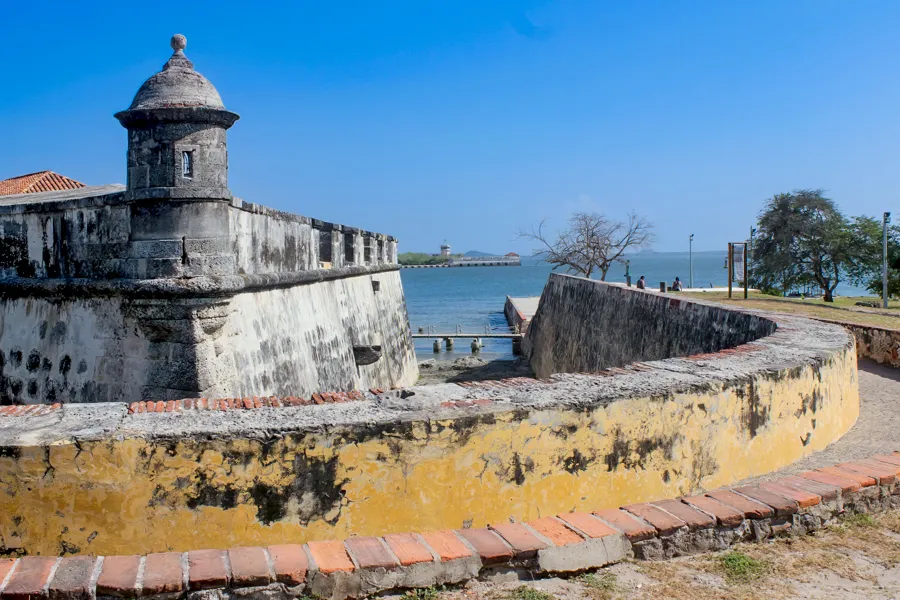
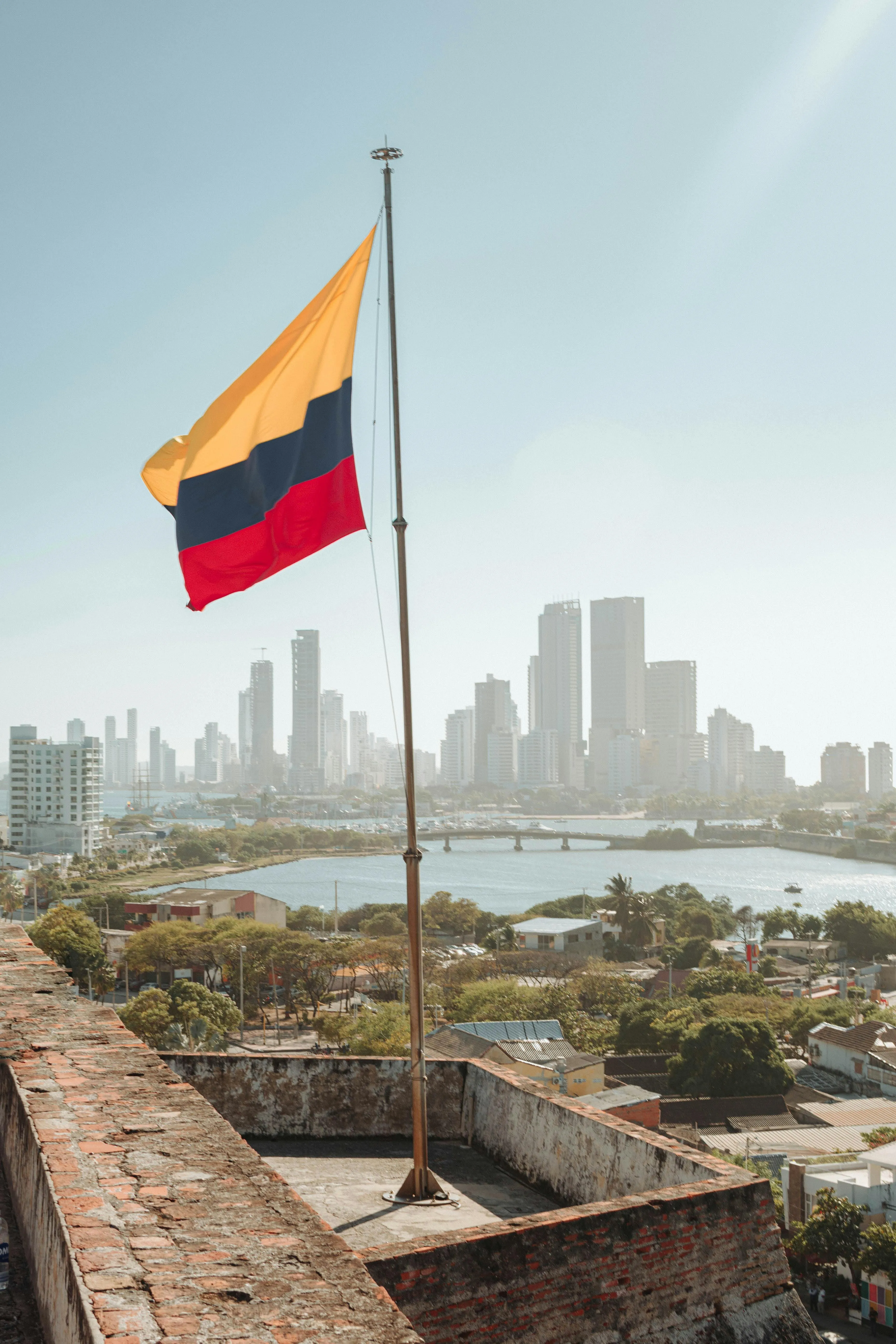 The walled city of Cartagena: 16th-century Spanish colonial architecture on the Caribbean coast.
This four-hour walk covers the UNESCO World Heritage walled city, and it is the clearest demonstration of why Cartagena belongs on any first Colombian itinerary. After the Andean cool, formality, and altitude of Bogotá, the city’s tropical heat and Caribbean colour land as a deliberate contrast rather than a mere change of scene. The route moves through El Centro, the historic heart, taking in the Palace of the Inquisition, the city’s own Plaza Bolívar, and the Cathedral of Cartagena, then crosses into Getsemaní, the bohemian neighbourhood where street art, colourful doors, and the daily life around Trinidad Square show a less manicured version of the old city.
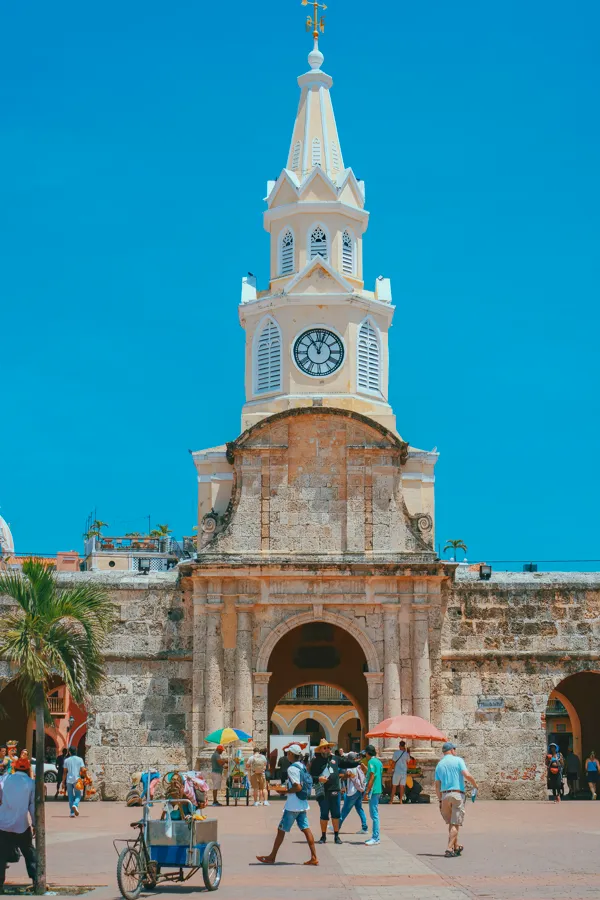 The Torre del Reloj, Cartagena: the main gateway into the walled city, and the starting point for the tour.
You begin at the Torre del Reloj, the clock tower gate that has been the main entrance to the walled city for centuries, and at some point climb the 16th-century ramparts, where the fortifications open onto panoramic views over the Caribbean Sea. The honest qualifier here concerns timing rather than the tour itself: Cartagena is a genuinely tropical city, and the afternoon heat can be punishing, so morning departures are strongly recommended and the difference in comfort is considerable. To see the full itinerary, visit the Cartagena walking tour page.
4. Medellín’s Transformation
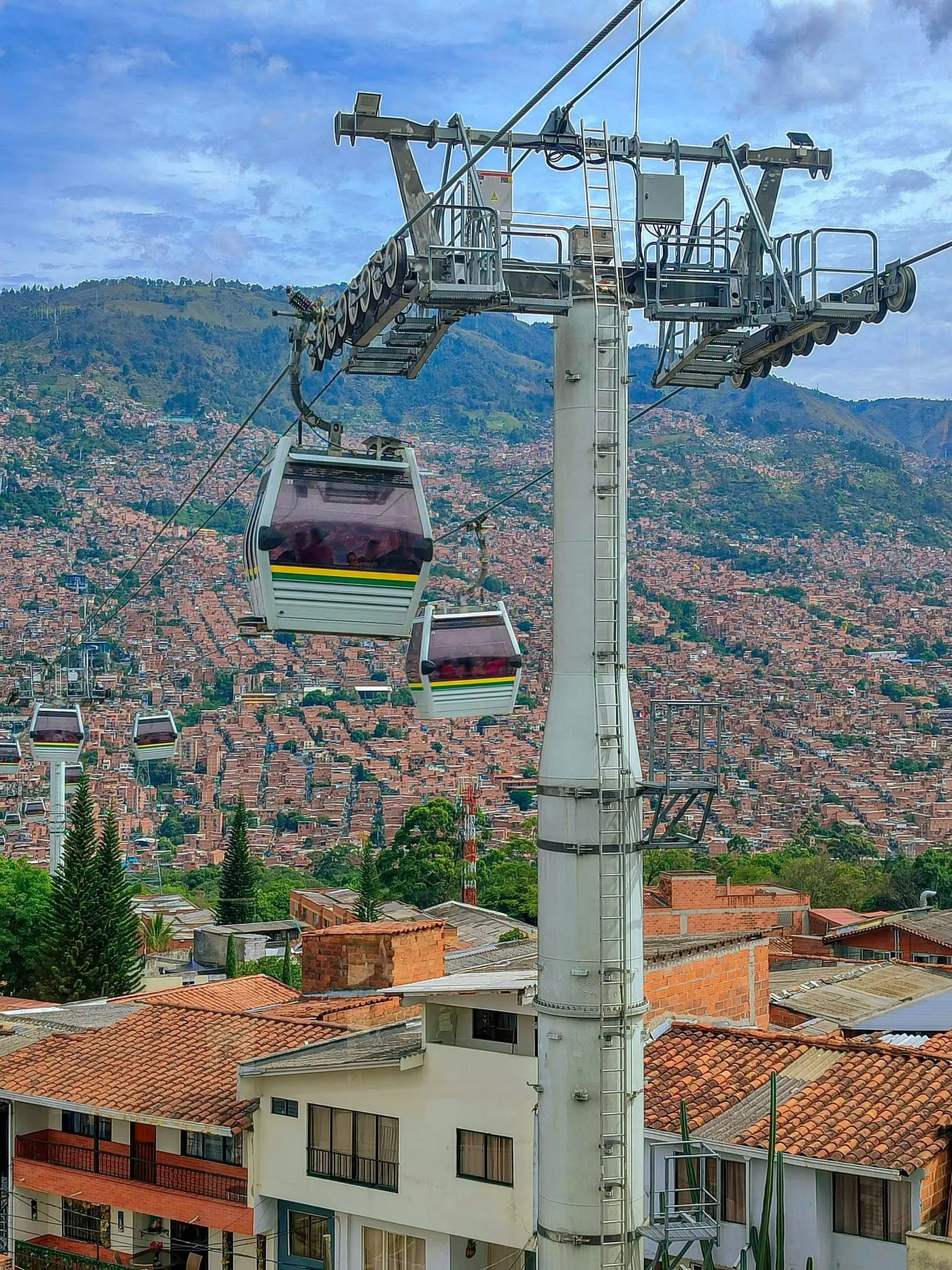 Medellín’s Metrocable: urban infrastructure that connected hillside comunas to the city below, and a symbol of the transformation.
The title given to this four-hour tour, “We Don’t Talk About Pablo”, is deliberate, and it sets the terms honestly from the outset. The subject is transformation, not glorification. It begins at the Museo Casa de la Memoria, whose interactive exhibits and recorded voices of victims trace the city’s long journey towards peace, and it grounds everything that follows in the real cost of the narcotics era rather than its mythology. This is the most compelling urban narrative in Latin America precisely because it refuses to be a thriller.
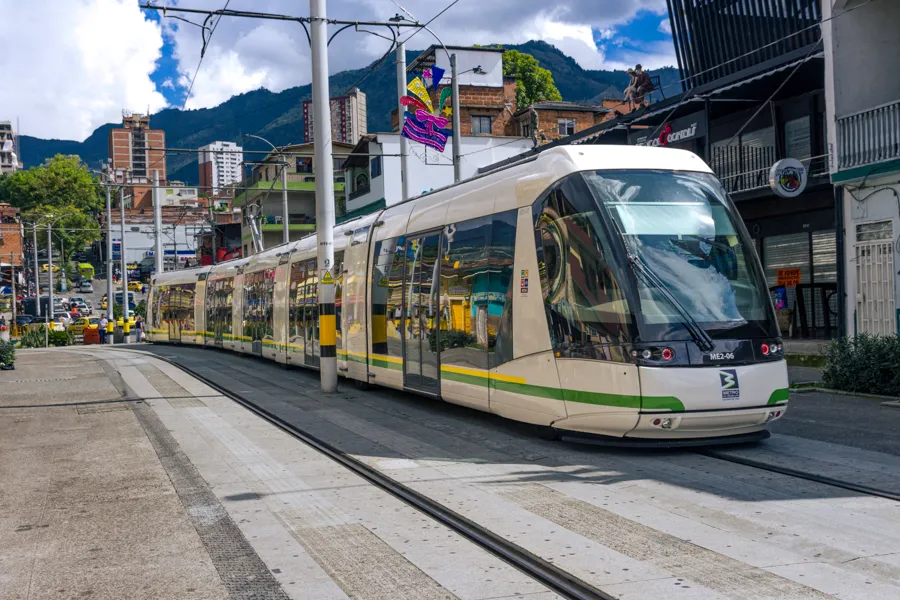 The Tranvía de Ayacucho: Medellín’s tram connecting historically marginalised neighbourhoods to the city centre.
The infrastructure is the argument. In Medellín the Metrocable is not a tourist ride but public transport, the line that connected hillside comunas previously cut off from the city below, much as the Tranvía de Ayacucho reconnected historically marginalised neighbourhoods to the centre. The walk also takes in Botero Plaza in El Centro, where 23 bronze sculptures stand as another of Fernando Botero’s gifts to a Colombian city. The honest note is the most important part of the description: anyone hoping for a Pablo Escobar tour will not find one here, and that is the point. This is a tour about what the era did to Medellín’s communities and how the city rebuilt itself. The full background is on the Medellín transformation tour page.
5. Guatapé and El Peñol
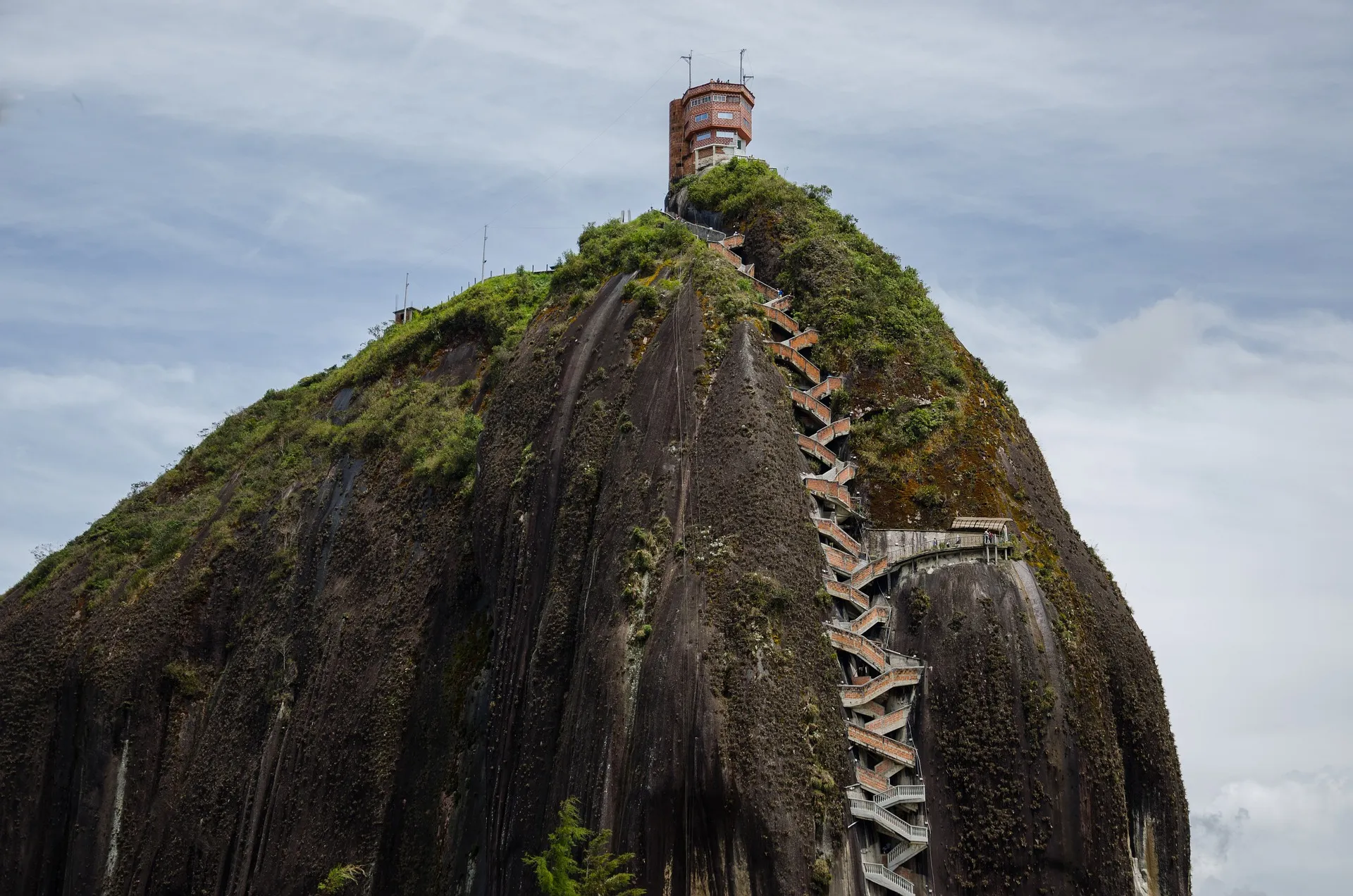 El Peñol rising from the Peñol-Guatapé reservoir: one of Colombia’s most striking landscapes.
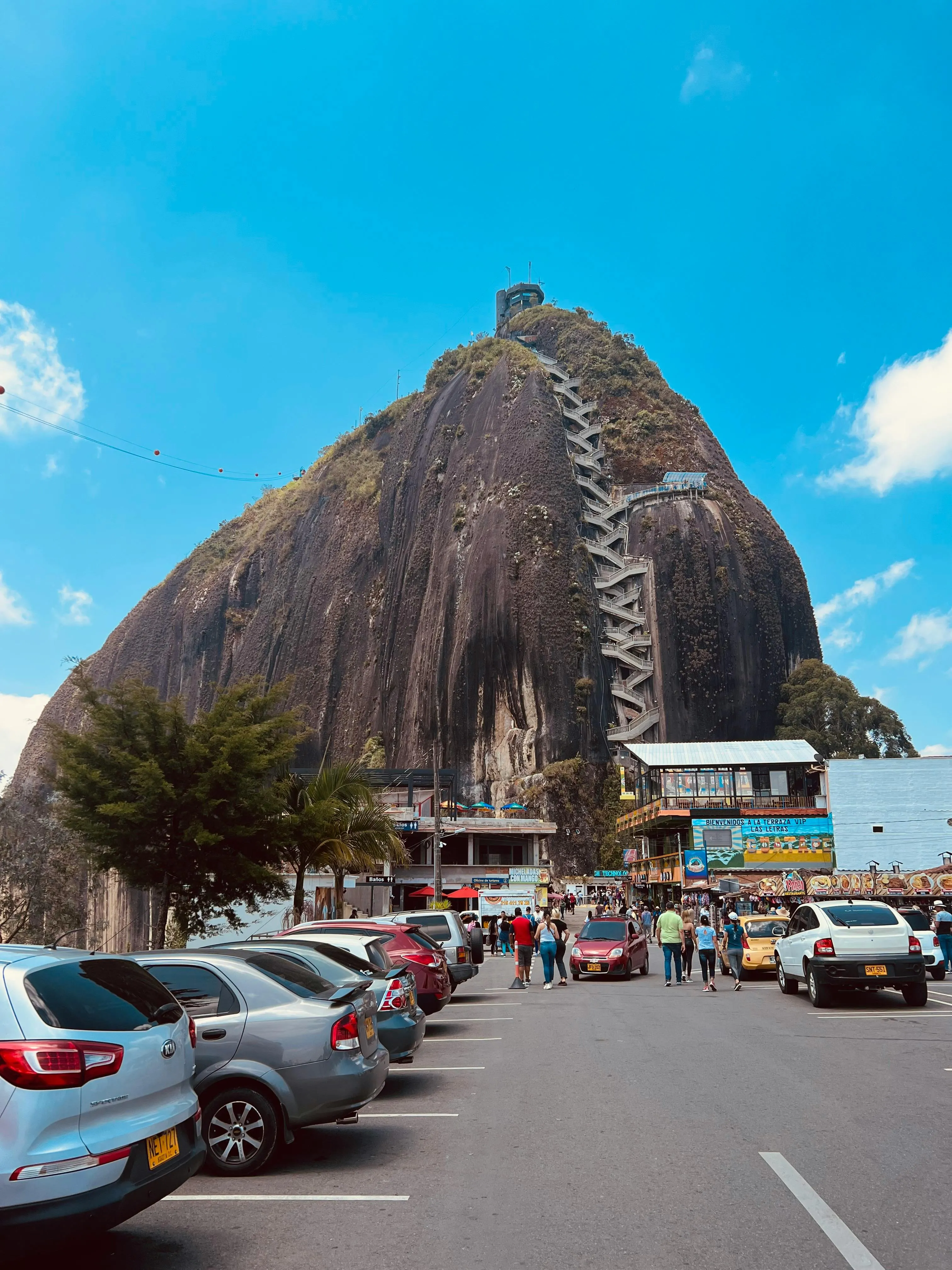
This is the most demanding day on the list, a full nine to ten hours with an early 7:00 AM start and a drive of an hour and a half to two hours from Medellín. The centrepiece is El Peñol, the Piedra de Guatapé, a granite monolith that rises straight out of a vast reservoir. A staircase of 740 steps is built into a natural crack in the rock, and at the summit the reward is a 360-degree view over the water and its more than 200 islands, a landscape unlike anything else in the country.
 Guatapé’s zócalos: hand-painted bas-relief panels decorating the lower facade of every building in town.
It is worth being plain about the climb. The 740 steps are narrow and steep, a moderate level of fitness is genuinely required, and the ascent is not recommended for anyone with serious heart or mobility conditions. Those who would rather stay at ground level still have a full day, because the nearby town of Guatapé is among the most distinctive in Colombia: every building wears zócalos, hand-painted bas-relief panels along its lower facade, each one depicting a different subject, and there is an optional boat trip out among the islands on the reservoir. Hotel pickup from Medellín is included. The complete itinerary is set out on the Guatapé and El Peñol tour page.
Colombia rewards the curious traveller more reliably than it rewards the box-ticker. The distance between Bogotá’s museum halls, Cartagena’s ramparts, and Medellín’s cable cars is not just geographical: each city has arrived at the present by a different route, and moving between them is itself a kind of education in how varied one country can be.
That curiosity is worth following past the obvious list. Cartagena can be covered end to end on two wheels rather than one quarter of it on foot. A community dance academy in Medellín’s Manrique opens its floor for an afternoon of salsa and tango that is a genuine social project rather than a show. And in El Poblado, a morning with a working designer shows how Colombia’s fashion capital is remaking itself around ethics and craft. None of the three is a headline sight, and each tells you more about its city than a headline sight would.
None of this needs to happen in a single visit, and most of it is better savoured than rushed. The full range of itineraries, durations, and departure points is gathered on our Colombia tours page, and it is a reasonable place to start shaping a first trip, or a second.

Written by
Mano Chandra Dhas ›Founder of Coromandel Tours. In travel since 1975, from Singapore Airlines to Emirates and Carlson Wagonlit, he now curates private journeys through Colombia, Peru, India, and Nepal from his home in Bogotá. Many of the photographs on this site are his.