Bogotá is the city most Colombian itineraries treat as a door. You land, you sleep, and by mid-morning you are on a flight to Cartagena, having seen the capital through a taxi window. It is an understandable instinct, the coast is calling, and it is a mistake. Bogotá is where Coromandel Tours is based, it is the city we know best of any we work in, and our advice is the same one we give for every city worth visiting: three nights is the minimum that does it justice, and four is better.
We have made the general case for travelling this way before. This is what the argument looks like when it is applied to one specific city, day by day.
Day One: Arrive Gently, Then the Colonial Centre
The first thing to know about Bogotá is its altitude. The city sits at 8,660 feet, and the thinner air is the first thing most visitors notice: the light is sharper, the stairs are steeper than they look, and the sensible response is to take the first day slowly, walk at half speed, and drink more water than feels necessary. This is not a warning so much as a design principle. The trip goes better when the first day is planned around acclimatising rather than in spite of it.
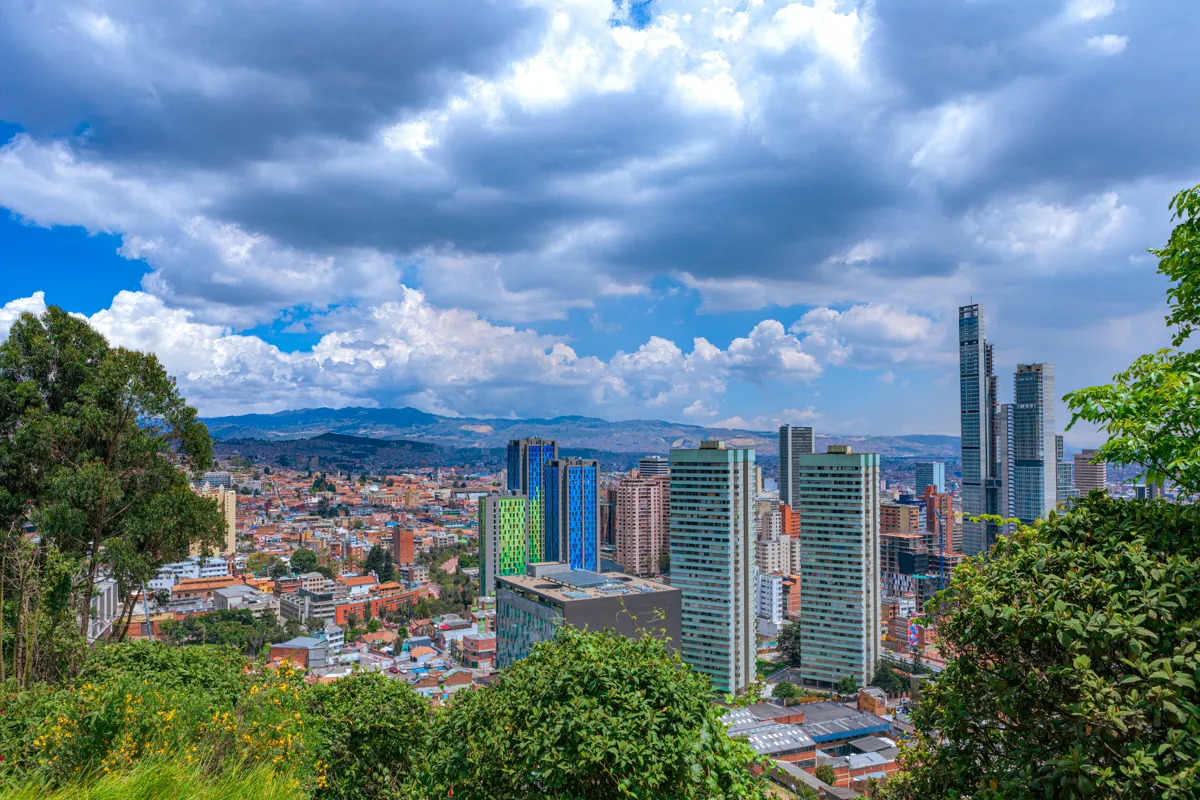 Bogotá from the slopes of Monserrate. Close to ten million people live on the high plateau, at 8,660 feet.
Fortunately, the best introduction to the city is also the gentlest. La Candelaria, the colonial quarter founded in 1538, is compact enough to cover on foot at a stroll. A guided walk through the city centre takes about four and a half hours and threads together the Chorro de Quevedo, where the city is traditionally held to have been born, Plaza Bolívar with the cathedral and the Capitol on its flanks, and the two museums that would each justify the day on their own: the Museo del Oro, the largest collection of pre-Columbian gold in the world, and the Botero Museum, where the artist’s donated collection puts Picasso, Monet, and Dalí in a restored colonial house in the middle of the old town. Walking Through Time goes deeper into what these same cobbled streets hold, for anyone who would rather linger than move through on a schedule.
One planning note that shows why the order of your days matters: the Gold Museum closes on Mondays and the Botero Museum closes on Tuesdays. Which day becomes day one is exactly the kind of small decision that a well-built itinerary quietly gets right.
Day Two: The View From Above, Then Colonial Charm
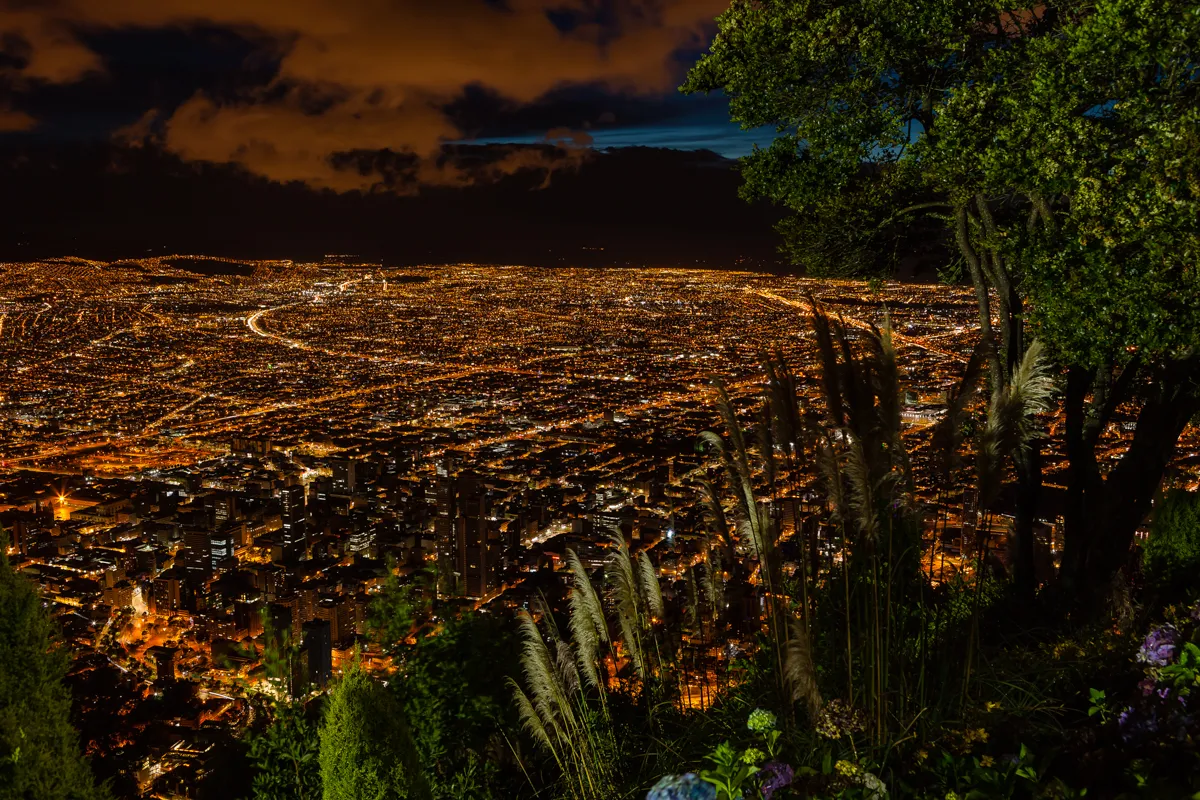
With a day of altitude behind you, Monserrate is the natural second morning. The hill rises to 10,341 feet on the eastern edge of the city, topped by a 17th-century sanctuary that has been a pilgrimage site for centuries, and the cable car does the climbing for you. From the summit the city stretches to the horizon in every direction, and the view carries a surprising piece of deep history: the vast plateau below was once the bed of an ancient lake, which is why a capital of close to ten million people has room to sprawl so flatly across the Andes.
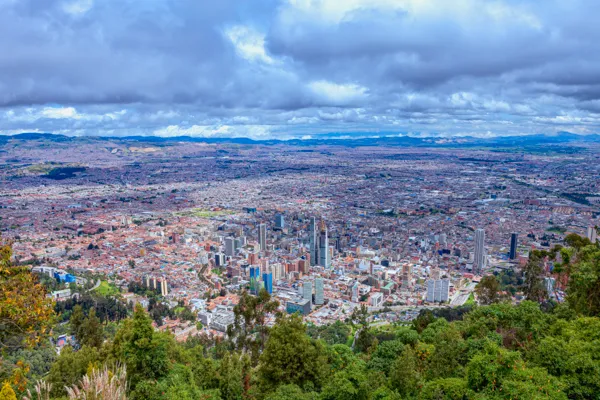 The view from Monserrate, at 10,341 feet. On a clear day the city runs to the horizon.
Mano’s advice, printed on the Monserrate and Usaquén tour page and earned through many ascents: board the cable car on the side away from the mountain, and the whole city unrolls beneath you on the way up. And if low cloud sits over the summit when you arrive, have a Colombian coffee in one of the restaurants at the top and look again in half an hour; the clouds usually move.
The afternoon belongs to Usaquén, once a separate colonial town and now the city’s most charming neighbourhood, where cobblestone streets and the 17th-century church of Santa Bárbara share space with some of Bogotá’s best restaurants and cafés. On Sundays the famous flea market fills the streets around the plaza, with one caveat worth planning around: Sunday is the day to see Usaquén at its liveliest, but it is also the day Monserrate is most crowded with pilgrims, so if your visit falls on a weekend, the two halves of this day are better split across different days. It is, again, the kind of detail that decides whether a day feels effortless or hard won.
Day Three: Into the Highlands
Bogotá’s third day belongs outside the city, and there are two directions worth driving in.
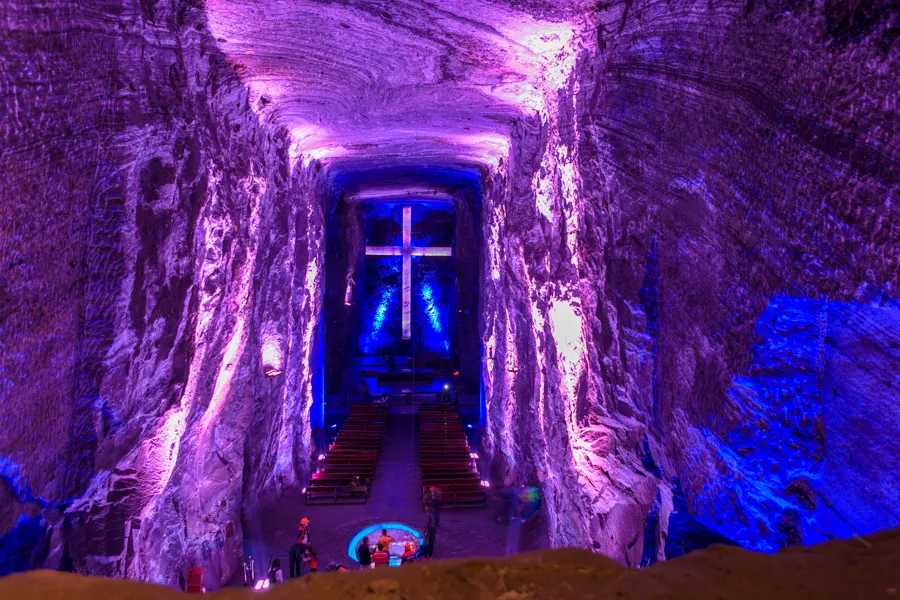 The Salt Cathedral at Zipaquirá: a working church carved 660 feet underground into an ancient salt mine.
The first is Zipaquirá, about an hour north across the savanna, where the Salt Cathedral is carved 660 feet underground into salt mines the indigenous Muisca worked long before any church stood there. It is a fully functioning place of worship rather than a themed attraction, and the descent past the Stations of the Cross to the great cross hewn from the rock is genuinely unlike anything else in Colombia. The colonial town above ground, whitewashed and terracotta-roofed, makes a pleasant counterweight to the chambers below, and the whole excursion runs seven to eight hours door to door. Zipaquirá Day Trip sets out how the day works in full, including the option of the old tourist railway from Usaquén.
The second, more ambitious option is Villa de Leyva, around three and a quarter hours north in the Boyacá highlands: a national heritage town founded in 1572, whose Plaza Mayor, 120 metres on each side, is among the largest colonial squares in the Americas. The town has barely changed in four centuries, the surrounding semi-desert holds the blue mineral pools of the Pozos Azules and the fossil of a 120-million-year-old Kronosaurus, and the whole region sits in a warmer, drier climate than the capital.
The Case for the Fourth Day
Here is where the arithmetic of the three-day visit starts to argue for a fourth. Villa de Leyva can be done as a day trip, but the driving comes to well over six hours of the day, and Mano’s published advice on the matter is unambiguous: stay overnight if you possibly can. The town changes character in the evening when the day visitors leave, and a second day opens up the house museums, the Muisca astronomical site the Spanish named El Infiernito, and the 17th-century Convento del Ecce Homo, whose cloister stones are studded with ammonites. A fourth day is also where Guatavita becomes worth considering, the sacred lake behind the legend of El Dorado, a little further along the same highland roads north of the capital.
So the honest shape of the choice is this. Three days gives you the capital properly: the colonial centre and its museums, Monserrate and Usaquén, and one highland excursion. Four days lets you sleep in Villa de Leyva and come back without hurrying, or simply gives Bogotá itself the unstructured afternoon that every good city visit needs. Either way, the city rewards the traveller who resists treating it as a connection.
Practicalities are brief. Bogotá is cool year round, averaging around 14.5°C, and it rains on roughly half the days of the year, so a warm layer and a light rain jacket earn their place in any month; December to March is the driest stretch. All of it, weather, altitude, museum closures, and the Sunday question, is set out on our Bogotá city page. If you are deciding where to go once the capital has had its days, or simply want to tell us what you have in mind, we will tell you honestly how the rest of the country fits together.

Written by
Mano Chandra Dhas ›Founder of Coromandel Tours. In travel since 1975, from Singapore Airlines to Emirates and Carlson Wagonlit, he now curates private journeys through Colombia, Peru, India, and Nepal from his home in Bogotá. Many of the photographs on this site are his.