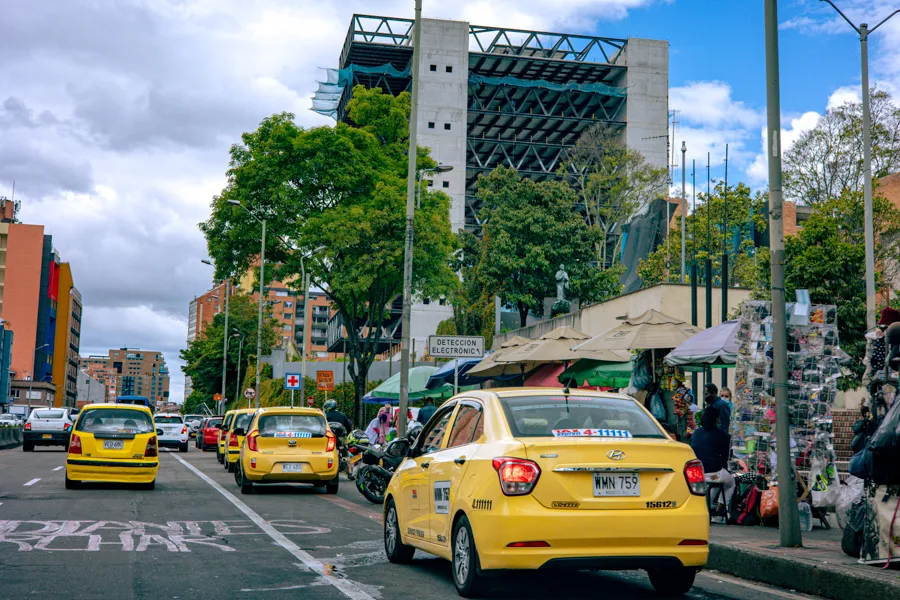
Suppose you have taken our advice and given Bogotá the three or four days it deserves. The colonial centre, Monserrate, a day in the highlands, and an unhurried afternoon or two. The natural next question is where to go from there, and the natural instinct is to reach for a longer list of cities. Colombia rewards the opposite instinct. It is a big country of real distances and dramatic changes in altitude, and a trip that tries to touch six places ends up seeing none of them. The better approach is to think in hubs, and there are three we build most Colombian journeys around. For a shortlist of the specific tours that fill those days, see our picks for first-time visitors.
We have made the general case for slow travel elsewhere. What follows is how that principle shapes a single country, and how the pieces fit into ten days to a fortnight without any of them feeling rushed.
Cartagena: The Caribbean and the Walled City
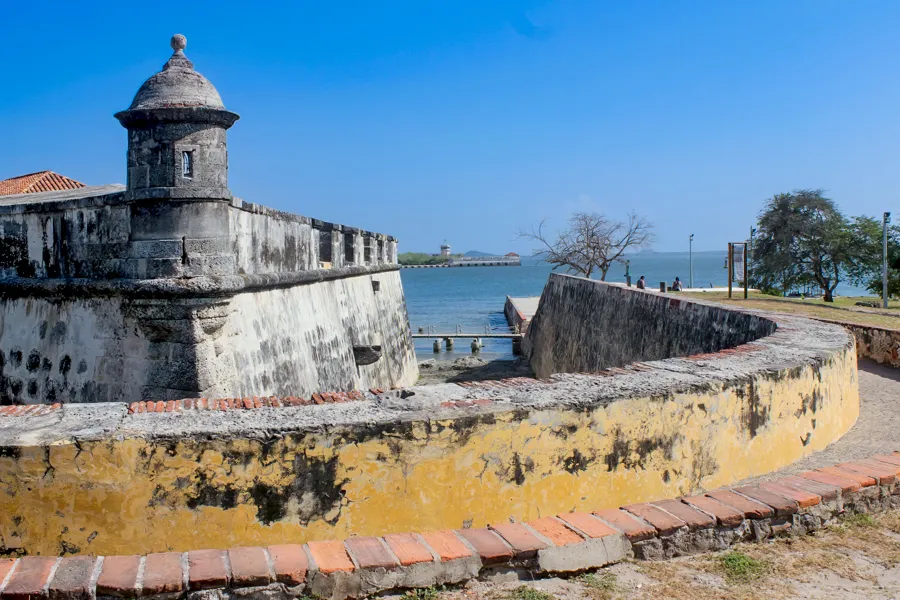
If Bogotá is Colombia at altitude, cool and Andean, Cartagena is its opposite in every register. It sits on the Caribbean coast at sea level, hot and humid the year round, and its walled old city is among the finest colonial quarters in the Americas, a UNESCO World Heritage Site since 1984. Inside the walls, the streets are a tangle of bougainvillea-draped balconies, ochre and cobalt façades, and small plazas that come alive after the heat of the day has broken. Just outside them, the fortress of San Felipe de Barajas still guards the approach it was built to defend, and the adjacent neighbourhood of Getsemaní has become the city’s most characterful quarter without losing its working roots.
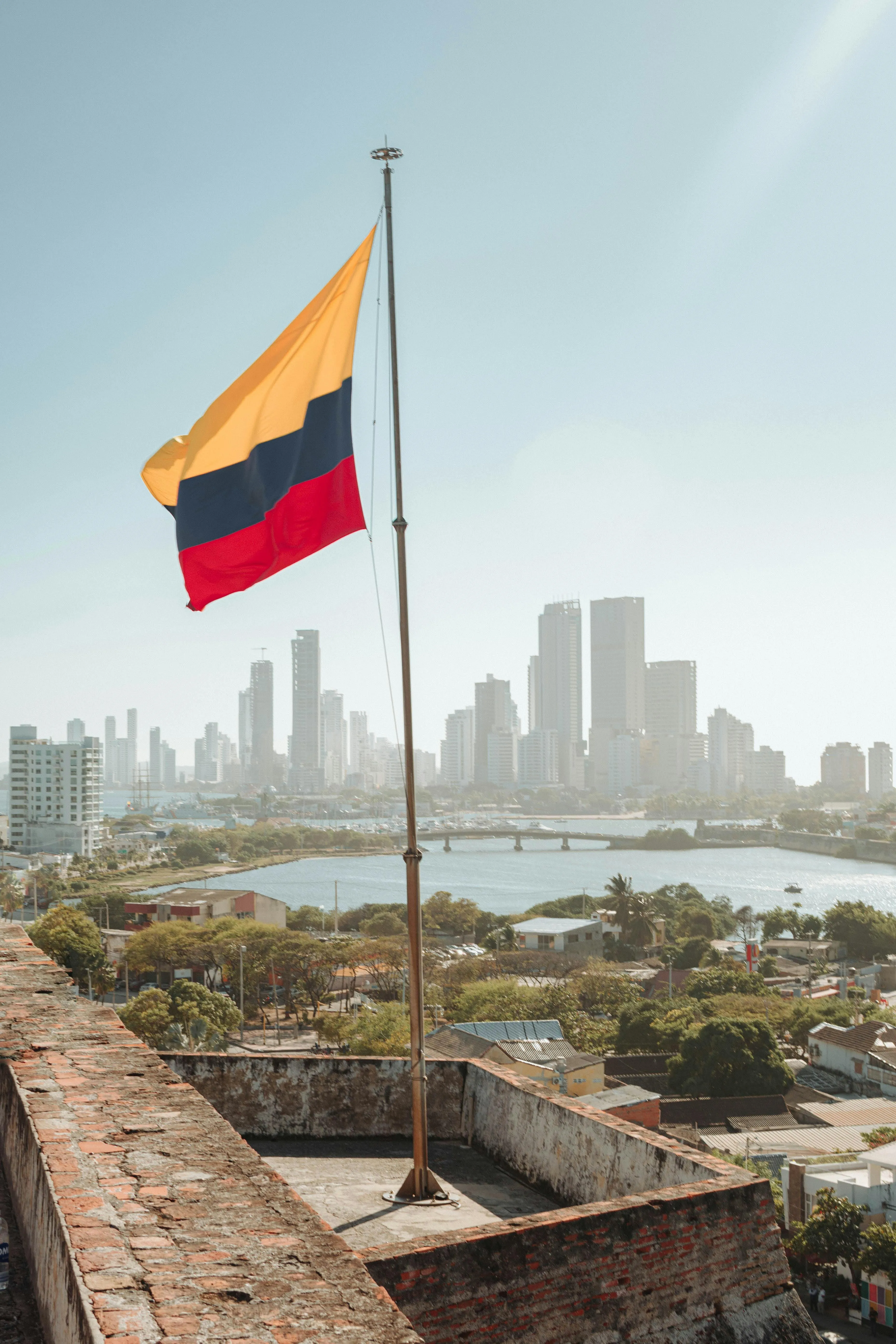 Inside Cartagena’s walled city. The old town is best walked in the early morning or the cool of the evening.
The flight from Bogotá takes only an hour and a half, which is the first argument for flying rather than driving between Colombian cities, and the change on landing is total. Cartagena asks to be taken slowly, in the mornings and evenings, with the hot middle of the day spent somewhere shaded or by the water. Two or three nights is the right measure, enough to walk the walls at sunset, spend a proper morning inside the old town, and still have time for the coast. Our Cartagena walking tours are built around that rhythm rather than against it. If you would rather take in the whole shape of the city than one quarter of it on foot, seeing Cartagena by bike reaches from Bocagrande to Getsemaní and the fort out on Manga in a single flat, unhurried morning.
Medellín: Reinvention, Cable Cars, and the Coffee Country
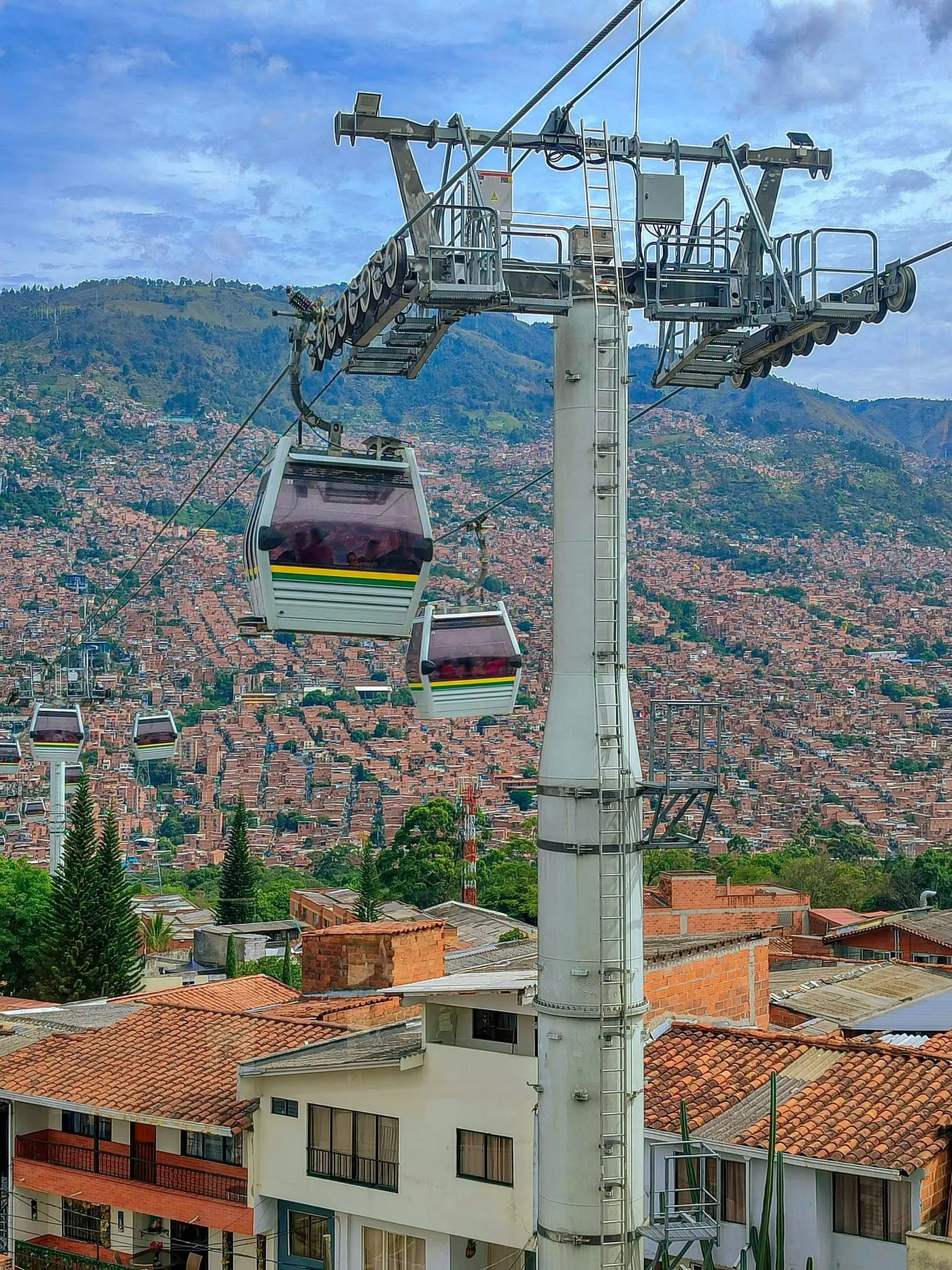
Medellín is the story most travellers know a little of and understand less. Thirty years ago it was a byword for a particular kind of violence; today it is one of the most quietly impressive urban turnarounds anywhere, a city that used public transport, libraries, and design to reach the hillside neighbourhoods that had been cut off from it. The Metrocable, a network of gondolas woven into the metro system, was built to carry residents up the steep valley sides, and riding it is both the best view of the city and the clearest lesson in how it changed. Medellín sits at around 4,900 feet in the Aburrá Valley, high enough for a spring-like climate that has earned it the name the City of Eternal Spring, and warm without Cartagena’s heat.
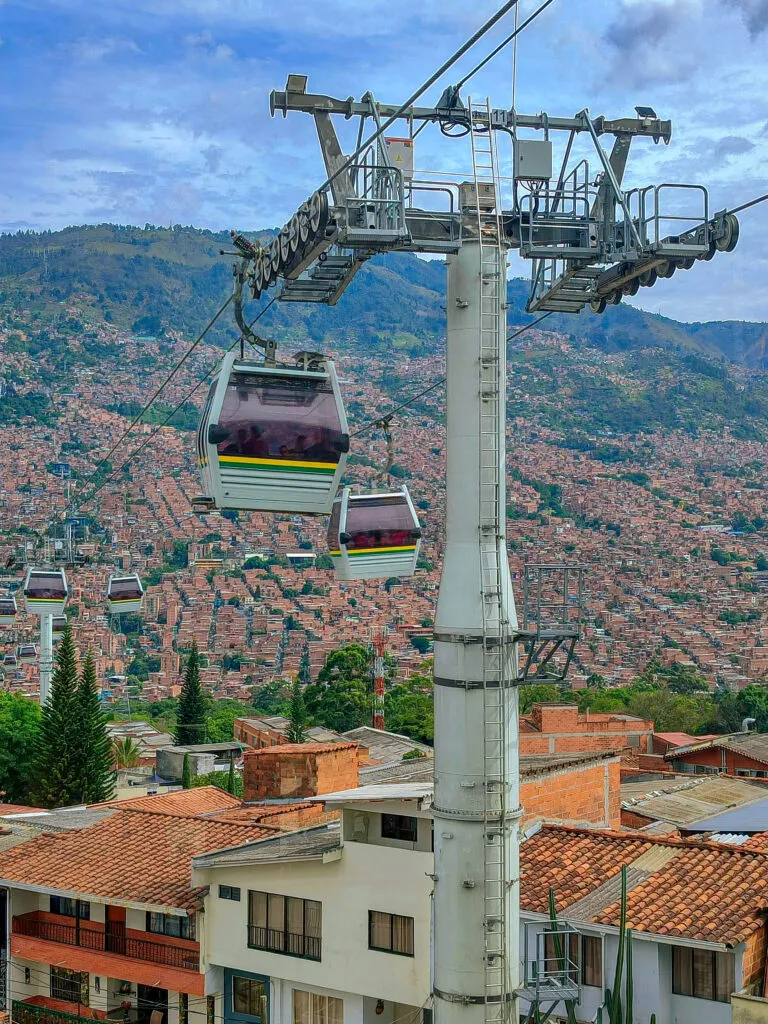 Medellín’s Metrocable, built to connect the hillside neighbourhoods to the city below.
Medellín is also the natural base for two of Colombia’s most rewarding day trips. Guatapé and the great rock of El Peñol lie a couple of hours east, where a monolith of seven hundred and some steps looks out over a maze of blue reservoirs, and the town below is painted with the coloured relief panels, the zócalos, that decorate its houses. And this is coffee country: the hills of Antioquia are dense with the farms that made Colombian coffee famous, and a morning on a working plantation, walking the rows and following the bean from cherry to cup, is one of the most grounded things you can do in the region. Two or three nights in Medellín gives you the city and one of these excursions comfortably; three lets you do both.
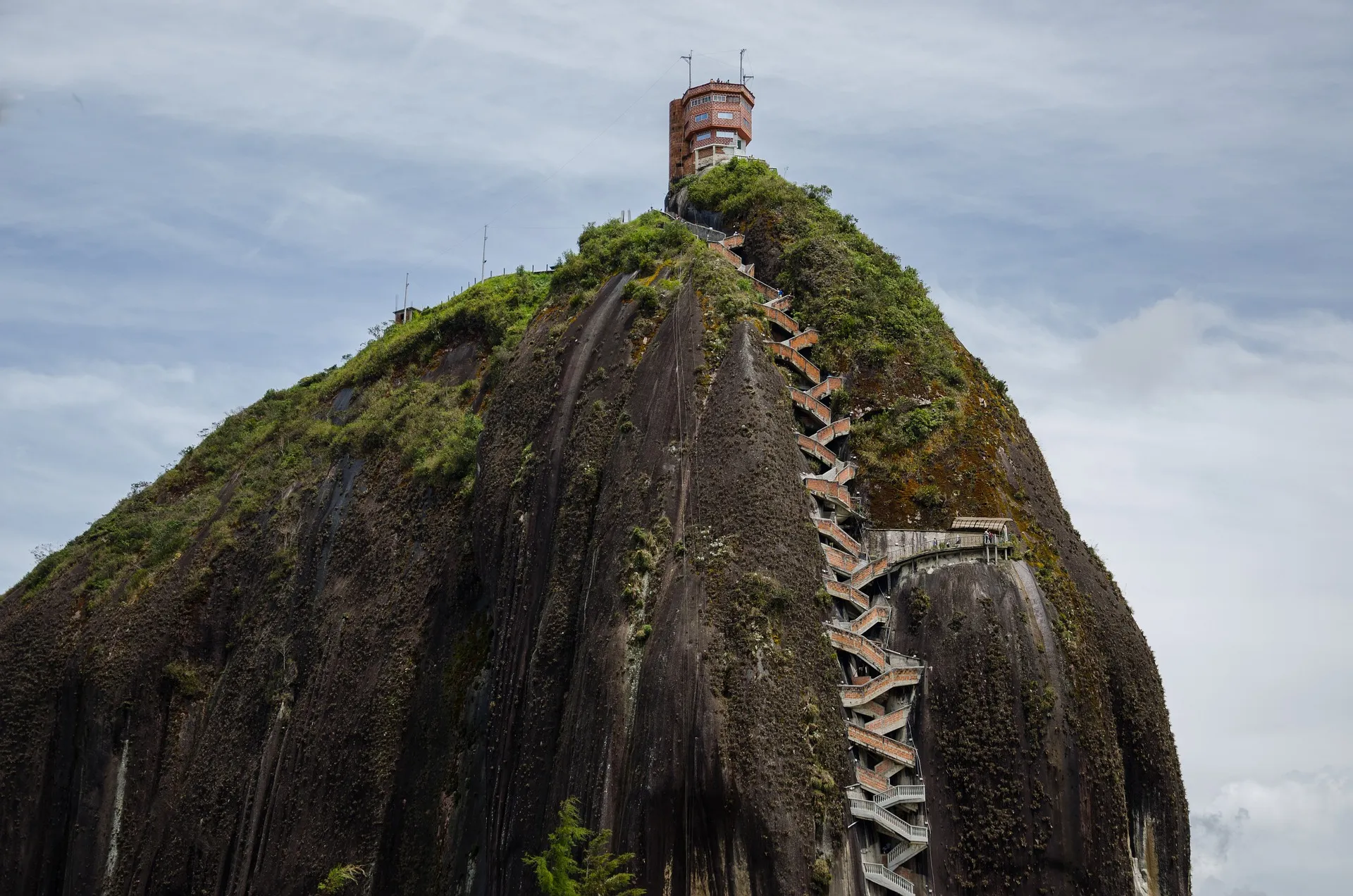 El Peñol and the reservoirs of Guatapé, a day trip east of Medellín.
The city itself rewards more than a ride on the cable car. In the hillside barrio of Manrique, a community dance academy opens its floor to visitors for an afternoon of salsa and tango that is a working social project rather than a performance staged for tourists. And in El Poblado, Colombia’s fashion capital is quietly rebuilding itself around ethics and craft, which a morning walking the district with a local designer explains far better than any shop window.
How to Put the Three Together
The three cities are close by air and far apart in every other way, which is the single most useful thing to understand when planning. Nearly every hop between them is a flight of an hour or a little more, and the roads, while scenic, climb and wind through mountains for the better part of a day. Flying is not a luxury here so much as the sensible default, and it is what lets a trip of ten to fourteen days feel spacious rather than spent in transit.
The order matters too, and altitude is the reason. Bogotá at 8,660 feet is the highest of the three, and it makes sense to begin there, when the thinner air is easiest to plan around, before descending. A common and comfortable shape is Bogotá first, then Medellín’s mild middle register, and Cartagena’s coast last, so the trip finishes on the Caribbean rather than climbing back up to it. It is not the only order that works, but it is the one that asks the least of you.
What we would gently steer you away from is trying to add a fourth and fifth axis, the Amazon, the Tayrona coast, the coffee triangle proper, onto the same two weeks. Each of them is worth a trip of its own, and folding them in turns a well-paced fortnight into a scramble of airports. The honest arithmetic is that three hubs, given three to four nights each, is a full and satisfying fortnight in Colombia, and a fortnight is what most of these journeys want.
The Practical Shape
Pack for three climates rather than one, because you will move through them. Bogotá is cool and often wet, so a warm layer and a light rain jacket earn their place; Medellín is mild and forgiving; Cartagena is hot and humid, and lighter clothing and a sun hat matter more there than anywhere. Domestic flights should be booked as part of the whole rather than piecemeal, since the sequence and the timings decide how the days actually feel.
All of this, the routing, the number of nights, and how the coast and the coffee country fit around the cities, is the sort of thing we work out with you rather than hand you as a fixed template. If you have a rough number of days and a sense of what draws you, tell us what you have in mind and we will tell you honestly how far it stretches.

Written by
Mano Chandra Dhas ›Founder of Coromandel Tours. In travel since 1975, from Singapore Airlines to Emirates and Carlson Wagonlit, he now curates private journeys through Colombia, Peru, India, and Nepal from his home in Bogotá. Many of the photographs on this site are his.