Let me take you to my most favourite city in the world: Rome. Where 2,700 years of vintage history is blended with the mundane cocktail of everyday life of the 21st Century. Here is the Best of Rome in 6 short days, a specially curated itinerary.
Given two weeks, you can hardly do justice to the City; most tourists try to give it four days before they move on. This is a 5-nights/6-days itinerary. Of course, you will find tons of information on Rome, in every language of the world; but, let me show you the City, my way - Rome in six days.
When to Visit And Get The Best Of Rome – Winter Spring Summer or Fall?
Rome is good to visit almost any time of the year. August, however, is not the month for Italy. The weather is hot, and virtually everyone and his dog, has gone on holiday. It is not uncommon for restaurants and even small hotels to be closed in August. The Roman winter is usually mild (except, in an unusual year like 1985 when it snowed for the first time in 26 years). I prefer the cooler months.
Where To Stay in Rome The Eternal City, For 6 Days
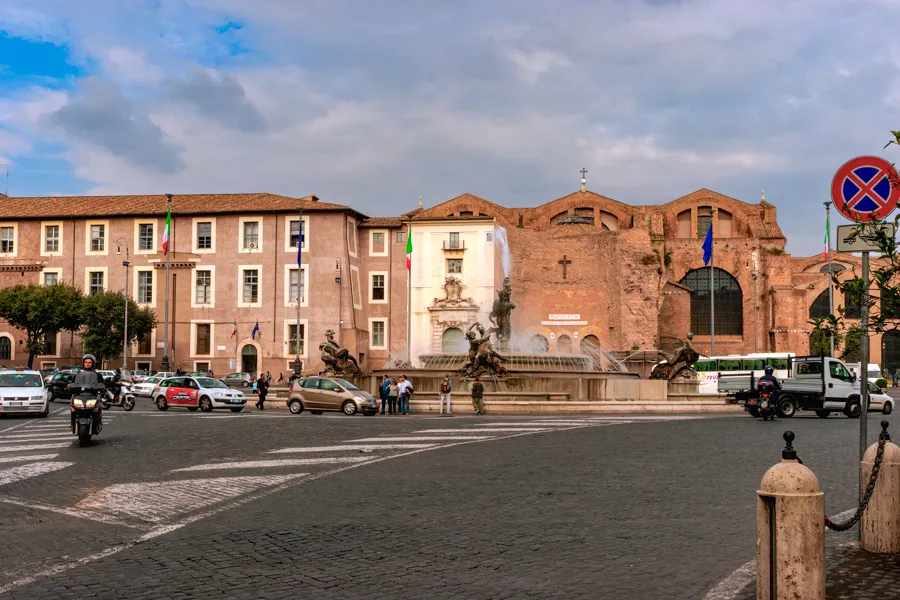 Piazza della Repubblica viewed from Via Nazionale
I would recommend staying in Central Rome from where all the historical sites are easily accessible. Often within walking distance. It will save you time and money. Rome has thousands of hotels of all categories. Central Rome is no exception. I would suggest staying on Via Nazionale, or its vicinity.
The location is convenient. It is just a short walk to the Piazza della Repubblica Metro underground station. Travelling on the Metro is easy, and many interesting sites are just walking distance from Metro stations. Do please note that apart from vending machines, Metro tickets are available at any tobacconist. Look out for the Tabacchi sign with the big ‘T’.
A hotel with a lot of old-world charm, on Via Nazionale, is the Hotel Quirinale. It was built in 1865 and is named after the Quirinal Hill: one of the original seven hills Rome was built on. For Opera buffs, the Quirinale has its own private entrance to the Opera.
Another of my favourite hotels is the Hotel Forum Roma. The structure is an 18th Century Monastery that was converted into a Hotel. Some rooms can be small with hardly a view. You must bear in mind it was a monastery; many of the rooms were inhabited by monks, once upon a time.
Among the celebrities who stayed there were Jackie Kennedy, Alain Delon, Liz Taylor, Brigitte Bardot, King Gustav of Sweden and Gregory Peck. The list is long and impressive. The Forum has some excellent views of the ancient Imperial Forum, from its rooftop restaurant. It is known for its breakfast with a view.
Please note that in all Roman hotels, you will have to pay extra for the view, if you want one. Visitors from the Arabian Gulf must also remember that they cannot expect the pampering and service they are accustomed to, in the Gulf hotels. The service culture of Southeast Asia, which has been imported into the Persian Gulf, does not exist in Europe.
Your Itinerary – Day 1 of Your 6 Days in Rome
Benvenuti a Roma (Welcome to Rome).
Most long-haul flights especially across the Atlantic, or from the Gulf will arrive in Fiumicino early in the morning. After you clear immigration and Customs, you will be ready to proceed to your hotel.
Transportation From Fiumicino Airport to Your Hotel In Rome
If you wish, you could take a taxi directly from the airport to the hotel. Always take a taxi from the official taxi rank; do not accept transportation offers from any of the touts who offer to drive you to town for a fantastic price.
 The Leonardo Express from Rome Fiumicino Airport to Roma Termini - by Hide1228
The Leonardo Express Train
A convenient alternative would be to take the Leonardo Express Train from Fiumicino Aeroporto to Roma Termini (the Central Station). It is the quickest and comparatively less expensive way to travel from the Airport to the centre of the capital city. The journey only takes 32 minutes and tickets currently cost €14 per person online, or €15 at the station. Pets are allowed and there is no limit on your baggage allowance. If you are on your own or a couple, this method may be less expensive, than a direct taxi from the airport. There are three ways to buy your train tickets. Please ensure your smartphone is ready to capture the QR Code on the screen. That will become your ticket.
Buying on the Internet
You can buy your tickets on the Internet, ahead of time through the Trenitalia website (link below in Additional Links and Information). Please ensure you are buying tickets on the Leonardo Express Train and not on any other regional train. The first train departs Fiumicino at 06:23 and the last one at 23:23. The trains depart from Roma Termini at 05:35 and 22:35. Train schedules can be changed without notice. Please check their website for the latest information.
Buying From the Ticket Office at the Train Station at Fiumicino Airport
If you do not care about digital processes, this is another option: queue up at the ticket booth at the train station. After buying, do check if your ticket has been validated. If in doubt, please check with one of the ticket booth employees. At least one of them will be able to speak English.
Tickets from the Train Station Vending Machines
The third option is the automated ticket vending machines in the train station. These tickets must be validated before travel. Ticket validation machines are located after the turnstile.
Validating Your Ticket
It is important to validate your tickets before travel. Failure to do that can attract a considerable fine. Tickets purchased online are already validated.
The Final Leg of Your Transfer From the Airport to the Hotel
On arrival at Roma Termini, you can take a taxi to the hotel. Some hotels may be within walking distance of Roma Termini. Dragging your baggage (if they have wheels), over the sampietrini (cobblestones), may present a challenge.
Checking in at Your hotel
Check-in and check-out times at hotels in Rome are usually mid-day. If they have a room which is ready, they may let you check in early; but, that usually does not happen. It would be best to leave your baggage with the Concierge (don’t forget to get a receipt), and leisurely explore the area around the hotel.
Enjoy your walkabout. You could perhaps even find a Trattoria (traditionally, a family-run restaurant) or a Pizzeria, for some pizza and a glass of wine. Do get back a little before noon, to check in.
 Chiavi d’oro
By the way, if you find a person at the Concierge Desk who wears the “Chiavi d’oro” (Golden keys), on his or her jacket lapels: it indicates they belong to the Association called Les Clefs d’Or Roma. You could ask them for information on almost anything. Members of the Chiavi d’oro pride themselves in their collective knowledge. If they do not have the information for you straight away, they will usually get it for you, fairly soon.
The Rome Metro and Tourism Cards
Before I go into what you can do on your first afternoon, here is some brief information on some transportation and tourism facilities.
The Rome Underground Metro
There is a Travel Card called ROMA 72H. It is excellent value for money and valid for 72 hours from the time of validation. The current price of the card is €22.00. They are available online (link provided below), or at ATAC offices, authorised shops and vending machines.
Where Can You Use the ROMA 72H?
Within the territory of Rome:
- on buses, trams and trolleybuses;
- on Cotral buses (urban route);
- on Metro lines;
- on Regional Trains (urban route): Trenitalia (2nd class only), Roma-Lido, Termini -Centocelle and Roma-Viterbo;
- on the bus lines 520 and 720 connecting Rome to Ciampino Airport.
The Rome Tourist Card
The Rome Tourist Card currently starts at about €88 per adult and comes with the following advantages:
- With this product, you can visit three top attractions in Rome.
- Buying the Tourist Card is convenient. It would be more time-consuming to book each ticket individually.
- A time slot is reserved for each attraction. This way your visit is guaranteed.
- You can choose between several sights.
- You will receive all tickets by e-mail. You can then save the tickets on your phone.
- The audio guide provides interesting information about Rome and the Pantheon.
- Save 10% on additional tickets for sightseeing in Rome.
The Rome Tourist Card gives you tickets to the following attractions:
- Vatican Museums with Sistine Chapel or St Peter’s Basilica (optional attraction)
- Colosseum with Roman Forum and Palatine Hill
- Castel Sant’Angelo or Pantheon (optional attraction)
A Leisurely Afternoon
Being the first of your 6 days in the historic Italian Capital, let us take it easy this afternoon. We can take the Metro to Piazza di Spagna (The Spanish Square). It is interesting to note that it gets its name from the nearby Spanish Embassy to the Holy See. The Steps leading to the Piazza are popularly called the Spanish Steps but have nothing to do with anything Spanish.
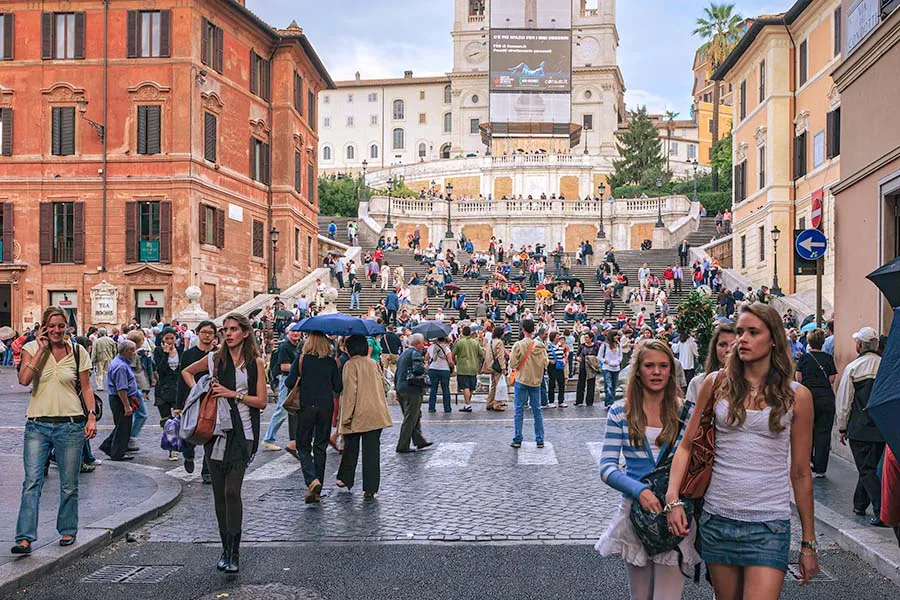 Piazza di Spagna
When you exit the Metro station, turn left and the whole Piazza opens up to you. As you face the Steps, at the left corner is the well-known Babington’s Tea Room (established in 1893), and at the right corner is the Keats Shelley Memorial House. In front of the Steps, is the Fontana della Barcaccia sculpted by Pietro Bernini and his more famous son, Gian Lorenzo Bernini. It was completed in 1627.
One of the principal occupations on the Steps is to just sit there and watch the world go by. When you are tired of watching people, walk around. There are many artists and caricaturists who will sketch or paint your portrait for a fee.
There are others trying to peddle various items. You can climb up the steps to the Church. The views change at every level. Eventually when you decide to leave the Steps and walk down, right ahead of you across the Fountain, is Via dei Condotti. It is the principal street for Italian fashions in Rome. Every famous Italian designer has a store on the street. Gucci used to have three.
Just about 10 yards from the beginning of the street, on the right, is Rome’s oldest coffee shop and Bar: the Antico Caffè Greco. It was opened in 1760. Many a celebrity has been a customer at the Cafe. Keats and Shelley had coffee there as well when they lived in Rome. The list of celebrity customers is almost endless: Goethe, Byron, Liszt, Wagner, and even Casanova, had coffee at the Greco. It is rumoured to be one of Sophia Loren’s favourite cafes in the City.
If you sit down for your coffee at the Greco, there will be a cover charge; but most Italians will just stand at the bar with friends and chat, as they have a cup of coffee and an Amaretto. Do go in and have a look. After the Greco, you could visit the designer stores or just window shop for ideas. It is said the fashion colours for the year are seen earlier in Rome than anywhere else in the world. Once you are through with the exclusive stores, at the end of Via Condotti, you could turn right to Via del Corso. There, you will find more upmarket shops that sell clothing. Their prices are lower than on Via Condotti.
After strolling around the area for a while, and having had more cups of Cappuccino or glasses of Vino, if you have paced yourself correctly, it is probably time for dinner. Restaurants in Rome are usually open for dinner from 7.30 pm to midnight. You may have already found a restaurant that looked attractive and the menu, appetising.
For Italians, dinner is a very leisurely affair. After the Antipasti, it usually consists of at least three courses, starting with Pasta. You have a choice: you could either do as the Romans do, or elect to behave as a foreigner and settle for a single course. It is up to you. Buon appetito! After dinner, you head back to the hotel for some well-deserved rest. I’d recommend some ‘bedtime’ reading on the Internet, about the places you will visit in Rome, tomorrow.
Itinerary Day 2 – Coins in the Fountain, the Pantheon and St. Peter’s Basilica
In every new city that you visit as a tourist, I would recommend one sightseeing coach tour, to kick-start the trip. In a city like Rome, there are virtually scores of tours to choose from. I would recommend any tour conducted by an established and reputable operator. The tour will usually take you to some of the must-visit sites. You can then, if you wish, go back to the site to spend more time there, or just divert your attention to other places of interest.
For Rome, I would recommend the tour that is often referred to as “Classical Rome”. Every operator worth his salt will feature the tour. It is usually a morning tour. They may stop in three or four places to give you a closer look at monuments before they take you back to the hotel. You could also opt to stay on at the final destination, or turn around point, and make your way back to the hotel on your own.
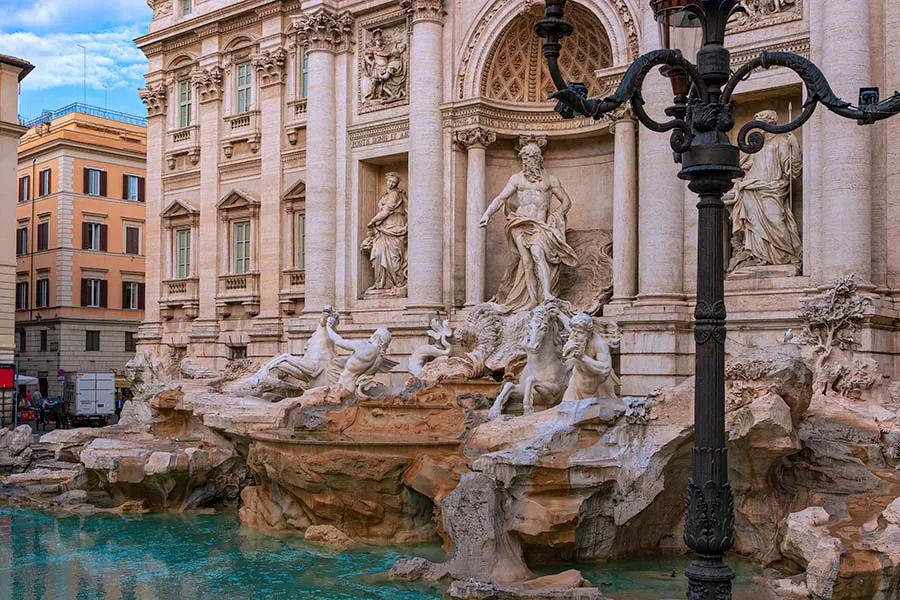 Fontana di Trevi
With Classical Rome, the stops are usually the Trevi Fountain, the Pantheon, Piazza Navona and St. Peter’s Square in the Vatican City. The Fontana di Trevi is an absolute ‘must-see’. Remember to throw your coin over your shoulder to ensure your next visit to the City.
During the tour, you will drive past Piazza Venezia and Il Vittoriano, which houses the Tomb of the Unknown Soldier. Due to the white marble and the enormity of the structure, American GIs gave it the name, “Wedding Cake” during the War.
In front of the monument is what is perhaps the largest Equestrian Statue in the world. It is said that after the foundrymen set up the statue, some of them celebrated with a party inside the belly of the horse. On the Piazza, you will drive past the Palazzo Venezia from whose small balcony, Mussolini once delivered his speeches.
The Pantheon was completed in 126 AD. It is one of the finest remaining functional buildings of Ancient Rome. It has been a church since the 7th Century. Sadly all the outer marble has disappeared over the centuries. The bronze from the interior was melted down to make cannon balls; there are also claims that some of it was used by Bernini to create the Baldacchino or canopy over the central altar at St. Peter’s Basilica, where only the Pope celebrates mass.
The High Renaissance painter Raphael Sanzio is buried in the Pantheon. On his marble sarcophagus are inscribed the words in Latin, which translated, reads, “Here lies that famous Raphael. Nature feared to be conquered while he lived, and at his death, feared herself, to die.” So excellent was his depiction of nature in his works of art! On the opposite side is buried Vittorio Emanuele II, the first king of unified Italy.
I would recommend that you get off the tour at the Vatican City because the one hour they’d give you to visit St. Peter’s Basilica is inadequate for the magnificent edifice. Of the four Papal Basilicas in Rome, St. Peter’s is the largest. It is indeed considered the largest church on Earth. Anyone’s first time in the Basilica is bound to be an unmatched experience.
There are no paintings inside St. Peter’s. All works of art are either sculptures or mosaics. They are all absolutely beautiful.
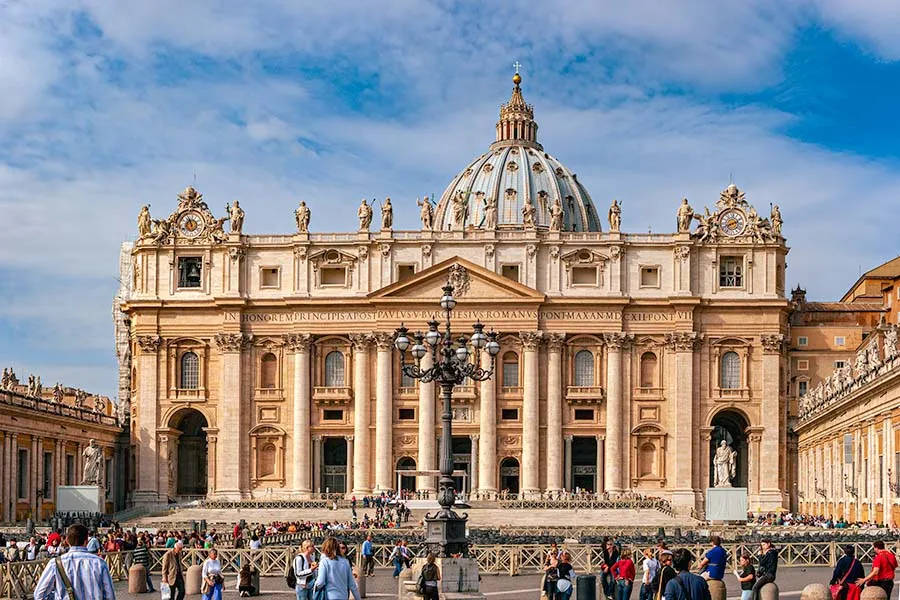 St Peter’s Basilica at The Vatican
To me, one of the most significant altars in the church, is the first altar on the right, as you enter the Basilica. It features Michelangelo’s Pietà, now behind bullet-proof glass, after the last attack on the work. The first time I saw it, I was moved to tears. Michelangelo sculpted Mary as the Eternal Virgin: as a young woman in her teens. Christ taken down from the cross, is his full thirty-three years. The pain on Mary’s young face is incredible. It is very difficult to depict pain on a face so young.
Many people who saw it for the first time refused to believe the Sculptor was Michelangelo. Some said he was too young to create such a work. Others said he was too small. The sculptor was so upset to hear people’s remarks, that night he went back with his chisel and mallet; he sculpted right across the tunic of Mary, his full name, Michelangelo Buonarroti. It was the only piece of sculpture he ever signed.
Three altars had the bodies of Popes in glass coffins. I think the number has been increased to four with the coffin of Pope Blessed John XXIII being brought up to the Basilica. If you walk down the central aisle of the church you will find, marked on the floor, the lengths of other major churches and cathedrals, around the world. Do look out for the ones you know. It will prove to you that most other churches can really be fitted into St. Peter’s.
To the right, almost in the middle of the church is a bronze statue of St. Peter with the keys. Notice that all the touching and kissing of his right foot by the faithful, have almost worn off his toes on that foot. Just at that corner is a door that leads to the Crypt where many Popes are buried.
These days, however, visitors are not given access to the Crypt through that door. After you have finished with the interior of the Basilica, do visit the Crypt where so many Popes are buried. Unfortunately, these days, you will have to queue up to be able to visit the Crypt. As you leave the church, also look out for the Holy Door. The doors are sealed on the inside and are only opened during the Jubilee years designated by the Pope.
When you have finished with the Church, you may wish to pick up a few Vatican coins in the Vatican souvenir shops at the corner of Piazza San Pietro, close to where the Swiss Guard stands. You can also mail picture postcards to friends and to yourself, from the Vatican Post Office close by.
Do not forget your photos of the Vatican Swiss Guard who is always there by the side of the church. After that, you can head back to the hotel if you are tired, for some rest, before you go through with your plans for the evening.
Itinerary Day 3 – The Colosseum, the Imperial Forum and Campidoglio
The Colosseum of Rome
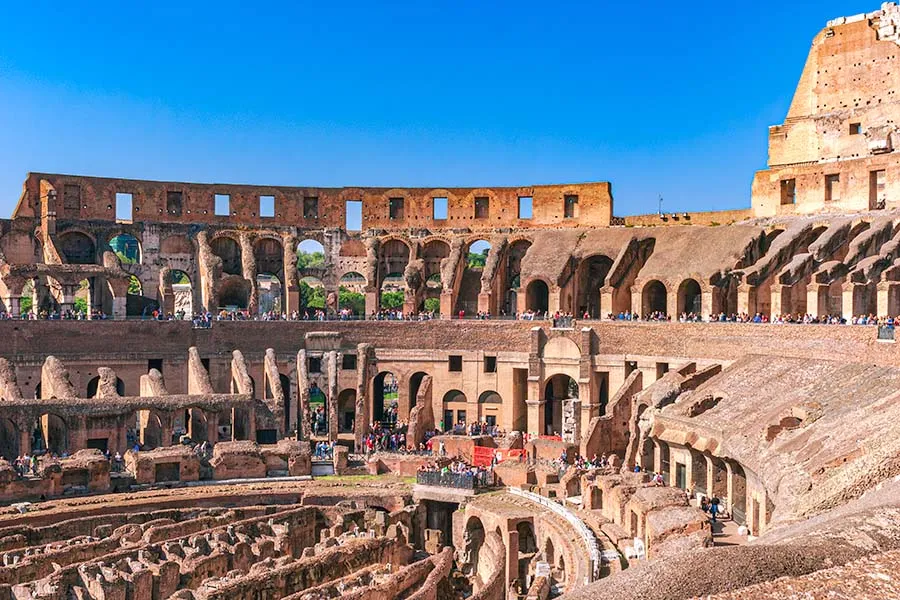
After an early breakfast, we can take the Metro to the Colosseo station. When you exit the station, the Colosseum is right before you. In its heyday, the exterior was clad in white marble. The columns outside the three levels were Doric, Ionic and Corinthian. The Romans say, “When stands the Colosseum, Rome shall stand; when falls the Colosseum, Rome shall fall, and with it, the whole world.”
During the early 80s when I first visited Rome, one could just stroll into the Colosseum. There were not a lot of tourists, or even tickets to visit the Amphitheatre, then. Today, you will have to queue up (queues can be long), to buy your ticket, and enter the arena. The Rome Tourist Card (details below), can help you circumvent the queue procedure!
At many Roman sites, headphones or electronic devices are available for hire. You can listen to descriptions and commentaries, on the headset at several designated areas, and handle the visit at your own pace. You will do well to hire a device for each of you.
It is only when you are inside, that you will be struck by the enormity of the structure that was completed in 80 AD. You also realise it is an elliptical structure and not circular. It could seat over 80,000 people. During the inaugural games, over 9000 animals and hundreds of slaves were killed. The collapsed hypogeum exposes today, much of the underground structure where animals and slaves were once held. Currently, there are plans to restore the hypogeum to its original shape and form.

Once you have finished with the Colosseum, we could proceed toward the Arch of Constantine, on to the Via Sacra which was once the main road into Rome, to the Arch of Titus. The road will lead through the Imperial Forum to Campidoglio or Capitoline Hill. It was the route of many a triumphal march of victorious Roman armies returning to Rome. Here is a link to my recommended walk (on Google Maps). If you would like the route on your phone, please scan the QR Code.
Once past the Arch of Titus, I will leave you to chart your own path through the Forum. We will meet again at Campidoglio late in the afternoon. Do not miss what were once the largest arches in the world at the Basilica of Maxentius, the temples of Romulus, Antoninus and Faustina (both of which are churches today), the temple of the Vestal Virgins and then eventually the Arch of Septimus Severus. The walk through this ancient forum is a walk through Roman History. Every column and stone has a story to tell. It is the stuff of legends and scandals. Of heroism and treachery. Power and misery.
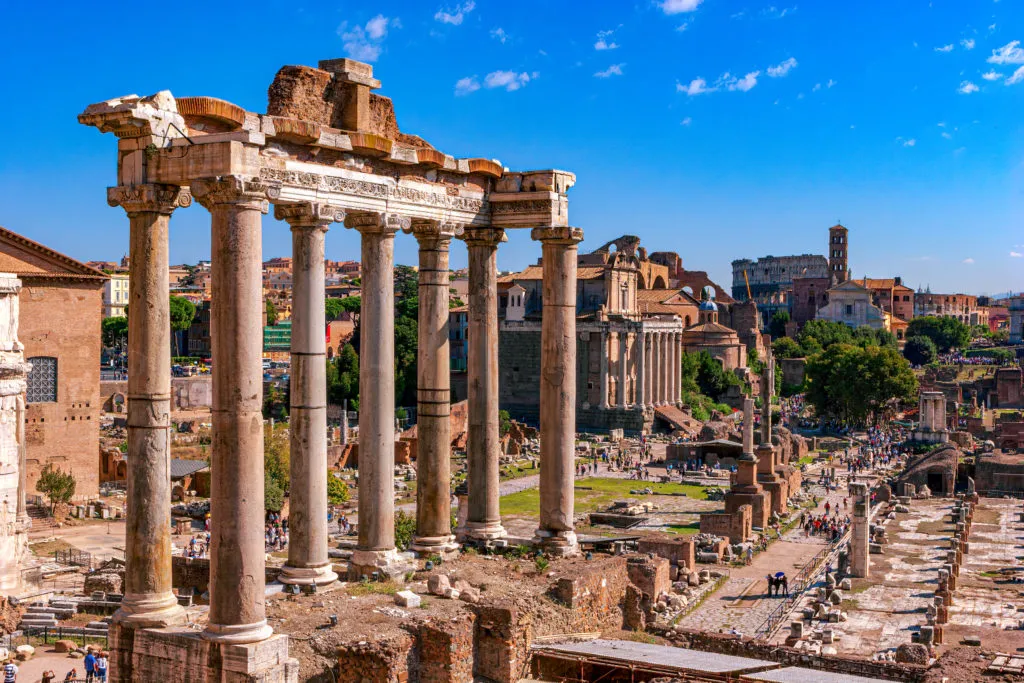 Classic view from Campidoglio
We meet again at Campidoglio. From here you have some of the best views of the Imperial Forum. As you gaze down the Via Sacra, right before you are the ruins of the Temple of Saturn. The temple had been completely reconstructed in 42 BC.
All that is left are the magnificent eight columns of the portico. It was once the Treasury of Rome. Here was stored all the gold and silver the Romans looted from other parts of the world. There are some superb photo opportunities from this point.
After we have finished with the Imperial Forum, we go on to the Piazza del Campidoglio. Michelangelo completely redesigned this piazza, turning the view away from the ancient forum, to the modern city. In the centre of the square stands the replica of the equestrian statue of Marcus Aurelius. Do look for the statue of Romulus and Remus with the she-wolf (the original is in one of the museums on Campidoglio).
The rest of the evening is all yours to do whatever you wish with it. For those who must sample the nightlife of the city, you will need to proceed to Via Vittorio Veneto. You need to be there early because it all happens from sunset for a couple of hours. To get to the street, you can take the Metro to Piazza Barberini and then walk up Via Veneto.
You will pass the US Embassy housed in the Palazzo Margherita - a palace, that the US Forces took over, towards the end of the War and retained as their Embassy. Further up the street is also the Excelsior Hotel made famous by the movie La Dolce Vita. Be sure to get some good night’s rest. Tomorrow’s itinerary will test your walking capabilities.
Itinerary Day 4 – Pompeii – Lost City Rediscovered
You will need to get up early in the morning to be ready for the pick-up for the full-day excursion to Pompeii. Our coach will head South taking the Highway of the Sun towards Naples.
We will be in Pompeii in about 3 hours, and after lunch, we’ll visit the ruins. Pompeii as you know was destroyed by the last great eruption of Mt. Vesuvius in 79 AD; it is even today, an active volcano.
That massive eruption destroyed four Roman settlements: Herculaneum, Stabiae, Oplontis and Pompeii. The cities were destroyed mainly by volcanic ash and pumice. Pompeii was destroyed by pyroclastic surges, volcanic ash and pumice. Several sections of the ruined city have been excavated for visitors to see and admire.
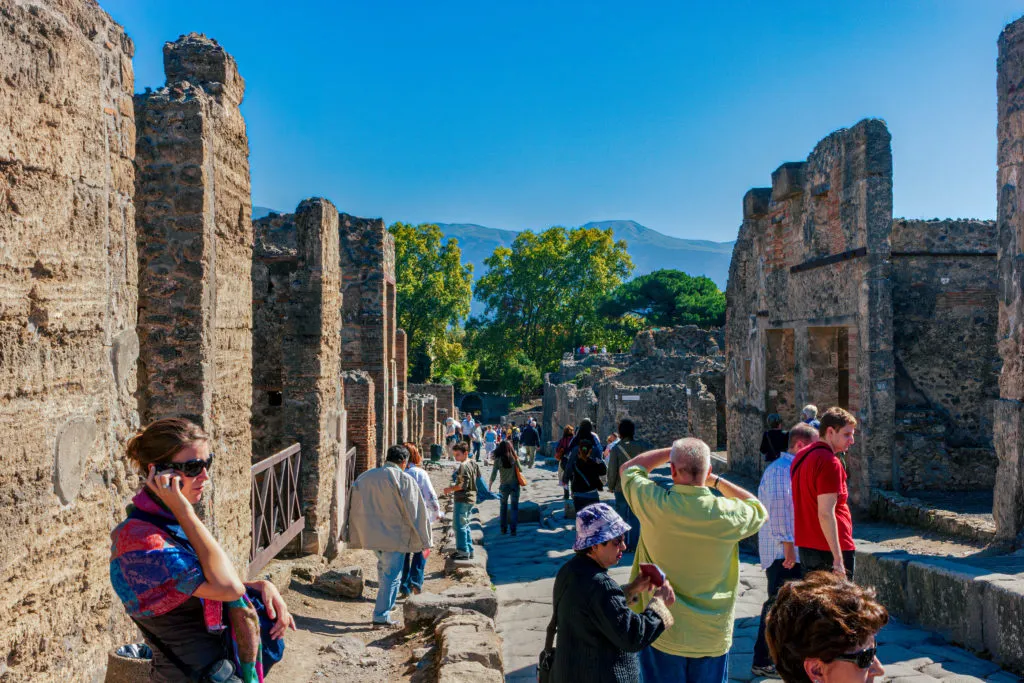 Pompeii, Italy - Tourists at the ancient ruined city
They knew from the writings of Pliny the Younger, of the existence of Pompeii; but the city was lost to the world for 1500 years. Today it is a UNESCO World Heritage site.
When they rediscovered Pompeii, archaeologists came across several hollow areas. They contained some fragments of bone.
Some of the archaeologists came up with the idea of injecting liquid Plaster of Paris into the hollows, to see what it was all about.
The results were frighteningly stunning: they came up with casts of human beings and animals, at the time of their deaths in 79 AD. Twisted forms in great agony. They literally show the pain and suffering, at the time of death. Many of these plaster casts are on display in Pompeii.
The excavations give visitors a peep into what Roman life was like in the 1st Century AD. They had many facilities that few other cities outside Italy had. The streets are well laid out. One can even visit the old shops, bars and bakeries of the city. They had advanced systems of water supply and central heating. They had baths and swimming pools.
Quite a lot of erotic art was found during the excavation. There was controversy on whether it should be shown to visitors. Some early visitors were clearly embarrassed by what they saw. Under the orders of the King of Naples, they were locked away for many years. Only in 2000, they became available for visitors’ viewing. Young children are not permitted into those areas.
The tour will end late afternoon when we will board our coaches again for our journey back to Rome.

Click on this URL for the usual route on Google Maps to Pompeii and back. If you would like to have the map on your phone, please scan the QR Code. Your driver may stop at Cassino (famous for the Abbey of Montecassino) for an early evening meal. Tip: By the way, it is always good to take a mobile phone photo of your coach’s registration number to help you identify your coach among a host of other buses.
Itinerary Day 5 – The Vatican Museum – One of the Best in the World
You cannot complete the Best of Rome without seeing Michelangelo’s ceiling at the Sistine Chapel. As you know, it is the Pope’s private chapel. The only access to the Sistine, for us lesser mortals, is through the Vatican Museum. You will have to queue up to buy your ticket and get in. The last time I was at the Vatican Museum, the queue for tickets was well over half a mile long. Hopefully, you will be luckier.
In our modern times, it is possible to buy entrance tickets to the Vatican Museums online on the Internet. I have provided the link at the end of this article. Click to buy.
The quickest tour through the Vatican Museum will take about three hours. For tourists who do not have a lot of time, what will be most important are the Raphael Rooms and the Borgia Apartments, before you head into the Sistine.
Again, headsets are the best way to be guided through the Museum. The Sistine, which is also the scene of the Papal Conclave that chooses the new Pope, is today an extremely crowded place during the time visitors are allowed in.
Do take your time to study the frescos, even if the environment is not too friendly (it can be overcrowded these days). The Last Judgement behind the altar, which was painted later than the Ceiling, is proof again of the genius of Michelangelo.
It is interesting to read, that the artist got into an argument with a senior Cardinal, who was of the opinion that there should be no nudity in the Papal Chapel. The Pope, however, gave Michelangelo the go-ahead to paint what he wished. In a final act of vengeance, Michelangelo painted the Cardinal as the Judge of the Underworld, with donkey’s ears to boot.
Of course, the Cardinal went to complain to the Pope. It is rumoured that the Pope’s response was that he had no jurisdiction over the Underworld. The portrait, therefore, remains to this day, in Michelangelo’s Hell, for all visitors to behold, even after 450 years.
The nudity was later covered up by another painter, after decisions taken by the Council of Trent. I believe no artist has the right to touch the work of another artist; but at the Vatican, the Pope and his Councils rule.
After the Sistine experience, you are free for the rest of the afternoon to do some shopping or go ahead with more sightseeing in the City. For dinner, on your last night in Rome, I would recommend the Ristorante da Pancrazio with its authentic Italian cuisine. It is located in Piazza del Biscione 92 and is built over the ruins of the Theatre of Pompey which was built in 61 BC. It is infamous for the assassination of Julius Caesar. Many historians think it happened at the rear of the Curia, not too far away from the restaurant. The debate goes on.
Reservations in advance are advisable at the restaurant. The basement of da Pancrazio offers the most sought-after seats in the restaurant because people want to actually dine in the old theatre. “Buon Appetito!”
Itinerary Day 6 - Departure
We’ve hit the last day of your 6-Day Itinerary for Rome. If you had followed my tips for the City, you would have covered a lot of the City and more. It is finally time to bid goodbye after you have seen the best of Rome. I would suggest an early start to enjoy one more stroll around your hotel area before you check out and head for the Airport.
Arrivederci Roma
I have endeavoured to give you just a glimpse of what to me is the fascination of Rome, in this 6-day itinerary. Personally, I have walked the ancient cobblestones on a couple of dozen different occasions. The city is always interesting. It always brings up a new facet with every new visit. You can never get tired of the City. It is truly The Eternal City.
Useful Links And Information
Tickets, Cards, and More
- All about the Leonardo Express Train
- Trenitalia website for tickets on The Leonardo Express Train between Fiumicino Aeroporto and Roma Termini.
- ROME 72H - the 72-hour Transportation Card.
- Rome Tourist Card Prices from about €88 - Children have reduced fares depending on their ages.
- Purchase tickets online to the Vatican Museum
- Hotel Quirinale
- Hotel Forum Roma
- Les Clefs d’Or Roma
- Ristorante da Pancrazio
Tourism-Related Links and Information
For those who would like more information than I have provided, here below are some Wikipedia links that should satisfy most people’s curiosity.
- Piazza di Spagna (the square)
- The Spanish Steps
- Fontana della Barcaccia
- Antico Caffè Greco (Via Condotti)
- Piazza Navona
- Fontana di Trevi
- The Pantheon
- Vatican City
- The Imperial Roman Forum
- Temple of Saturn - Roman Forum
- Piazza del Campidoglio
- Pompeii - destroyed in 79AD
- The Sistine Chapel
All photographs in this article are by Mano Chandra Dhas, except the Leonardo Express train, © Hide1228, openly licensed via CC BY 4.0.

Written by
Mano Chandra Dhas ›Founder of Coromandel Tours. In travel since 1975, from Singapore Airlines to Emirates and Carlson Wagonlit, he now curates private journeys through Colombia, Peru, India, and Nepal from his home in Bogotá. Many of the photographs on this site are his.