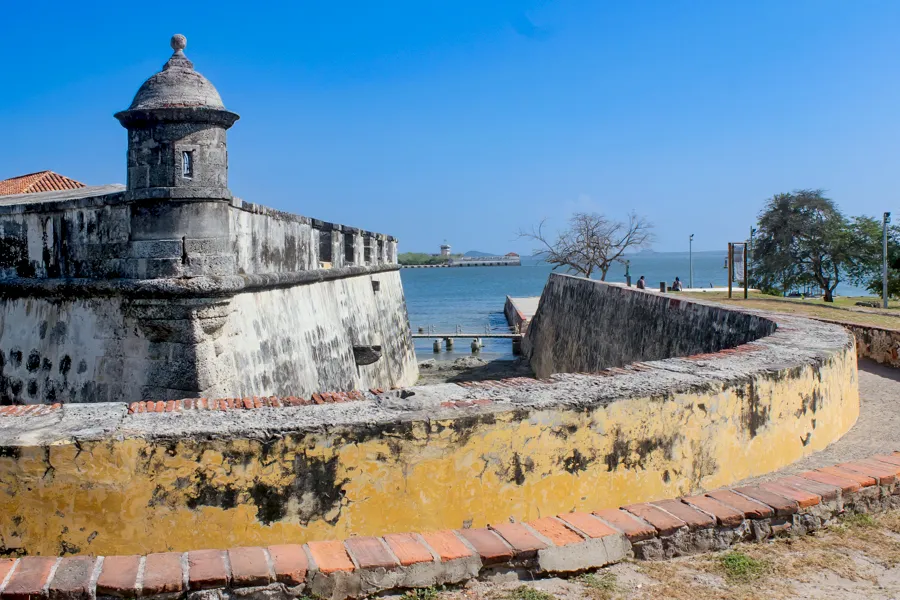
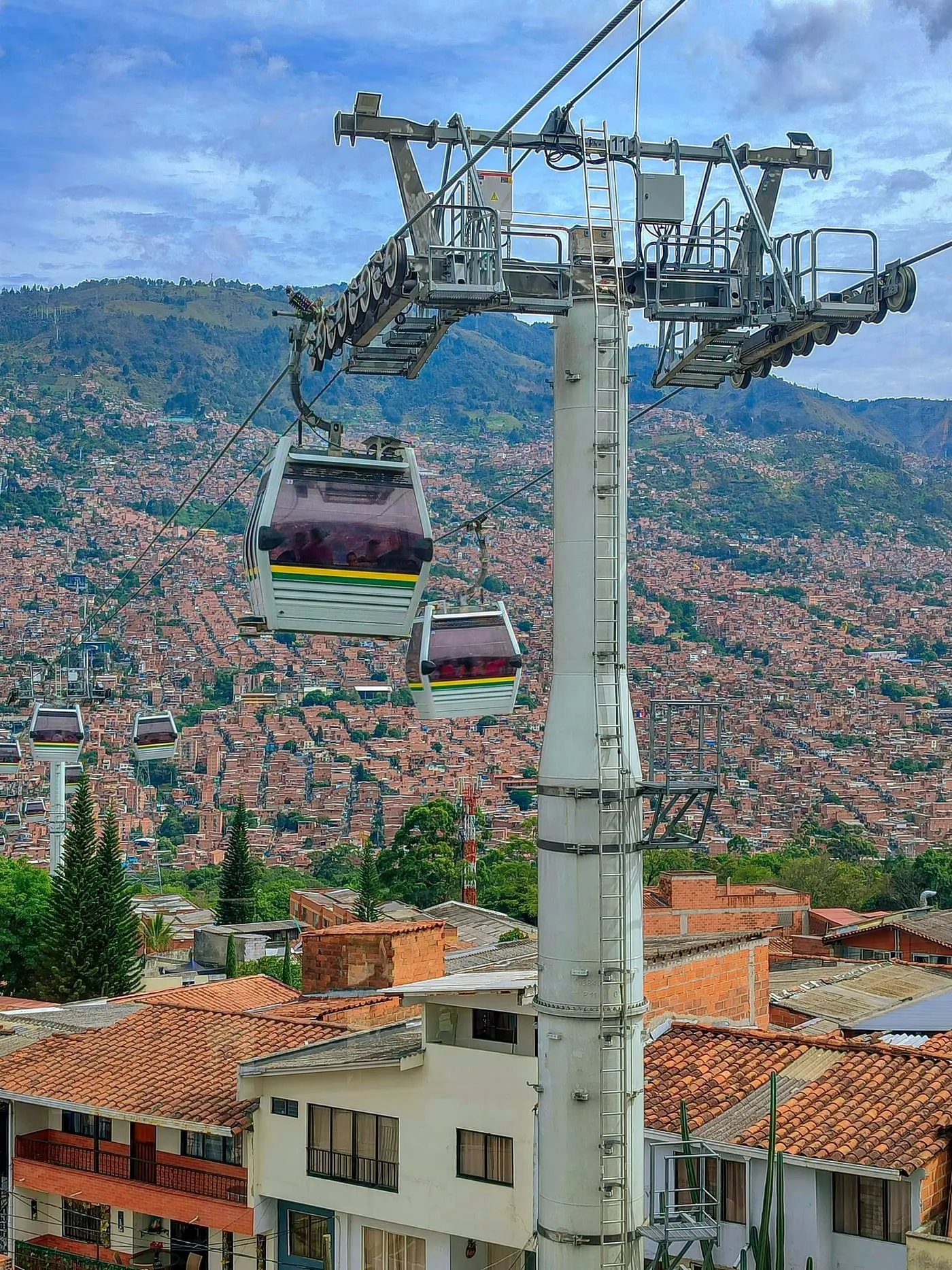
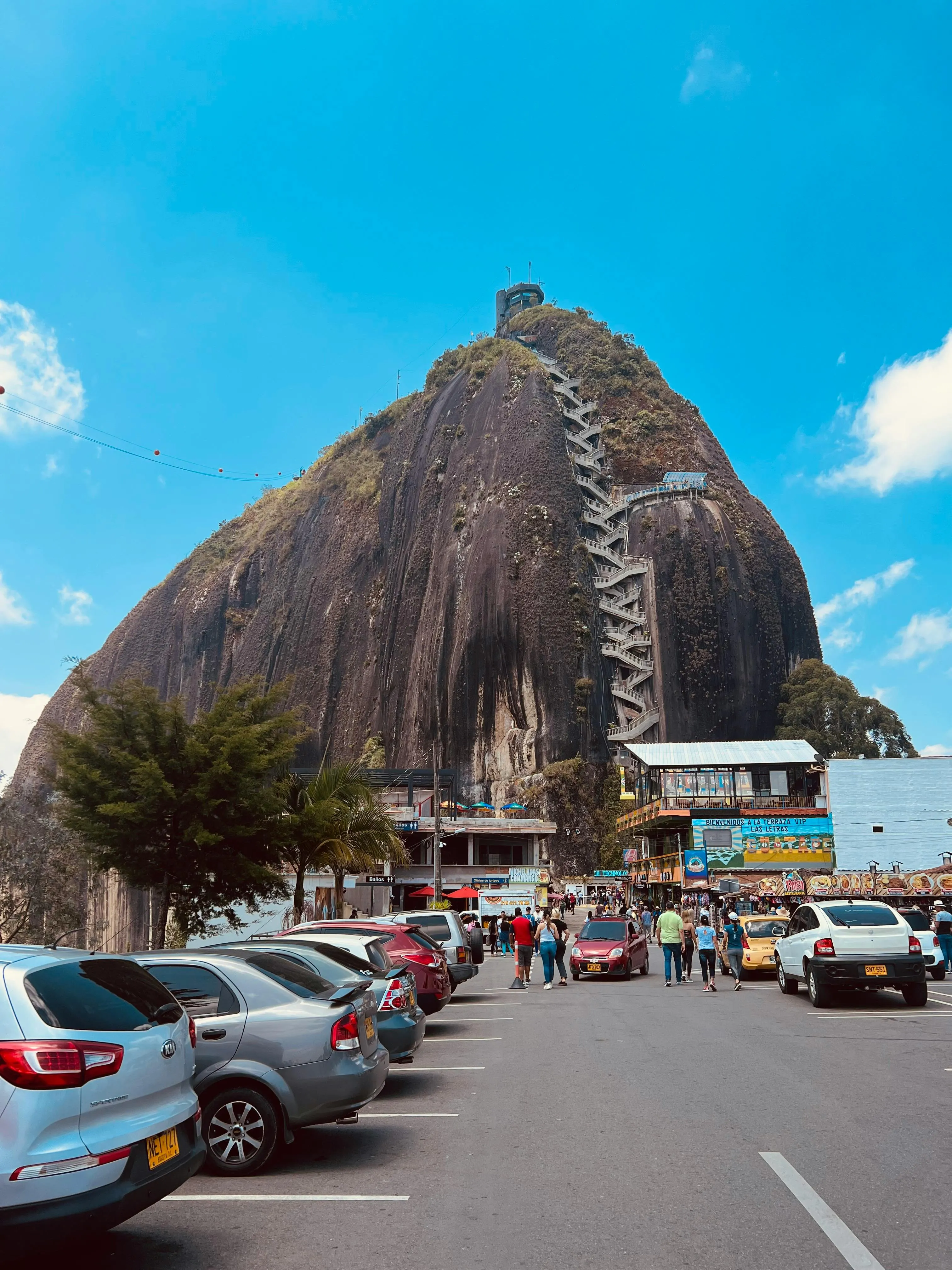
There is a photograph almost everyone has seen without knowing where it was taken: a vast grey monolith standing alone above green hills and turquoise water, with a zigzag of steps cut into a crack down its face. That is El Peñol, about two hours east of Medellín, and it is the anchor of the most popular day out in Antioquia.
It is also the excursion most often squeezed, and it is the one that punishes squeezing hardest. This is a piece about why it takes the whole day, and what you actually get for it.
The Shape of the Day
The full excursion leaves Medellín at seven in the morning and gets back between five and half past. The drive out takes an hour and a half to two hours each way, which already accounts for three or four hours before anyone has climbed anything.
What sits in the middle is a rock, a town, and a lake, and the honest answer is that each of them wants more time than a half-day itinerary can give.
The Rock, and the 740 Steps
El Peñol is a granite monolith, and the way up is a staircase of 740 steps built into a natural fissure in its face. There is no way to soften that number. It is a genuine climb, taken at whatever pace suits you, and the reward at the top is a 360-degree view over the reservoir, its islands, and the emerald hills running out in every direction.
Two things are worth saying plainly about those steps. The first is that the climb is the single most demanding thing in the whole Medellín catalogue, and anyone who is unsure about it should say so when booking rather than discover it at the bottom. The second is that the day does not collapse without it. The town, the lunch, and the boat are worth the drive on their own, and if the staircase is not for you, that is a conversation to have in advance so the day can be built around the other three.
The Town Nobody Expects to Like as Much as They Do
Guatapé is a short drive from the rock and is the part of the day most people are surprised by. The town’s buildings carry zócalos: painted panels running along the lower portion of every facade, each one depicting something, a scene, a trade, an animal, a piece of family history.
 The zócalos are not a tourist scheme. They run along the bottom of ordinary buildings on ordinary streets throughout the town.
It is worth walking slowly and reading them rather than photographing the first colourful street and moving on. The panels are a vernacular art form applied to a whole town, which is rarer than it sounds, and the difference between twenty minutes here and an hour and a half is the difference between a backdrop and a place.
Lunch is in Guatapé, beside the water, and it is on your own account rather than included. Fresh fish from the reservoir is the obvious order, though the bandeja paisa is there for anyone who wants the full regional experience and a long sit afterwards.
The Lake Is Not Scenery, It Is a Drowned Valley
The reservoir is artificial, and once you know that, the view rearranges itself. Those two hundred and more islands are hilltops. The water is sitting in a valley that was flooded, and the small islands now carry colourful weekend houses belonging to people from the city.
 The rock from the water. Antioquia’s weather does not consult the postcard, and an overcast Guatapé is still a good day out.
The optional boat trip goes out among the islands by lancha, the local water taxi, in the early afternoon. It is the part of the day most likely to be dropped when time is short, and it is the part that gives the landscape its explanation. If you are choosing what to cut, cut something else.
Why This Does Not Work as a Half Day
Add it up. Four hours of driving, a serious climb, a town that deserves ninety minutes, a proper lunch, and an hour on the water. That is a full day by any arithmetic, and it is why the excursion runs from seven to half past five rather than from nine to two.
The version that gets compressed usually keeps the rock and the photograph and discards everything else, which produces a tiring day built around a staircase. The full version produces something better: a rock, a town, a meal, and a boat, in an order that makes sense and at a pace that does not leave you wrecked for the following morning.
This is the same argument we made for Medellín itself, which is that the city and its surroundings reward a slightly slower hand than most itineraries allow, and it rests on the same practical foundation as the way the city moves: distances here are longer than they look on a map.
If you are working out how many days Medellín needs and whether Guatapé fits inside them, tell us the shape of your trip and we will give you a straight answer, including when the honest one is to leave it out.

Written by
Mano Chandra Dhas ›Founder of Coromandel Tours. In travel since 1975, from Singapore Airlines to Emirates and Carlson Wagonlit, he now curates private journeys through Colombia, Peru, India, and Nepal from his home in Bogotá. Many of the photographs on this site are his.