Seeing More by Slowing Down: A Case for Travel in Your Sixties and Seventies
There is a particular moment, usually somewhere in the sixties, when the constraint on travel finally lifts. The working years are behind you or nearly so, the children are grown, and for the first time in decades the calendar is genuinely yours. It is exactly the moment the travel industry tends to serve worst, with itineraries that promise ten countries in fourteen days and treat the traveller as someone to be moved efficiently between photo opportunities. Most of the people we design trips for are in precisely this stage of life, and our advice to them is the same advice we would give anyone, only more so: the way to see more is to slow down.
This is not a smaller version of travel. It is a better one, and it happens to suit this stage of life particularly well.
The Arithmetic of Depth
We have made the general case for slow travel before, and the core of it is a simple piece of arithmetic. A trip that spends three or four days in each city, rather than one, does not see less. It sees far more, because the days that a rushed itinerary loses to airports, check-ins, and orientation are the days a slower one spends actually inside a place. The traveller who gives Bogotá its three or four days comes home having understood a city; the one who used it as a connection comes home with a photograph of the airport.
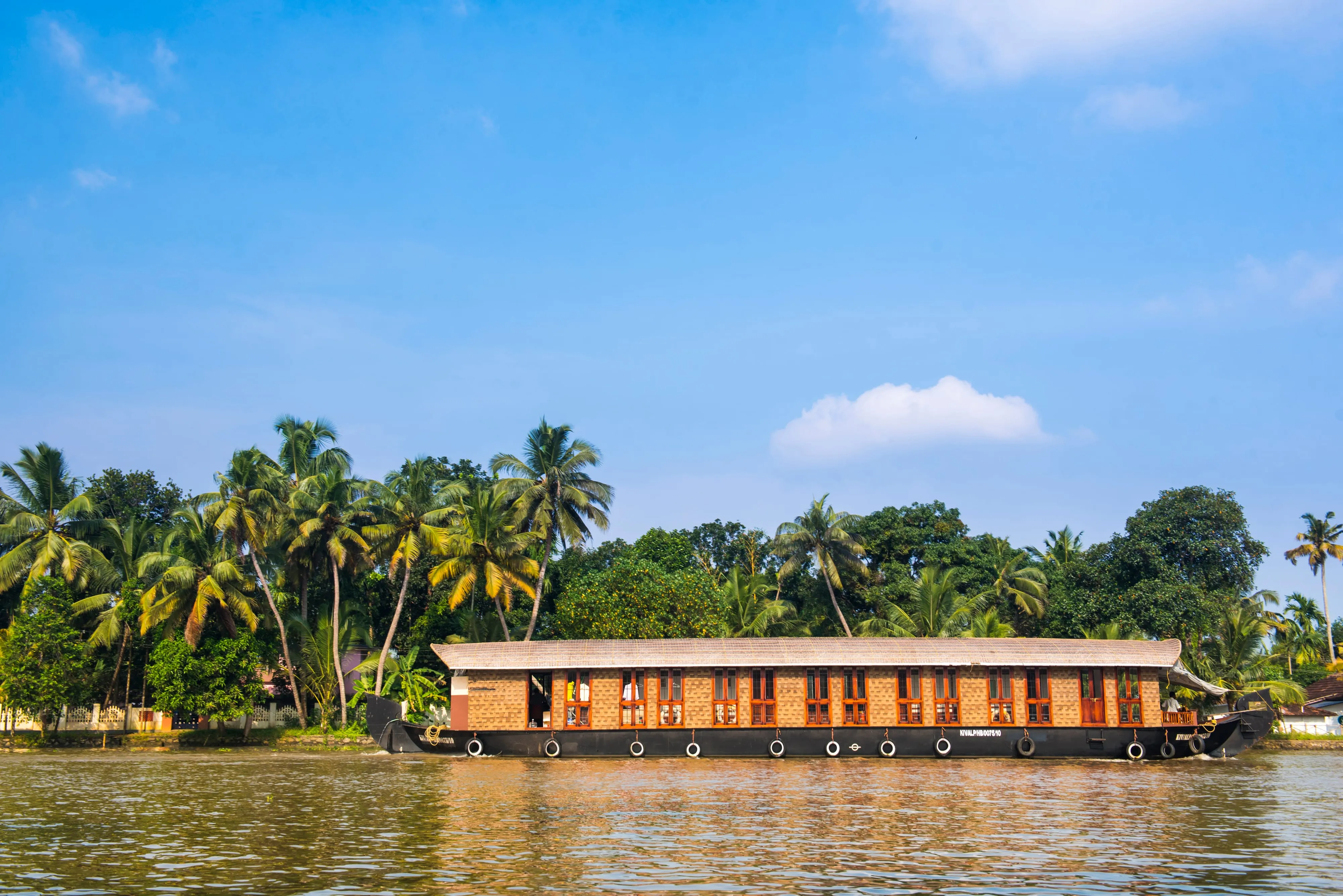 The backwaters of Kerala, taken at the pace they were meant to be taken. Slow is not a compromise here; it is the entire point.
What changes in your sixties and seventies is that this arithmetic stops being merely preferable and becomes the difference between a trip you enjoy and one you endure. Energy is a real budget, and it is not weakness to spend it well. A morning of unhurried sightseeing followed by a free afternoon is not half a day wasted; it is the shape that lets you be fully present for the morning and still have something left for dinner. The unstructured afternoon, which we build into almost every itinerary, is where a good trip breathes.
Comfort Is Not Indulgence
The second thing that changes is that comfort stops being a luxury and becomes the thing that makes the depth possible. A private guide and a private car are, at any age, the difference between travelling on your own terms and travelling on a coach operator’s. In your sixties and seventies they are also the difference between a day you can sustain and one you cannot. There is no dawn muster in a hotel lobby, no dragging a suitcase across a station concourse, no negotiating an unfamiliar transit system in an unfamiliar language. When you want to sit longer over lunch, you sit longer. When you have seen enough of a museum, you leave.
We wrote recently about how the altitude shapes a Cusco and Machu Picchu trip, and it is a good example of the principle in miniature. Planning the days around a rest day, a private vehicle, and hotels at the comfort level you actually want is not pampering. It is what allows a seventy-year-old to stand in Machu Picchu feeling exhilarated rather than wrung out. The mountains ask the same of everyone; the plan is what makes the answer bearable.
The Point Is the Place, and the People
The travellers we work with are, almost without exception, culturally curious. They are not collecting countries. They want to understand a place, to eat what people there actually eat, to hear why a building was built the way it was, to have the kind of conversation with a good local guide that turns a monument into a story. This is the deepest argument for slowing down, and it has nothing to do with age. You cannot have that experience at speed. It requires the time to linger, the guide who knows which questions you did not know to ask, and the room in the day for the unplanned detour that becomes the thing you remember.
This is also why we lean so heavily on the people on the ground. A trip is only ever as good as the guide who shows you the place, and the value of working with a curator is partly that the vetting of those people has already been done. You are not gambling on whoever the coach company assigned. You are met by someone chosen for the way they work.
The Honest Version
None of this is a gentle way of saying travel less as you get older. It is the opposite. The people we design for are often more ambitious than travellers half their age, going to Nepal, to the Peruvian Andes, deep into India, and they do it well precisely because they have stopped confusing motion with experience. The trip that works is the one built around real days rather than a checklist, with the pace, the comfort, and the guide all pointing the same direction.
If you are at the stage of life where the time is finally yours and you want to spend it on travel that rewards the attention you can now give it, tell us what you have in mind. We will build you a trip that sees more by hurrying less.

Written by
Mano Chandra Dhas ›Founder of Coromandel Tours. In travel since 1975, from Singapore Airlines to Emirates and Carlson Wagonlit, he now curates private journeys through Colombia, Peru, India, and Nepal from his home in Bogotá. Many of the photographs on this site are his.