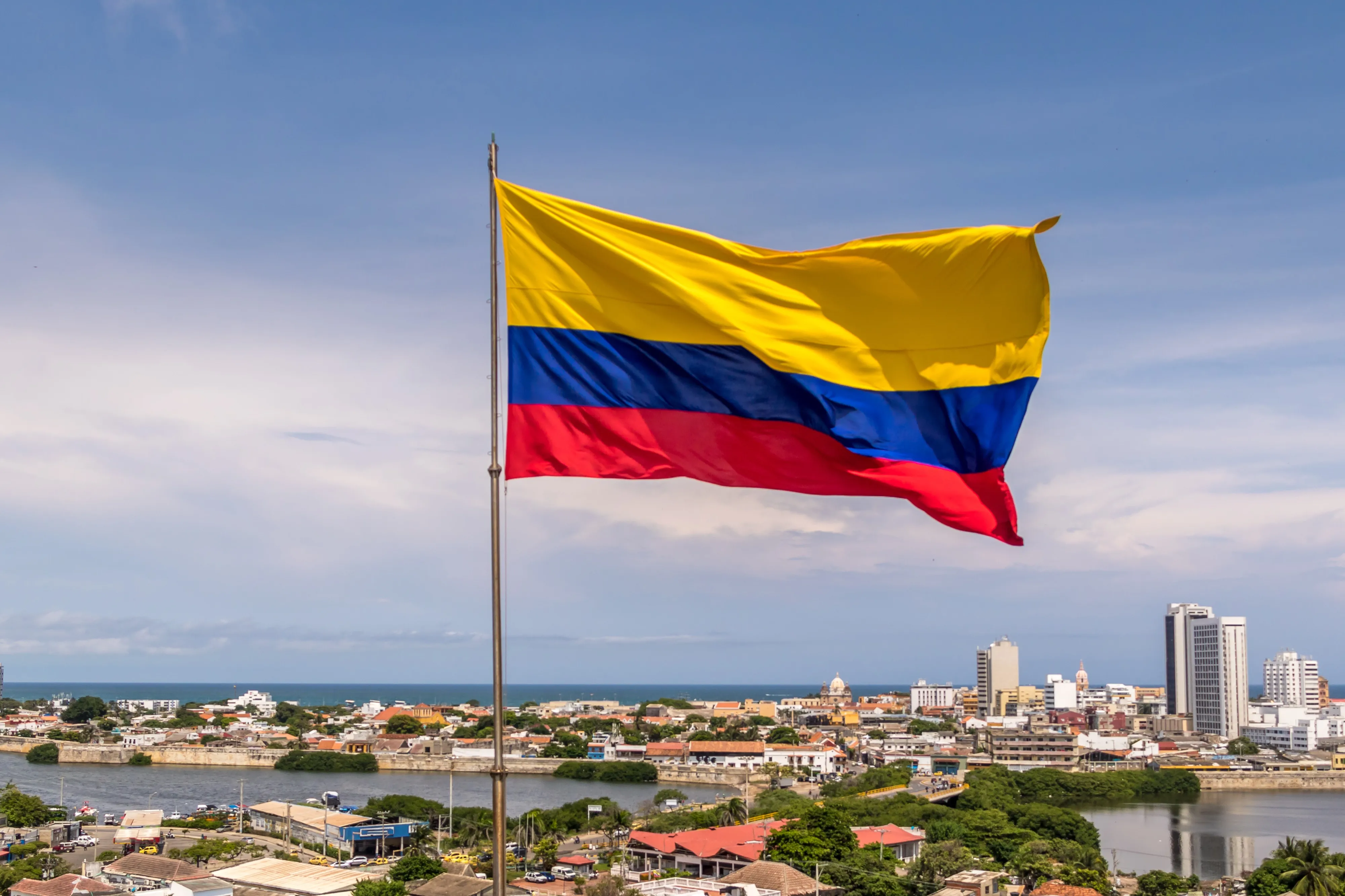
Colombia’s national Independence Day is 20 July, and it commemorates a confrontation in Bogotá in 1810 that set the revolution in motion. But the first place in what is now Colombia to declare absolute independence from the Spanish Crown, with no hedging and no half-measures, was Cartagena de Indias, on 11 November 1811. Bogotá would not be free in any effective sense for years yet.
Cartagena has never let anyone forget it. The city marks the date with the Fiestas de Independencia, eleven days of street celebration running from 1 to 11 November, and in a country full of festivals it is one of the very best, precisely because it is the least polished. In 2026 the Ministry of Cultures declared the festivities Intangible Cultural Heritage of Colombia, recognising among other things the Afro-Caribbean communities who have carried the tradition for more than two centuries.
Why This City, and Why First
To understand why Cartagena went first, look at what the city was. Founded in 1533 as a Spanish port on the Caribbean, it became one of the wealthiest cities in the Americas, and it built nearly eleven kilometres of stone walls to keep that wealth. Those walls are still standing, and the old city they enclose is a UNESCO World Heritage Site.
Wealth of that kind produced a merchant class with its own interests, its own money, and its own reasons to resent administration from across an ocean. It also produced, through the brutal machinery of the port, a large free and enslaved Black population whose descendants shape the city’s culture to this day. The independence declared in 1811 came out of that particular mix, and the festival that commemorates it still sounds like it.
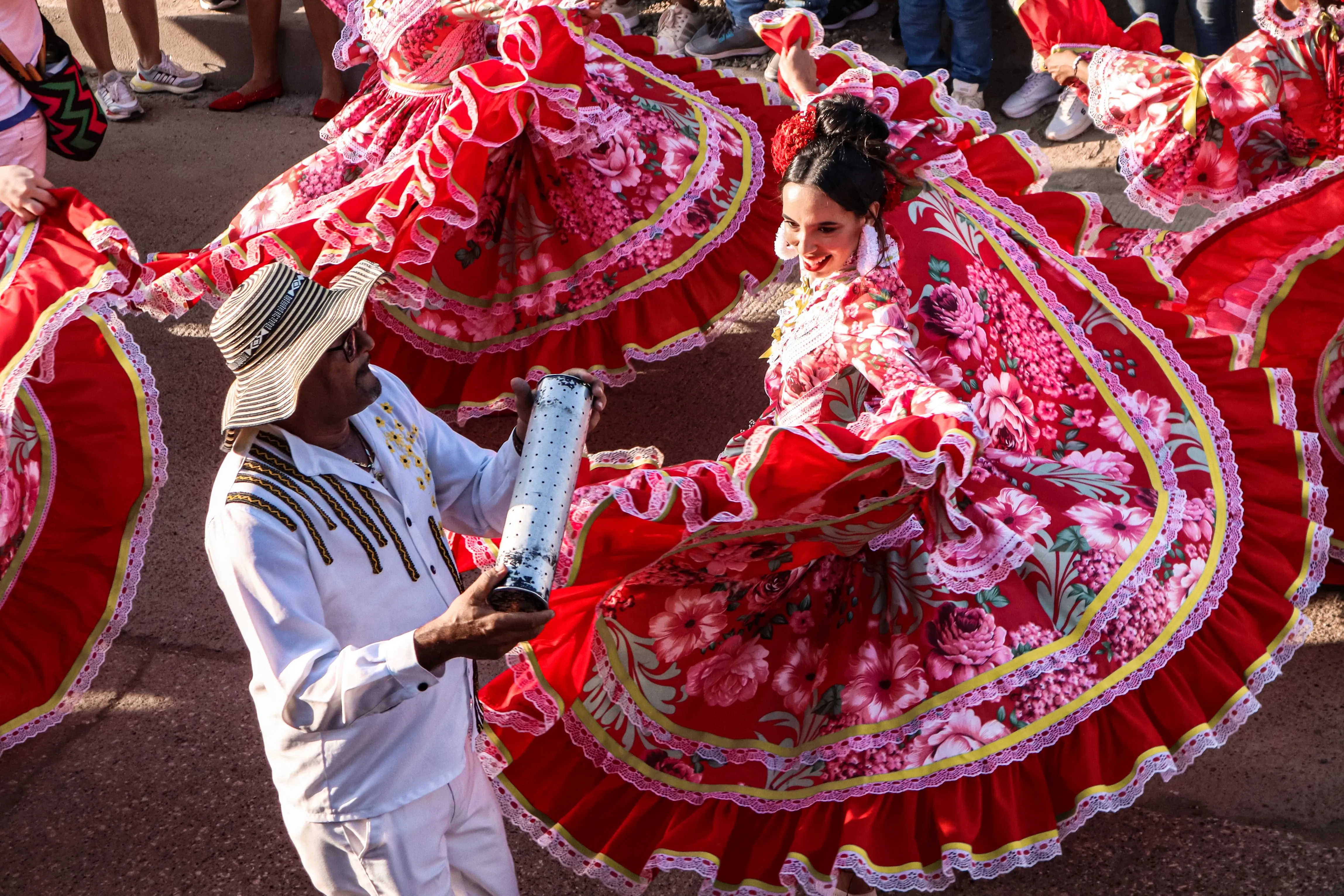 Caribbean-coast folk dance. The November festivities are the fullest expression of the Afro-Caribbean culture that runs through the whole region.
What the Eleven Days Actually Involve
This is not a parade you watch from a stand. The Fiestas are a street event, spread across neighbourhoods rather than concentrated in the walled city, with parades, drumming, dancing, costume, and music that runs late. Cultural programmes involve residents from across the city rather than performers brought in for visitors. One of the most distinctive events is the nautical parade, in which boats of every size process along the water decorated with lights and flags.
The character of it is closer to carnival than to a civic ceremony, and it is loud, hot, crowded, and genuinely of the place. If your instinct at that description is delight, this is one of the great weeks in South America. If your instinct is to flinch slightly, that is worth knowing about yourself before booking, and we would say so plainly rather than sell you the week regardless.
The Practical Reading
Two things are worth planning around.
The first is that early November is not Cartagena’s dry season, which runs December to April. November sits at the tail of the wetter months, so expect heat, humidity, and the possibility of rain. This does not spoil the festival, but it is not the crisp weather of January either.
The second is capacity. A festival of this size fills the city. Rooms inside and near the walled city are spoken for well ahead, and prices reflect it. This is a textbook case of what we meant by the decisions that genuinely have deadlines: if you want to be in Cartagena for the Novembrinas, that is a booking to make many months out, not one to improvise.
The compensation is that you see a side of the city that the ordinary visit does not quite reach. Cartagena is beautiful at any time of year, and in the quiet months the walled city can feel like a very well-kept stage set. During the November festivities it is unambiguously a living Caribbean city that happens to have colonial walls around part of it, which is a truer picture of what the place is.
If Colombia is on your mind and you are weighing when to go, tell us what kind of trip you want and we will tell you honestly whether the festival week suits it or works against it.

Written by
Mano Chandra Dhas ›Founder of Coromandel Tours. In travel since 1975, from Singapore Airlines to Emirates and Carlson Wagonlit, he now curates private journeys through Colombia, Peru, India, and Nepal from his home in Bogotá. Many of the photographs on this site are his.