How far ahead should we book? It is among the most common questions we are asked, and it is nearly always asked in the hope of a single number. Six months. A year. Give the traveller a figure and they can stop worrying until the deadline arrives.
There is no useful single number, and the reason is worth understanding, because it changes how you plan. A trip is not one decision taken at one moment. It is a sequence of decisions with very different deadlines. A few are fixed by the calendar and cannot be recovered once missed. A few genuinely sell out. Most of the rest can be left open until quite late, and are better for being left open. Knowing which is which is more practical than any rule of thumb, because it tells you what to settle this week and what you are entitled to leave alone.
The Season Decision Comes First, and It Is Not Negotiable
Everything else in the plan hangs off when you go, and the seasons of the countries we work in do not line up with one another. This is the single fact that most often surprises travellers who are choosing between destinations.
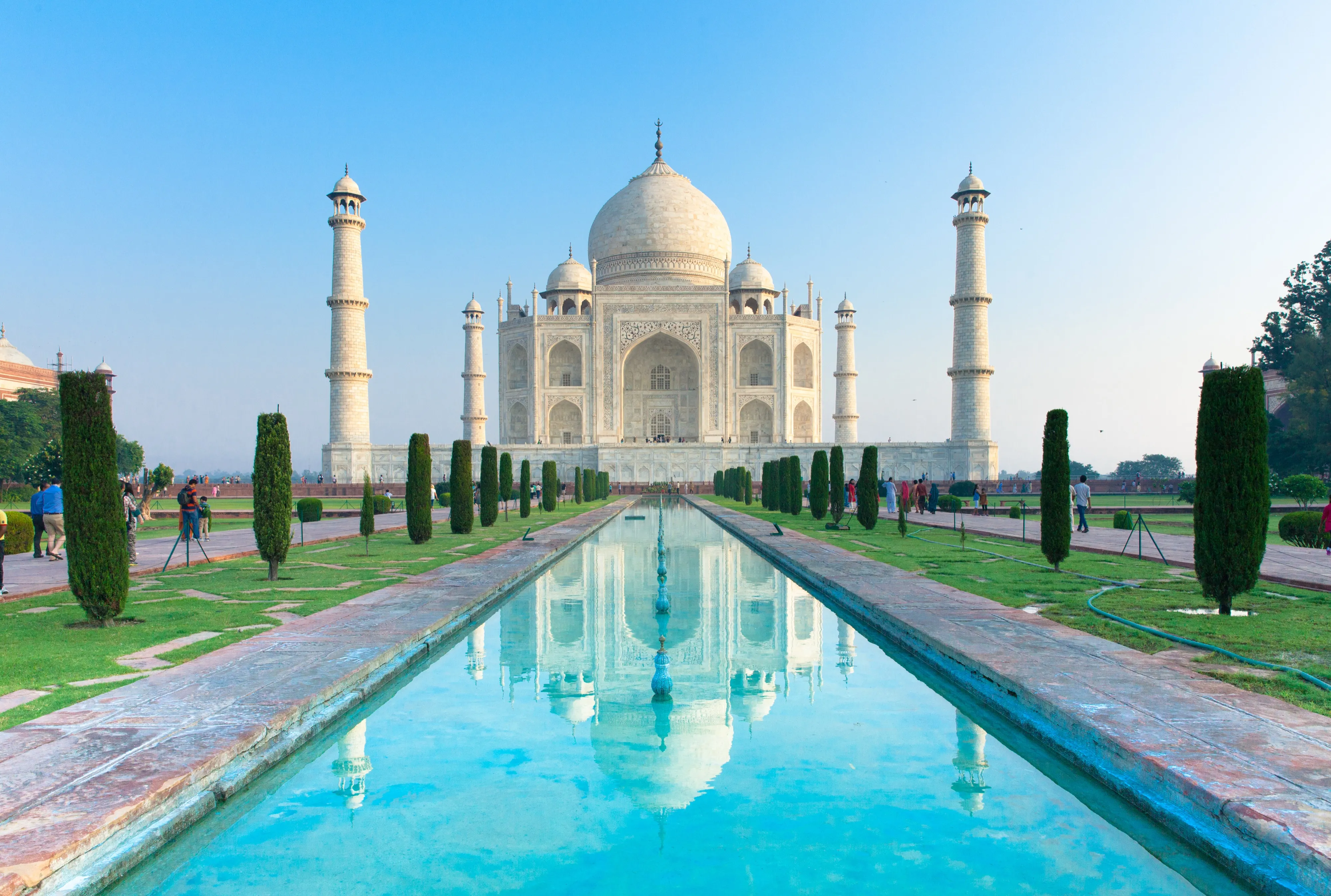
Bogotá is driest between December and March. Peru’s highlands are at their clearest and driest from May to October, and the wet months are not a write-off, since Machu Picchu in morning mist can be atmospheric rather than disappointing. Northern India runs the other way, at its best from October to March, with April and May pushing past 40°C and the monsoon arriving from July to September. Nepal has the tightest windows of all: October to November, and March to May, when the skies over the Kathmandu Valley are clear enough to see what you came for.
Read those together and you see the problem with planning around a fixed slot of leave. Next spring is an excellent time to be in Nepal and a punishing one to be in Delhi. Next January is right for Colombia and right for northern India and wrong for the Peruvian highlands. Either the season chooses the destination or the destination chooses the season, but one of them has to give, and settling that is the first real decision in any trip. It is also the one that costs nothing to make early.
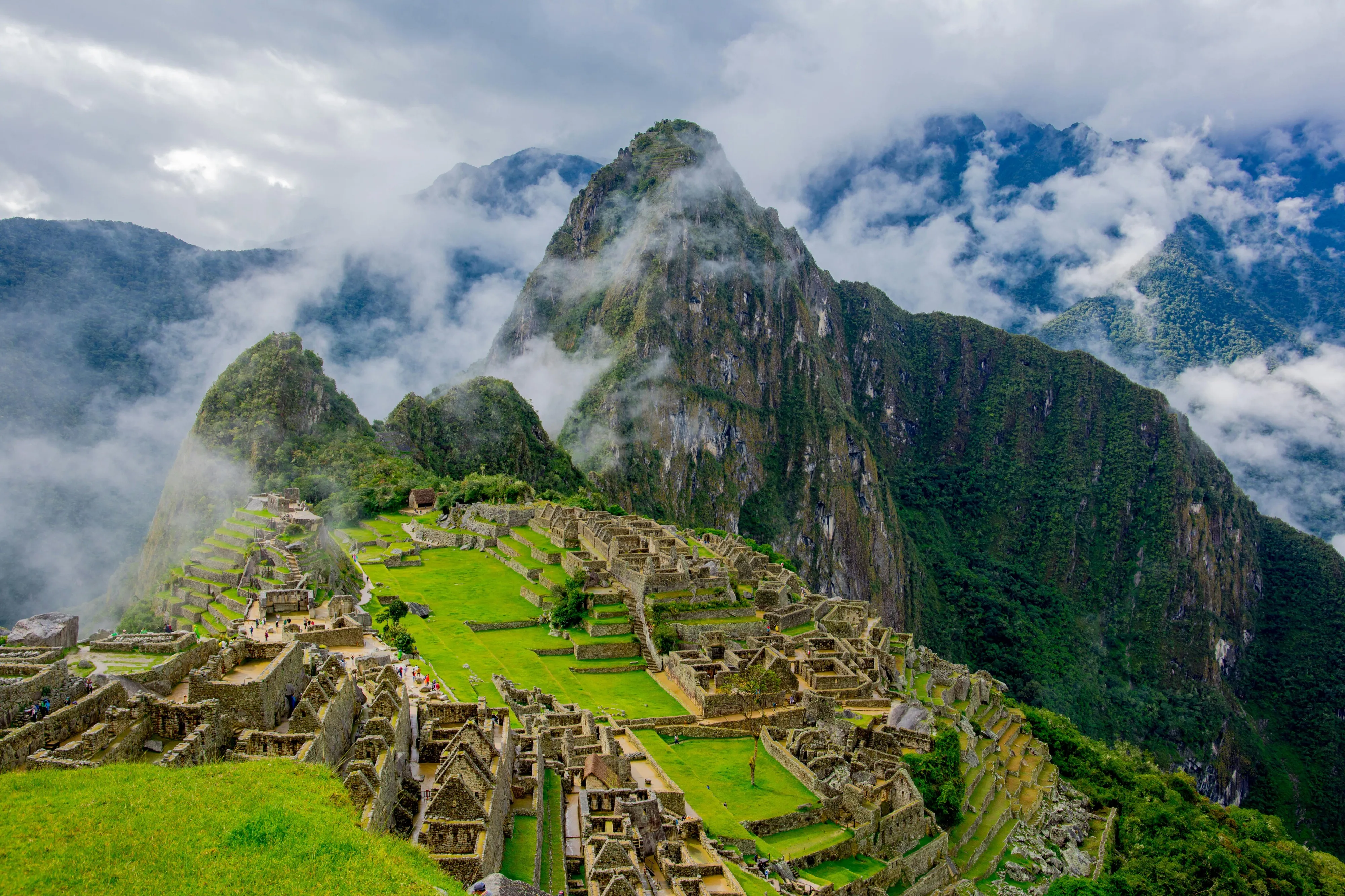 Machu Picchu in cloud. The wet season is not a write-off, but entry to the site has to be held long before you decide what else the day holds.
What Genuinely Sells Out
A short list of things really do run out, and they are worth separating from the general anxiety that everything might.
Entry to Machu Picchu is the clearest case. The site operates on timed entry circuits, and tickets sell out weeks ahead in high season. This is not a booking that can be improvised on arrival in Cusco, and it is the reason a Peru itinerary tends to firm up around a single fixed point earlier than trips elsewhere do. The same logic applies, in a quieter way, to internal flights on routes that only a few carriers fly, and to any country whose good season is only a few weeks long. When everybody sensible is trying to travel in the same eight-week window, the vehicles, the rooms, and the people worth having are all being spoken for at once. Nepal in October is the obvious example.
There is a second category that travellers rarely think about, which is their own recovery time. Cusco sits at 11,150 feet, and the standing advice is to give it a full, gentle day before anything strenuous. That day is not a booking, but it occupies a place in the calendar just as firmly as one, and a trip planned without it has to take the time from somewhere else. We have set out how to shape the first days so the altitude works for you rather than against you.
What Is Better Left Open
Almost everything else improves by being decided later, and this is the part travellers get wrong in the opposite direction, arriving with a finished day-by-day plan months out and then discovering they have designed away all their freedom.
The shape of individual days, the balance of monuments against markets, the afternoon left loose because you may want it for nothing at all, none of this needs to be fixed early, and fixing it early tends to produce the trip you thought you wanted rather than the one you actually did. A first draft itinerary is built to be argued with, which is the whole point of the exchange we describe in how an enquiry becomes an itinerary. What genuinely helps at the outset is not a plan but a picture of the traveller, which is why briefing a curator well matters more than arriving with a route.
The Practical Shape
So the honest answer runs roughly as follows. Settle the season and the destination together, and do it as early as you can, because that decision is free to make and expensive to unmake. Expect the fixed points, the timed entries, the internal flights, and the scarce high-season capacity, to be held next, several months out for a peak-season trip. Leave the texture of the days until the drafting conversation, where it belongs. And build in the recovery days honestly, particularly at altitude, because a trip that races its own clock loses more than it gains.
If you have a window of leave and are not sure which country it suits, tell us when you can travel and we will tell you honestly what that season is good for, and what it rules out.

Written by
Mano Chandra Dhas ›Founder of Coromandel Tours. In travel since 1975, from Singapore Airlines to Emirates and Carlson Wagonlit, he now curates private journeys through Colombia, Peru, India, and Nepal from his home in Bogotá. Many of the photographs on this site are his.