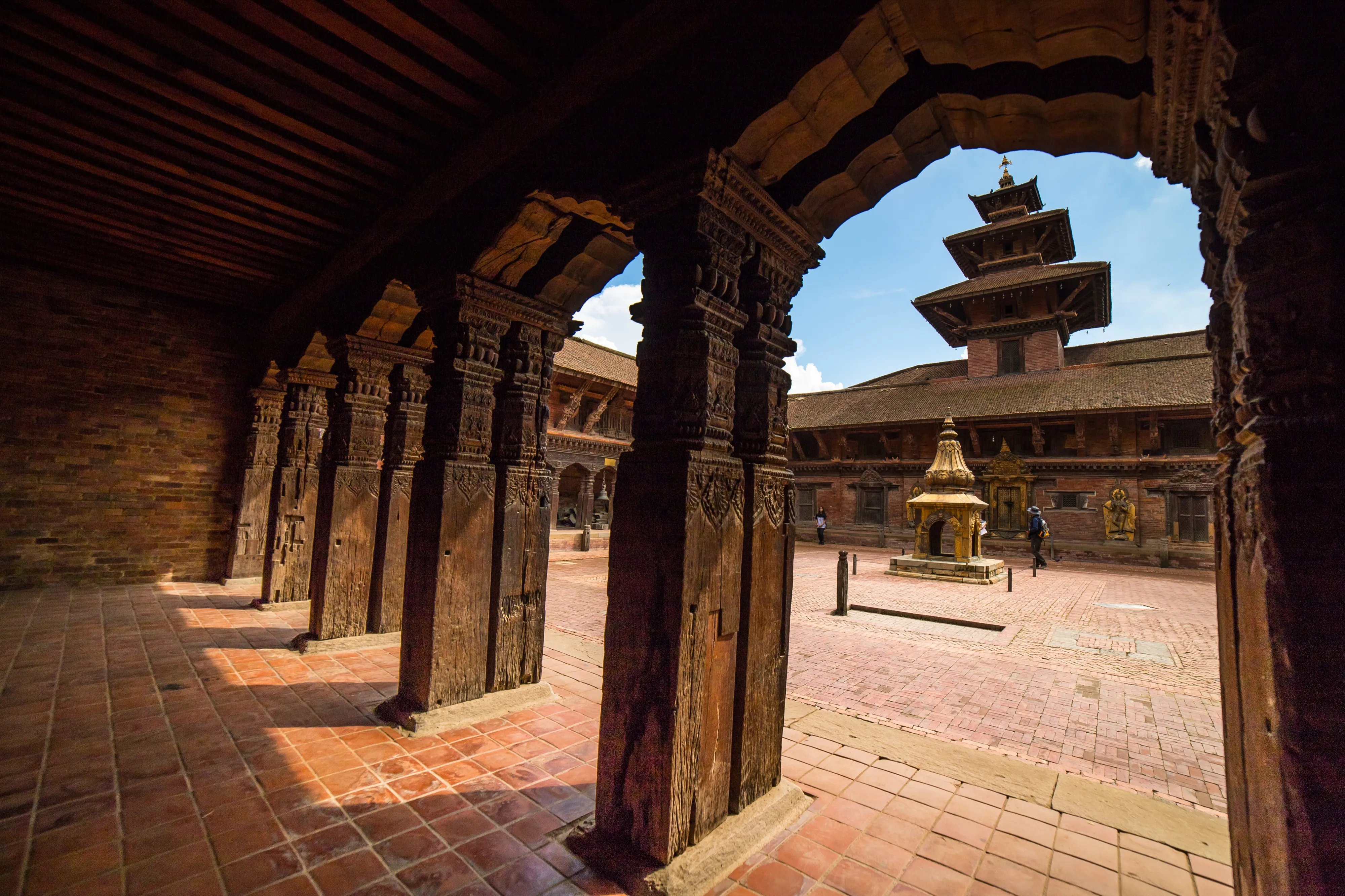
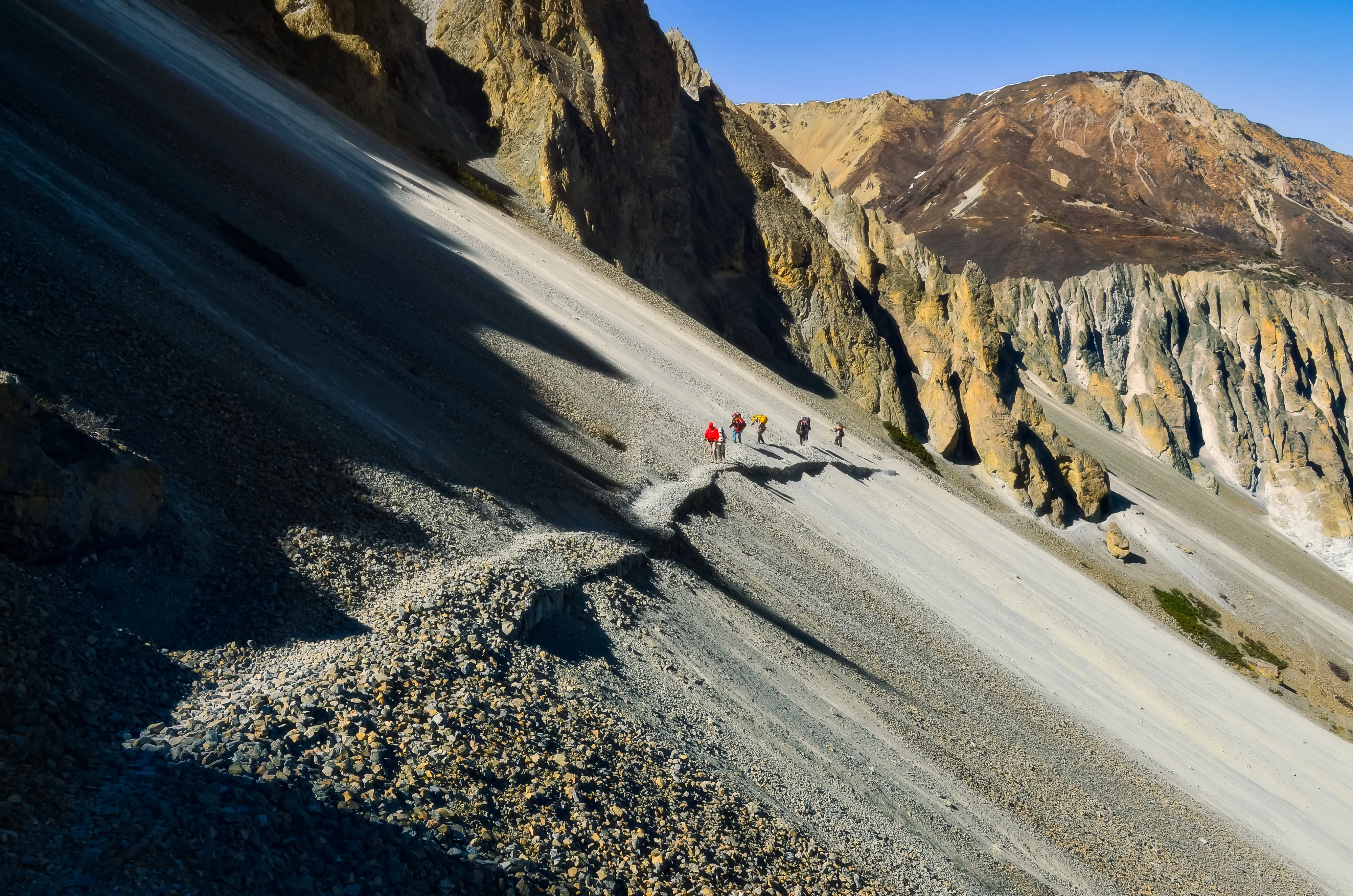
There is a version of every great place that the day visitor never meets. It lasts an hour, sometimes less, and then it closes again behind the diesel of tour buses, the shuffle of ticket queues, and the long flat afternoon. You cannot buy your way into it at the gate, because it is not for sale at the gate. It belongs to the people who live beside it: the ones who know which week of spring the dawn light falls clean across the river, which priest takes the first puja, and who are owed enough small favours that a door opens a few minutes before the sign says it should. That is the quiet thing dividing seeing a country from being let into it, and nowhere have we felt the line more sharply than in Nepal.
Take Pashupatinath at half past seven. By mid-morning the great temple complex on the Bagmati is three deep at the railings, cameras lifted over the cremation ghats, guides reciting the same facts in four languages at once. Arrive while the mist is still lifting off the water and you walk into a different place altogether. The first puja of the day has its own slow choreography: the bell, the rising thread of smoke, the marigolds turning on the current, the sadhus in their saffron sitting cross-legged on the steps and not yet performing for anyone. You are not watching a sight then. You are standing inside a morning that has run, unbroken, for centuries, and that will run again tomorrow whether you came or not. The privilege is the simplest one there is: being let in before the world arrives.
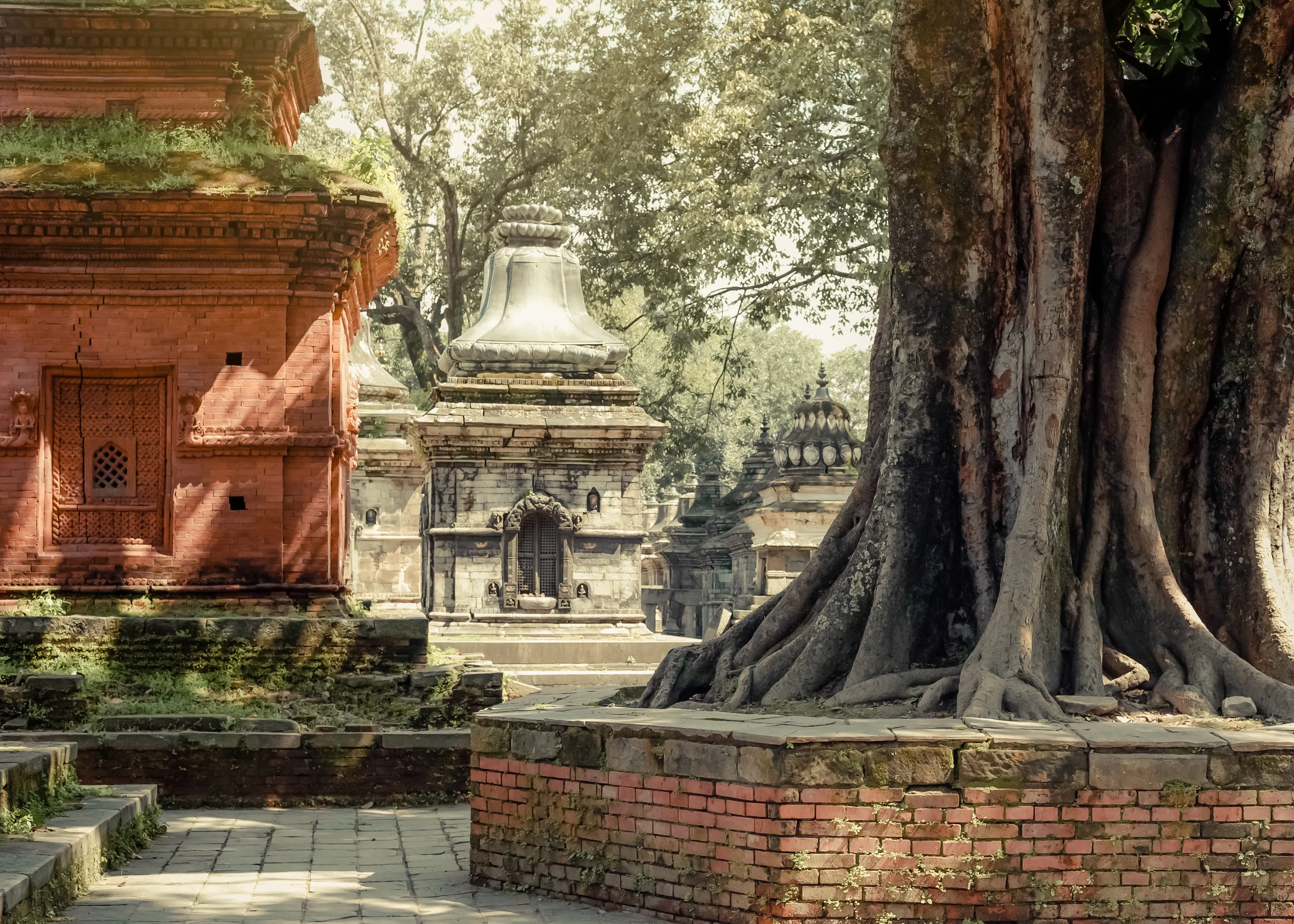 The shrine complex at Pashupatinath, on the banks of the Bagmati River — one of the most sacred sites in the Hindu world
The pilgrimage site at Namo Buddha, an hour’s drive east of Kathmandu into the Kavrepalanchok hills, carries one of the older stories in Buddhist tradition. Prince Mahasattva, walking in the forest with his brothers, came across a tigress close to death and unable to feed her cubs. His brothers left. In an act of compassion that Buddhist tradition calls the highest, the prince gave himself to the tigress. When his brothers returned, they found only bones and hair. The stupa at Thrangu Tashi Yangtse Monastery is said to stand on those remains, which is to say that the place is not a monument to achievement but to a willingness to be fully present at the cost of everything else.
A story like that needs silence to land, and the monastery gives it. The guided meditation and Buddhist puja that follow the walk up to the stupa are not timed to the hour of maximum footfall. They are set for the hour when the place is still itself: when the chant carries out through the prayer-hall walls across an empty courtyard, when the eastern hills still hold the early light and the valley below has not fully woken. A guidebook can tell you where Namo Buddha sits and what the tigress means. It cannot choose the morning.
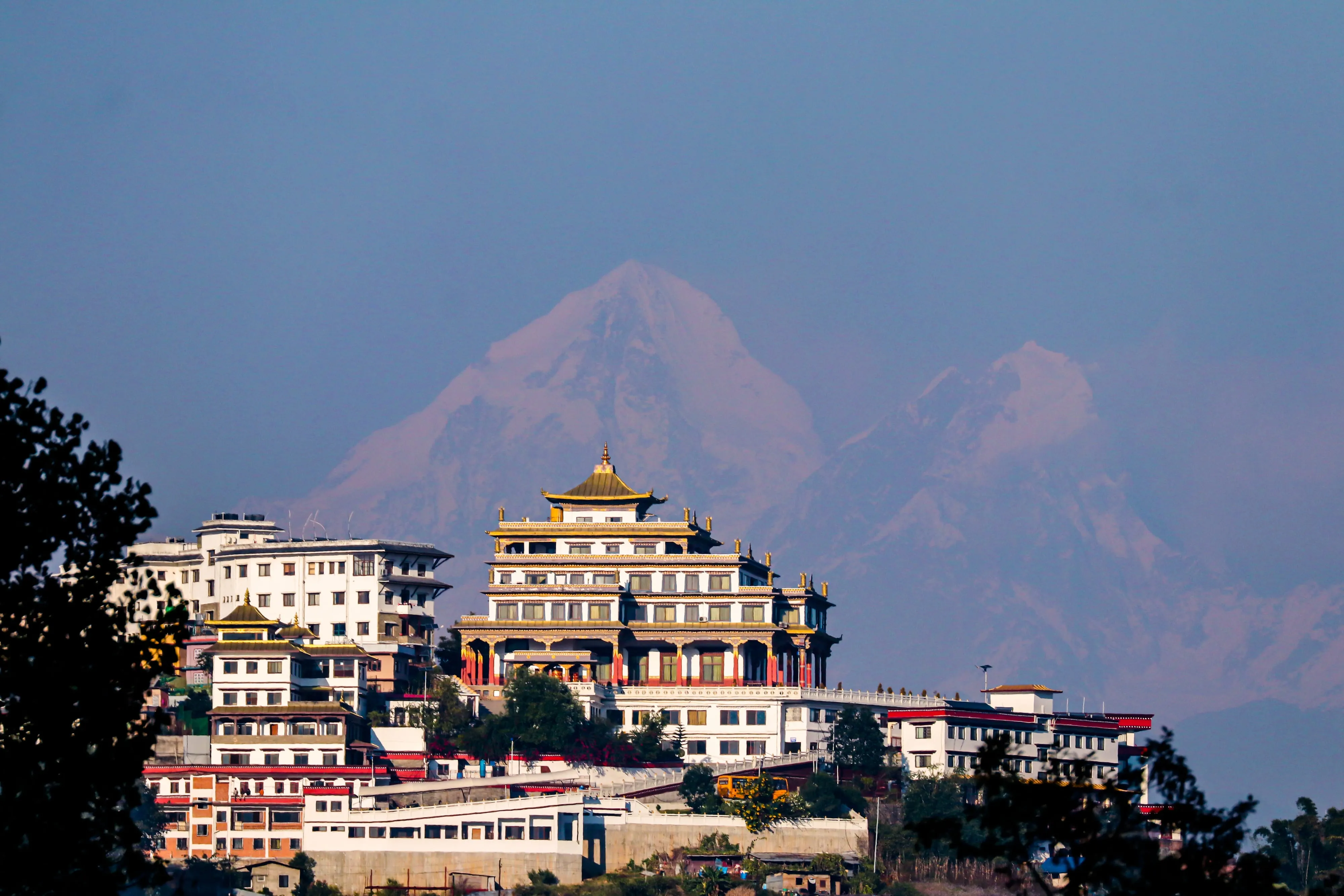 Thrangu Tashi Yangtse Monastery at Namo Buddha, an hour east of Kathmandu, where a Buddhist puja follows the visit to the stupa
Or consider Budanilkantha before breakfast: the great reclining Vishnu, five metres of black basalt cut from a single block, asleep on the coils of a serpent in the dark water of the sunken tank, the hooded heads raised above his own. Later in the day there will be a queue along the rail, a press of devotees, and the dull crowding that comes when too many people look at one thing at once. Early, the sleeping god has the morning to himself, and so, briefly, do you. The water lies flat. The marigolds and red powder on the offering tray are fresh from the first rite. A handful of worshippers stand at the stone lip of the tank with their palms together, in no hurry. It is the same statue at either hour. It is not the same encounter, and the whole of the difference comes down to timing and access, which is to say to knowing the right people and trusting them to choose the right hour.
This is where I should be honest about what a curator actually does, because the easy move in travel writing is to claim a knowledge you do not hold. I do not know the priest at Pashupatinath. I cannot, sitting in another country, judge which week the dawn light will fall clean at Namo Buddha, or telephone ahead and have a quiet courtyard kept for us. What I can do, and what I take to be the real work, is find the person who can, and then satisfy myself that he is the right one. Our ground partner in Nepal has spent a working life building exactly those relationships: the slow accumulation of favours and familiarity that turns a closed door into an open one. My judgement sits one step back from his. It is in telling apart the operator who will deliver you to the gate at the busy hour and call it done, from the one who understands that the morning was the entire point and has the standing to make that morning yours.
That distinction carries more weight than it sounds. Anyone can assemble an itinerary. The internet is thick with them, and most are perfectly competent lists of the same temples in the same order at the same crowded hours. What you cannot assemble for yourself, sitting at home with every booking site open at once, is the unbought hour. You cannot grant yourself the half-past-seven puja, the still monastery before the buses climb the hill, the sleeping Vishnu on cool flat water. Those arrive through someone whose feet are on the ground and whose memory is long enough to know who owes him what, and the curator’s one honest claim is to have chosen that someone with care. If that model is unfamiliar, our curated travel guide is the shorter introduction, and a plain explanation of what a curated tour actually is covers the full thinking.
So the promise here is not that we know Nepal. It is that we have chosen the people who do. The itinerary is only the structure: the temples, the drives, the hours set down in a sensible order. What fills the structure is earned, built up over years of knowing which priest to call and when to arrive, of having turned up at the wrong hour often enough to understand exactly why the right one matters. That is not a line you can tick when you book. It is the residue of a working life spent beside these places, and it belongs to the operator on the ground, never to the catalogue.
What we offer is the judgement that chose that operator, and the confidence that the days he builds around the Kathmandu Valley’s temples, and the longer journey south to Lumbini, Pokhara, and Chitwan, are shaped by access and not by a list. The morning you carry home will be the one you could never have arranged yourself. That, in the end, is the whole reason to let someone else arrange it.

Written by
Mano Chandra Dhas ›Founder of Coromandel Tours. In travel since 1975, from Singapore Airlines to Emirates and Carlson Wagonlit, he now curates private journeys through Colombia, Peru, India, and Nepal from his home in Bogotá. Many of the photographs on this site are his.