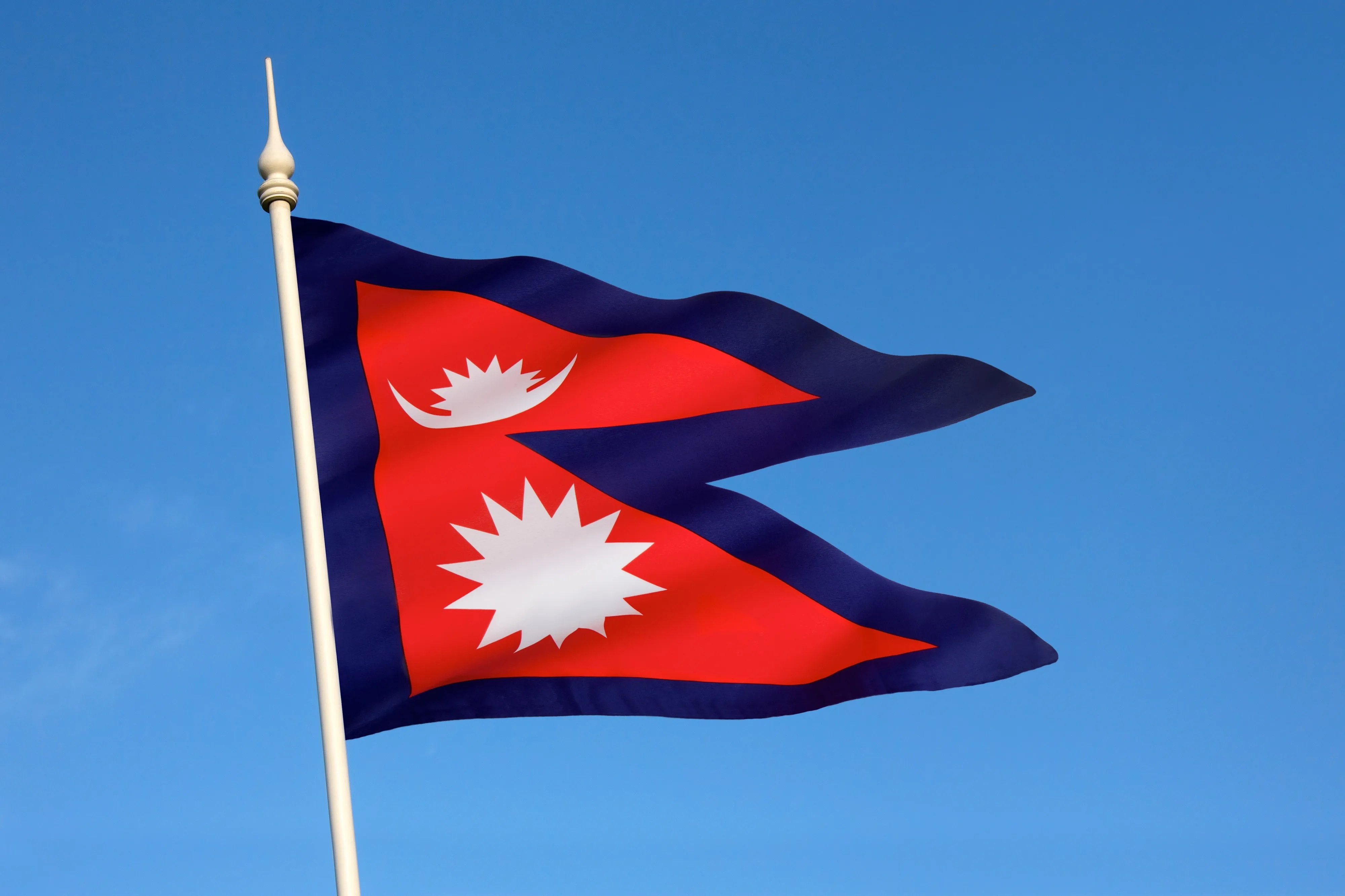
Say the word Nepal and a single image assembles itself. Gore-Tex. Thin air at altitude. A very long walk towards a very high mountain, undertaken by people who train for it. The image is so dominant that for most travellers it is the whole country: a physical challenge, filed away under things one does in one’s thirties, or not at all.
The image is accurate. It is simply not the only one. It describes one Nepal, the high and strenuous Nepal of the Everest and Annapurna routes. There is another Nepal entirely, lower down, older, and built not for the legs but for the eye. It asks nothing of your fitness and a great deal of your attention.
The foreclosed destination
Nepal is one of the most mentally foreclosed places in travel. People decide against it before they have learned the first thing about it. And the people who decide against it are very often the exact people who would love it most: travellers who have spent four days inside the walls of Cartagena, or a week moving slowly through Rajasthan, and understood the pleasure of a place with deep cultural layers and the time to read them.
They rule Nepal out on grounds that do not apply. They do not think they are fit enough. They do not think they are young enough, or adventurous enough, or the kind of person who owns the boots. None of that is required to visit the Kathmandu Valley. The foreclosure happens early, it happens silently, and it removes from the table one of the richest cultural destinations in Asia.
What the valley actually contains
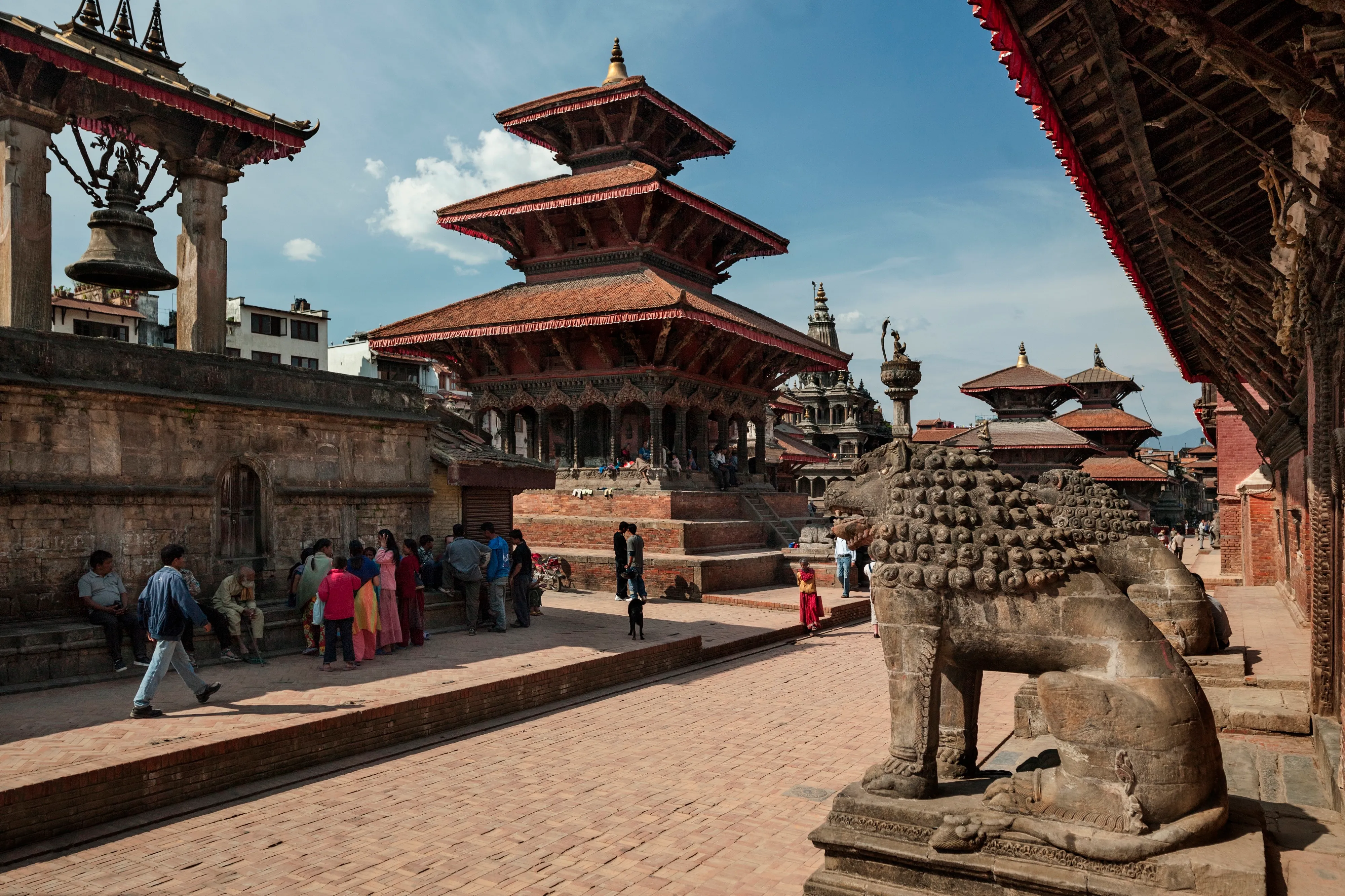
Consider what sits within a single bowl of land. The Kathmandu Valley holds seven UNESCO World Heritage Sites. Three of them are whole medieval cities: Kathmandu, Patan, and Bhaktapur, each with its own royal square, its own Newar architecture of carved timber and warm brick, its own working pantheon of Hindu and Buddhist deities who are not museum pieces but objects of daily devotion.
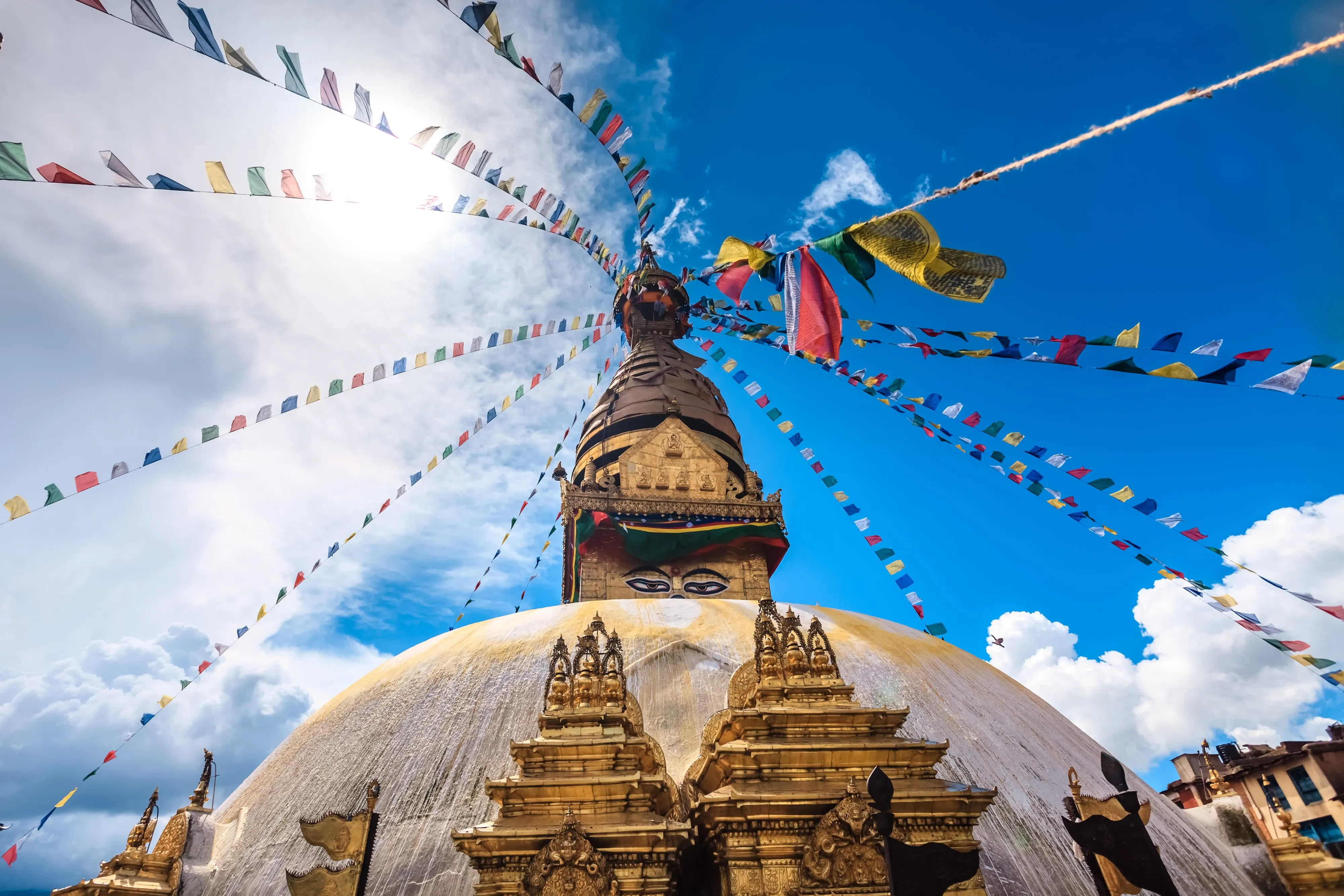
Changu Narayan Temple dates to 464 AD. The Patan Museum holds one of the finest collections of South Asian bronze and stone work anywhere in the world. Pashupatinath is the most sacred Hindu site in Nepal, alive with ritual along the river. Boudhanath Stupa, sometimes called Mini Tibet, draws pilgrims in slow clockwise circuits. Swayambhunath watches the whole valley from its hill.
None of this requires a single night above 7,218 feet, which is the height of Nagarkot, and you go there only for the sunrise. Kathmandu itself sits at around 4,600 feet. This is a city you fly into and then walk around, with a guide, over several days. The altitude is not a factor. It is barely a number.
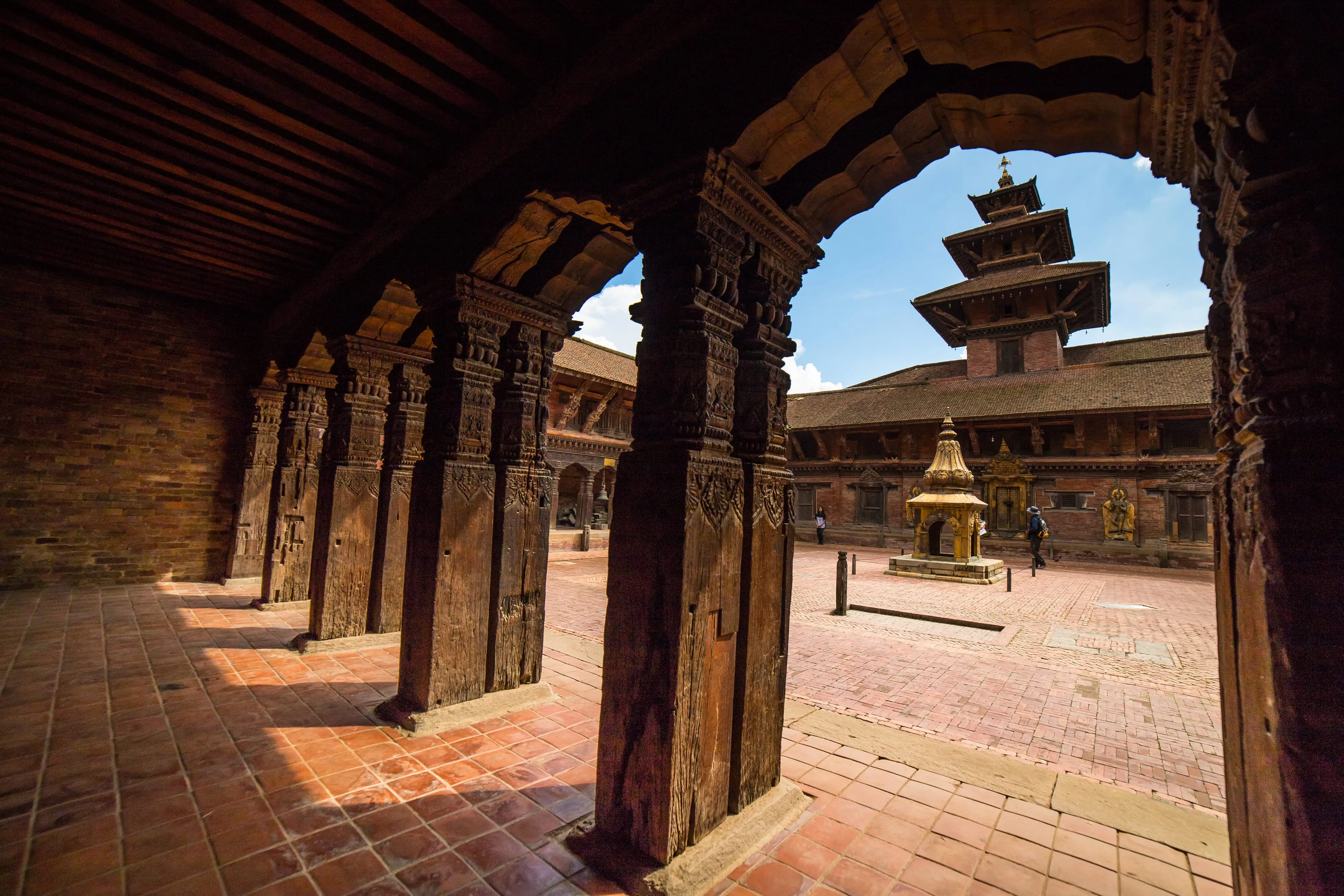 Patan Durbar Square, one of three medieval royal courts within the Kathmandu Valley
Ten days without a trailhead
Picture the days instead of the climb. A morning at Pashupatinath, early, before the heat arrives and while the river rituals still have the quiet of dawn around them. A full day in Patan, the City of Fine Arts, moving between bronze workshops where the casting is still done by hand and temple courtyards that have not changed their proportions in centuries. A sunrise watched from Nagarkot, the valley filling slowly with light below.
An hour of guided meditation at Namo Buddha monastery. The drive south to Lumbini and the sacred gardens where Siddhartha Gautama was born. The lakeside calm of Pokhara, the whole Annapurna range standing on the horizon on a clear morning, none of it asking you to take a step towards it. The lowland jungle at Chitwan, with its one-horned rhinos and its Bengal tigers and its slow canoe rides on the Rapti. A private guide and a vehicle throughout. No lodges, no altitude tents, no negotiations with porters.
This is the shape of the Kathmandu Heritage Tour, and of the longer Lumbini, Pokhara, and Chitwan circuit that carries it out beyond the valley rim. Both are walked, driven, and looked at. Neither is climbed.
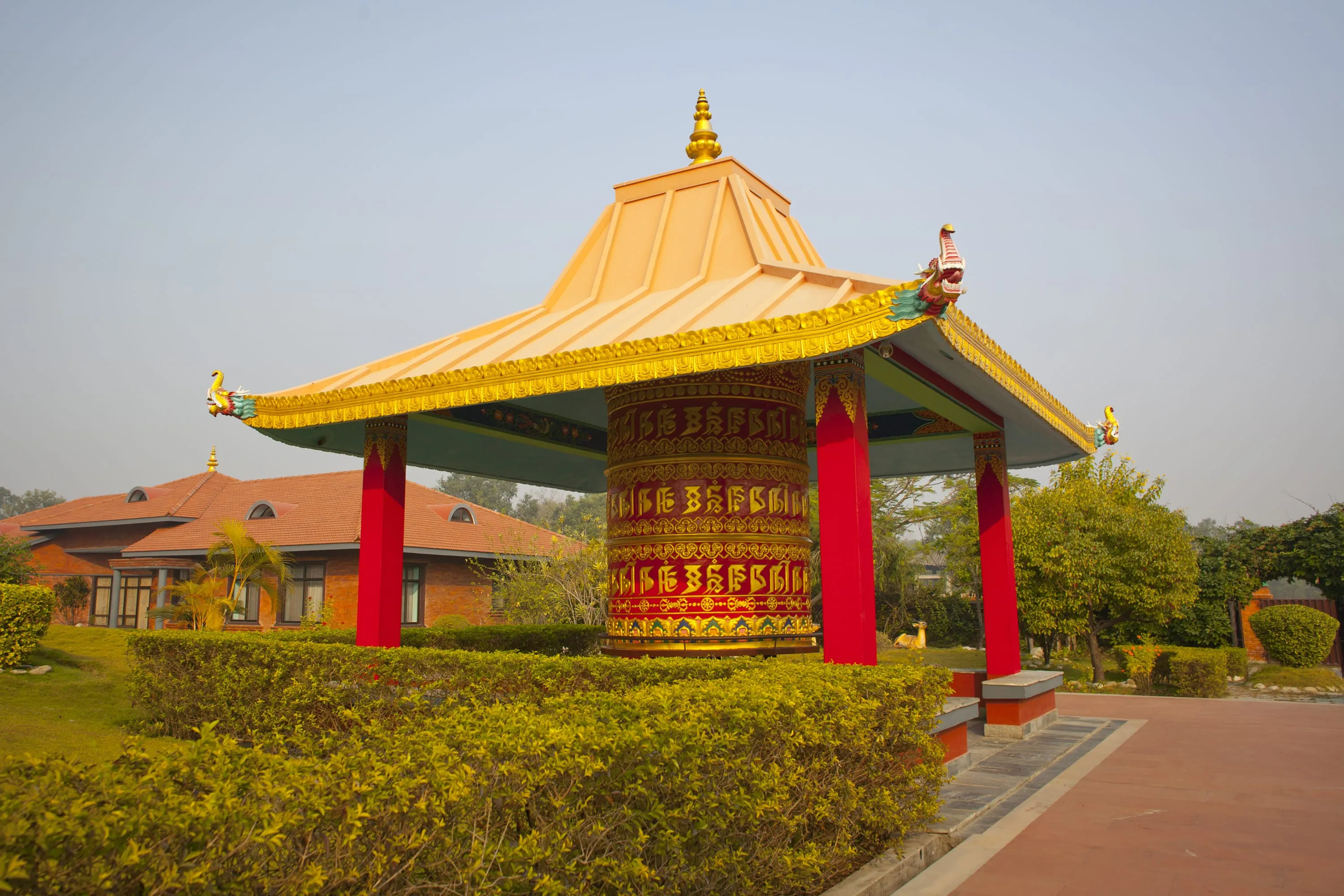 Lumbini, birthplace of Siddhartha Gautama
The traveller this suits
This is for the traveller who has stood in the great medieval cities of Europe and wants to understand what a medieval city looks like when the tradition it was built around is still alive, still worshipped in, still carving and casting and lighting butter lamps. Not preserved. Inhabited.
It is for the traveller who spent four days in a walled colonial city, the kind of stay where, by the third day, something genuinely shifts, and wants that same quality of unhurried attention applied to a place with an entirely different kind of depth. And it is for the traveller who would choose a morning at Pashupatinath over a morning at altitude without a second’s hesitation, and who is exactly right to choose it.
Why the image persists
To be fair to the image: the Everest route is genuinely one of the great journeys on earth, and the travel industry has spent decades marketing it brilliantly. The mountains deserve their fame. The error is not in believing Nepal has superb trekking. It does.
The error is the quiet slide from one sentence to another. From Nepal has trekking to Nepal requires trekking. Those are different propositions, and the gap between them is wide. The first is true and well known. The second is simply false, and it has cost a great many curious travellers a country they would have loved.
So return to that opening image. The Gore-Tex, the thin air, the long walk. It is perfectly accurate for one kind of Nepal visit. It is not accurate for the country. The Kathmandu Valley alone can absorb ten days of serious cultural attention and repay every one of them. The traveller who has been to Kyoto, or Istanbul, or Krakow, and wants to see what one of the world’s living religious traditions looks like when it has had fifteen hundred years to fill a single valley: Nepal is the answer. The Gore-Tex is optional.
Boudhanath Stupa, a UNESCO World Heritage Site in the Kathmandu Valley
The distinction between those two Nepals also has a practical consequence: the expertise required to navigate one is not the expertise required for the other. Why that matters, and what it means for how a serious visit is arranged, is worth understanding before you travel.

Written by
Mano Chandra Dhas ›Founder of Coromandel Tours. In travel since 1975, from Singapore Airlines to Emirates and Carlson Wagonlit, he now curates private journeys through Colombia, Peru, India, and Nepal from his home in Bogotá. Many of the photographs on this site are his.