On the afternoon of Saturday 19 September, a forest fire broke out on the Cerro de San Marcos, the hill that rises above Villa de Leyva in the Colombian department of Boyacá. Driven by strong winds and the dry conditions that have settled over the Andes ahead of El Niño, it spread quickly. By Monday the town’s authorities had declared a public calamity, closed the schools, and evacuated hotels near the fire as a precaution. The fire is not yet out.
Villa de Leyva is one of the journeys we arrange from the capital, as a full day out from Bogotá, so this is a short advisory rather than a long article. It sets out what has happened, what is known as of 22 September, and how we are handling enquiries and bookings for the town while the situation settles.
What Has Happened
The fire began in the rural area of La Castellana, on the slopes of San Marcos above the town. Over the following three days it moved in two directions: south-west into the village of Ritoque in the neighbouring municipality of Sáchica, and north-east into the Iguaque Flora and Fauna Sanctuary, the protected mountain reserve behind the town, in the municipality of Chíquiza.
More than four hundred firefighters, soldiers, Civil Defence volunteers, and local residents have been working on the ground, with helicopters from the Air Force, the Army, and the Boyacá government dropping water from above. One hotel close to the fire, the Arcoiris, was destroyed, and its guests and staff were all brought out safely. No injuries have been reported, though the Red Cross and Civil Defence had attended to more than thirty people, and the town’s sports hall was opened as a shelter for anyone directly affected. A curfew for minors was put in place, and the Villa del Cine film festival, due to open on 23 September, has been postponed.
The cause is under investigation. Colombia’s Environment Minister has said that preliminary information suggests the fire may have been started deliberately, and the Boyacá government has offered a reward for information.
Where Things Stand Now
As of 22 September, the national disaster agency reported the fire as roughly 75 per cent under control, with two fronts still burning in steep, broken ground near the Iguaque sanctuary. The terrain there has made it difficult for aircraft to work, so the remaining fire line is being fought largely by hand.
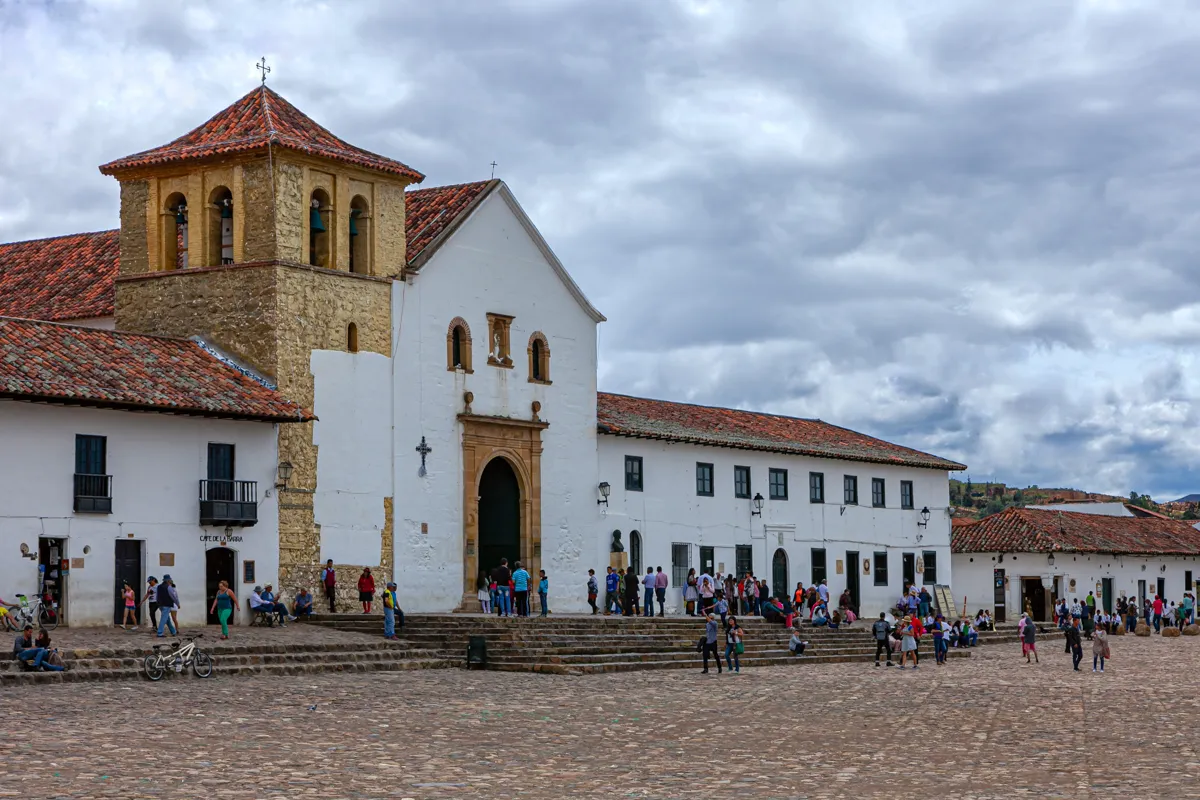
The most important point for the town itself is that the authorities no longer consider the fire a direct risk to Villa de Leyva’s urban centre. The historic town, its plaza, and its colonial streets have come through intact.
The damage to the landscape is another matter. The disaster agency puts the total area affected at close to 1,200 hectares, and between 715 and 800 hectares of that lies inside the Iguaque sanctuary, depending on which official estimate is used. The governor of Boyacá, having flown over the sanctuary on 22 September, described what he saw as a tragedy. Iguaque’s streams and springs also feed Villa de Leyva’s water supply, which is one reason the fire has caused such concern beyond the firefighting itself.
What This Means for Visiting Villa de Leyva
The honest position is that this is still a live situation, and the picture can change from one day to the next. A fire that is three-quarters controlled is not a fire that is out, and the smoke over the town has been heavy for several days. Colombia’s weather authorities have also said that the period of greatest wildfire risk from El Niño is expected to run from October to April, so the question of fire in the Andes is unlikely to go away entirely this season.
For that reason, we are not publishing a blanket verdict on whether to go. Instead, anyone who enquires about Villa de Leyva, or who books a trip that includes it, will be told the current status at that time: whether the fire is out, whether the roads and the places on the itinerary are open, and whether the air is reasonable for a day of walking. If the answer on the day is that it is better to wait, we will say so, and suggest something else in its place, such as the salt cathedral at Zipaquirá or more time in Bogotá itself.
Bogotá is around 100 miles from Villa de Leyva and is not affected, and neither are the other journeys we arrange from the capital.
If you are thinking about Villa de Leyva in the coming weeks, or you already have it in a plan, simply get in touch and we will tell you where things stand. We will update this advisory as the situation develops.
Sources
This advisory draws on reporting by Caracol Radio and its interview with the acting mayor, AP, Al Jazeera, Anadolu Agency, El Tiempo, Semana, El Colombiano, El Espectador, La FM, and Colombia One, which in turn cite the national disaster agency (UNGRD), the Interior and Environment ministers, the Boyacá government, and the municipality of Villa de Leyva.
Last updated on 22 September 2026. Figures are taken from Colombian and international press reports citing the national disaster agency and the Boyacá government, and may change as the emergency continues.

Written by
Mano Chandra Dhas ›Founder of Coromandel Tours. In travel since 1975, from Singapore Airlines to Emirates and Carlson Wagonlit, he now curates private journeys through Colombia, Peru, India, and Nepal from his home in Bogotá. Many of the photographs on this site are his.