India's Independence Day, 15 August: What It Means and What It Means for Travellers
On 15 August 1947, after nearly two centuries of British rule, India became independent. It is the date the modern country begins, and every year since it has been marked from one end of the subcontinent to the other, in a nation that now holds close to a billion and a half people. Whatever else can be said about a public holiday, this one is observed at a scale nothing in Europe or the Americas quite matches.
We write mostly about how to plan a trip. This piece is a little different, and it is worth saying why. Understanding what a country marks, and why, is part of what separates travelling through a place from simply visiting it. And there is a practical layer underneath, because the day changes what a traveller in India that week can actually see and do.
What the Day Looks Like
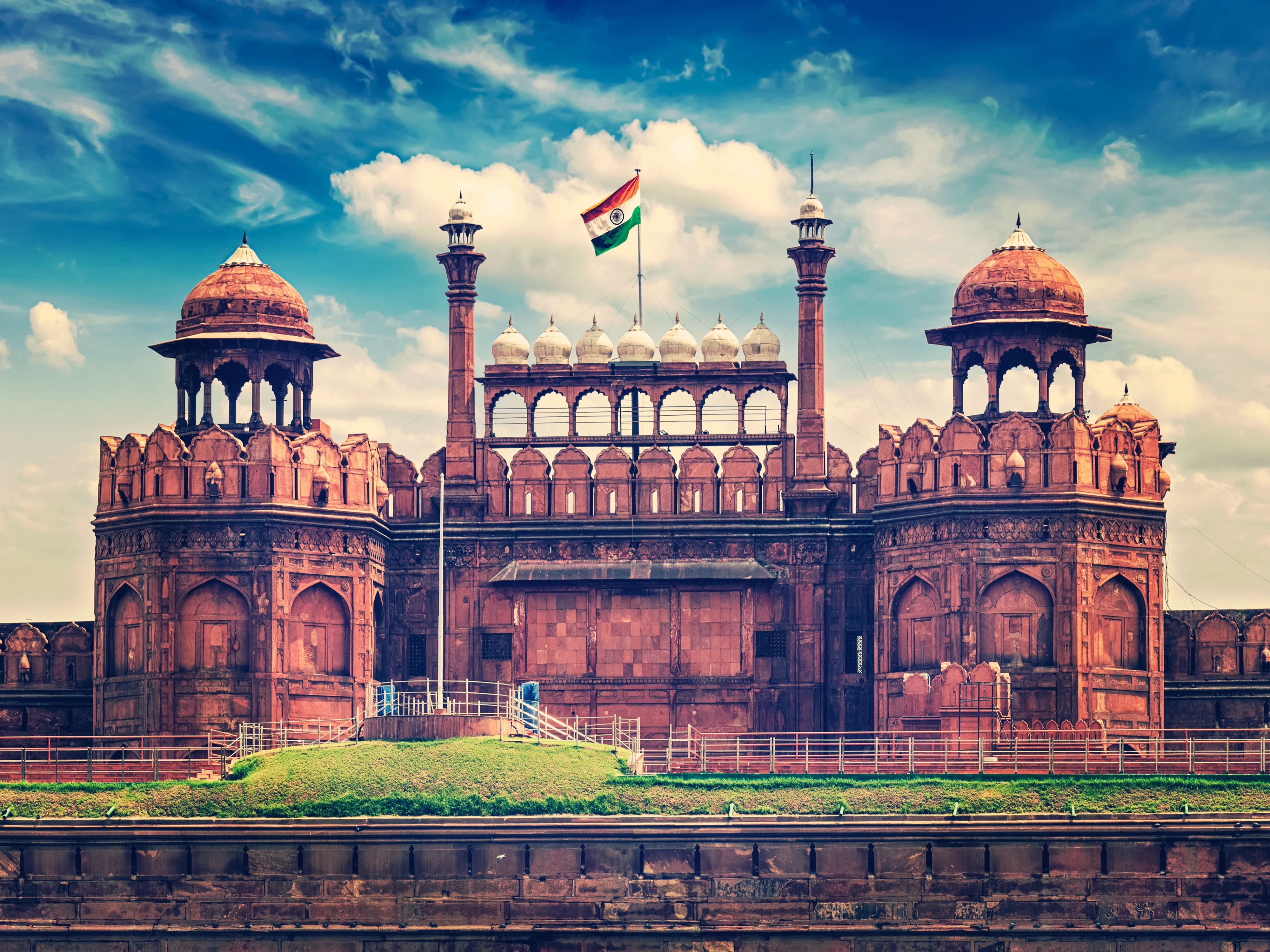
The centre of it is Delhi, and specifically the Red Fort. Each 15 August the Prime Minister unfurls the national flag from the ramparts of the fort and addresses the nation from them, a tradition dating back to the first Independence Day in 1947. Several thousand invited guests attend, and the address is carried live across the country. Security around the fort is formidable, running to tens of thousands of personnel and a restricted zone extending some kilometres in every direction.
Away from Delhi the day is quieter and more widespread than the televised ceremony suggests. Flags are hoisted at dawn at schools, offices, and public buildings in more or less every town in the country. It is a national holiday, so government offices and many businesses close.
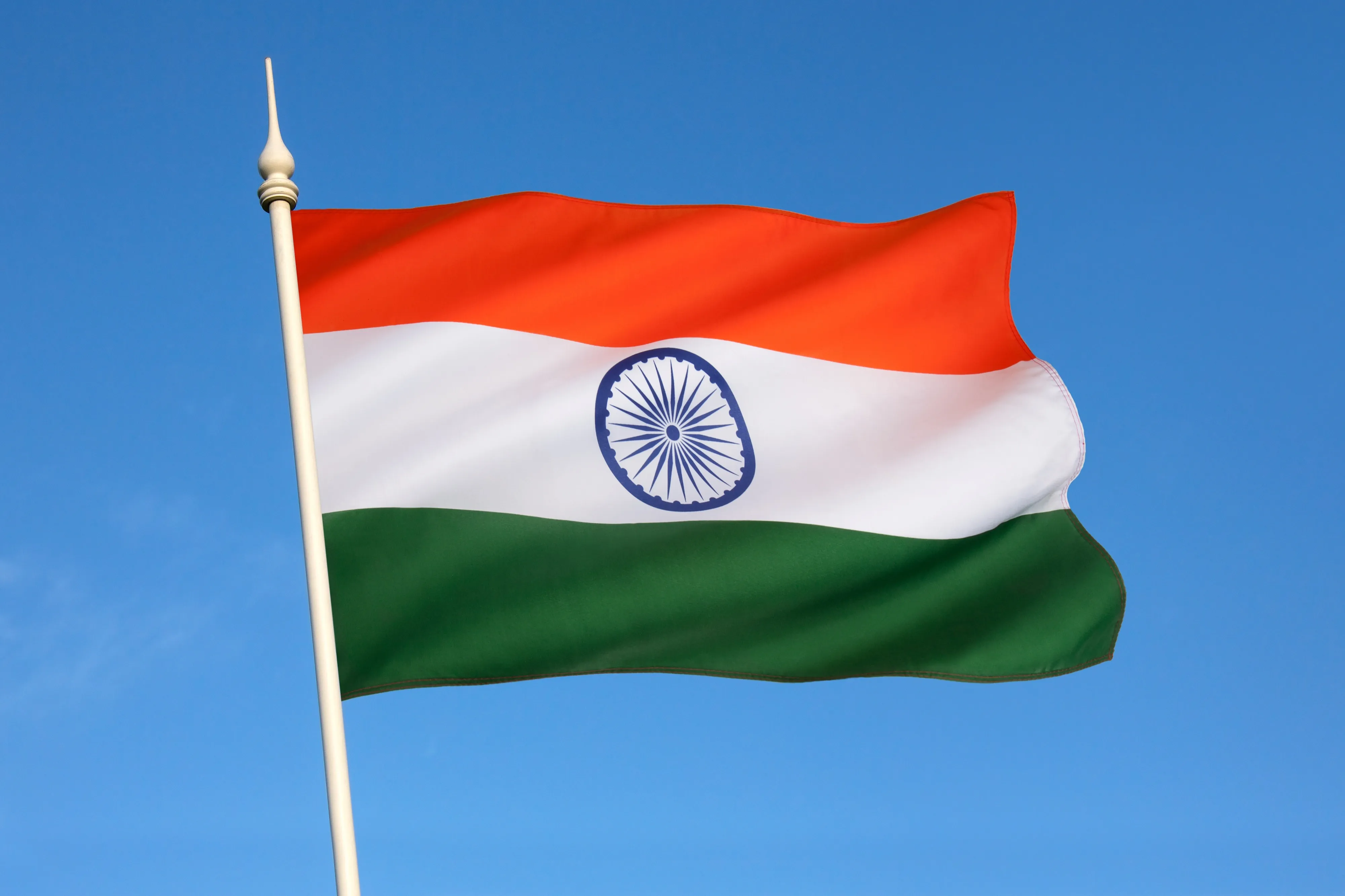 The tricolour, with the Ashoka Chakra at its centre. The wheel is taken from the lion capital of Ashoka, a third-century BC emperor.
What It Means If You Are Travelling That Week
Two practical consequences follow, and neither is a reason to stay away.
The first is Delhi. If your itinerary has you in the capital on 15 August, expect the area around the Red Fort and Old Delhi to be difficult, with road closures, diverted traffic, and a heavy security presence from early morning. Access to some monuments and public buildings is restricted on the day. This is not a week to plan a tightly scheduled morning in Old Delhi, and it is worth confirming locally what is open rather than assuming, since arrangements vary year to year.
The second is the season, and it is the larger point. Mid-August sits squarely in the monsoon. As the Delhi page sets out, the north is at its best from October to March, with the rains running from July into September. So a traveller in Delhi on 15 August is, by definition, travelling in the wrong season for the north, and a well-planned Golden Triangle almost never lands there. If you are in India in mid-August, you are most likely there for reasons other than the itinerary, and the day is a gift rather than a plan.
The Other National Day, and Why It May Suit You Better
There is a second date, and for a traveller it is the more practical one. India’s Republic Day falls on 26 January, marking the adoption of the constitution in 1950, and it is the day of the great parade in Delhi. It is at least the equal of 15 August as spectacle, and unlike 15 August it falls in the middle of the north’s best travelling months.
That is a genuinely useful piece of planning information. If you would like to be in India for a day of national significance, and to see the country at its most ceremonial, 26 January gives you that in clear, cool, dry weather, in the same window in which you would want to be doing the Golden Triangle anyway. Mid-August asks you to accept the monsoon for it.
Either way, it is worth knowing that these dates exist before you fix your own, which is the argument we made in what has to be decided first. A national day is not usually the reason to choose a departure date, but it is very much a reason not to choose one by accident.
A Note on Scale
One last thought, and it is the reason this date is worth a traveller’s attention even from a long way off. India is not a country that can be seen in a single trip, as we have argued at length. It is a subcontinent of dozens of languages and a dozen distinct regional cultures, and on 15 August all of it, from Kashmir to Kerala, marks the same morning. Whatever you make of the politics of any given year, holding that together is not a small thing, and it tells you something about the place that no monument quite does.
If India is on your mind, whether for January, for the winter months, or simply eventually, tell us what draws you and we will tell you honestly which season the trip you have in mind belongs to.

Written by
Mano Chandra Dhas ›Founder of Coromandel Tours. In travel since 1975, from Singapore Airlines to Emirates and Carlson Wagonlit, he now curates private journeys through Colombia, Peru, India, and Nepal from his home in Bogotá. Many of the photographs on this site are his.