Almost every trip to Peru lands in Lima, and a great many of them leave again the next morning. The logic is easy to follow. Machu Picchu is the reason most people are on the aeroplane, Cusco is an hour’s domestic flight away, and a night near the airport looks like the sensible way to lose as little of a fortnight as possible to a city nobody came for.
It is a false economy, and one of the few planning decisions we would argue with almost every time. Two days in Lima is not a tax on the trip. It is the best preparation for the Andes available to you, and it happens to work in both directions at once, on what you understand and on how your body copes.
The City Is Not a Waiting Room
Lima was founded by Francisco Pizarro in 1535 as the City of Kings, and for nearly three centuries it was the capital of the Spanish Viceroyalty of Peru, the seat from which Spanish power reached across the whole continent. That is not a footnote to Peruvian history. For three hundred years it was the centre of it, and the historic centre, a UNESCO World Heritage Site since 1991, still reads that way. Within a few square kilometres are baroque churches, colonial palaces, the oldest university in the country, and the catacombs of San Francisco, which hold the remains of an estimated 25,000 colonial-era burials.
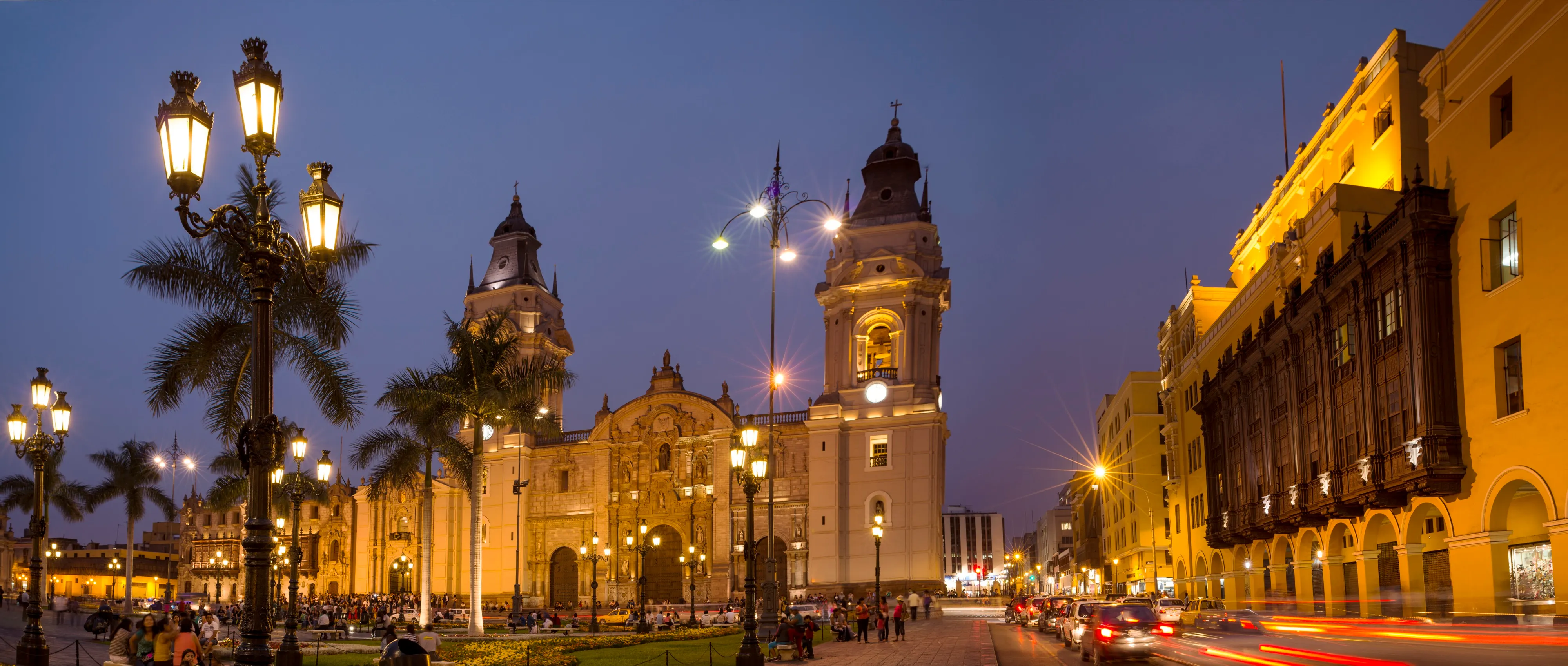 The Plaza Mayor at dusk. A morning on foot in the old city takes about four hours and explains most of what follows.
A morning on foot here does something specific for the rest of the trip. The Inca sites you are about to see in the highlands were not abandoned ruins when the Spanish arrived, and the colonial city built on top of Cusco makes very little sense unless you have already seen what the people who built it were building everywhere else. Walk the old city first and Cusco stops being a pretty town with some old stonework underneath it, and becomes what it actually is, which is one civilisation set physically on top of another.
Pachacamac, and Why It Should Come Before Machu Picchu
Thirty kilometres south of the city, on the edge of the last green valley before the desert begins, lies Pachacamac. It was an active religious site for more than a thousand years before the Spanish arrived, and the most important oracle in the central Andes. Pilgrims came from as far north as present-day Ecuador and as far south as Chile to consult the wooden figure of the god at its centre.
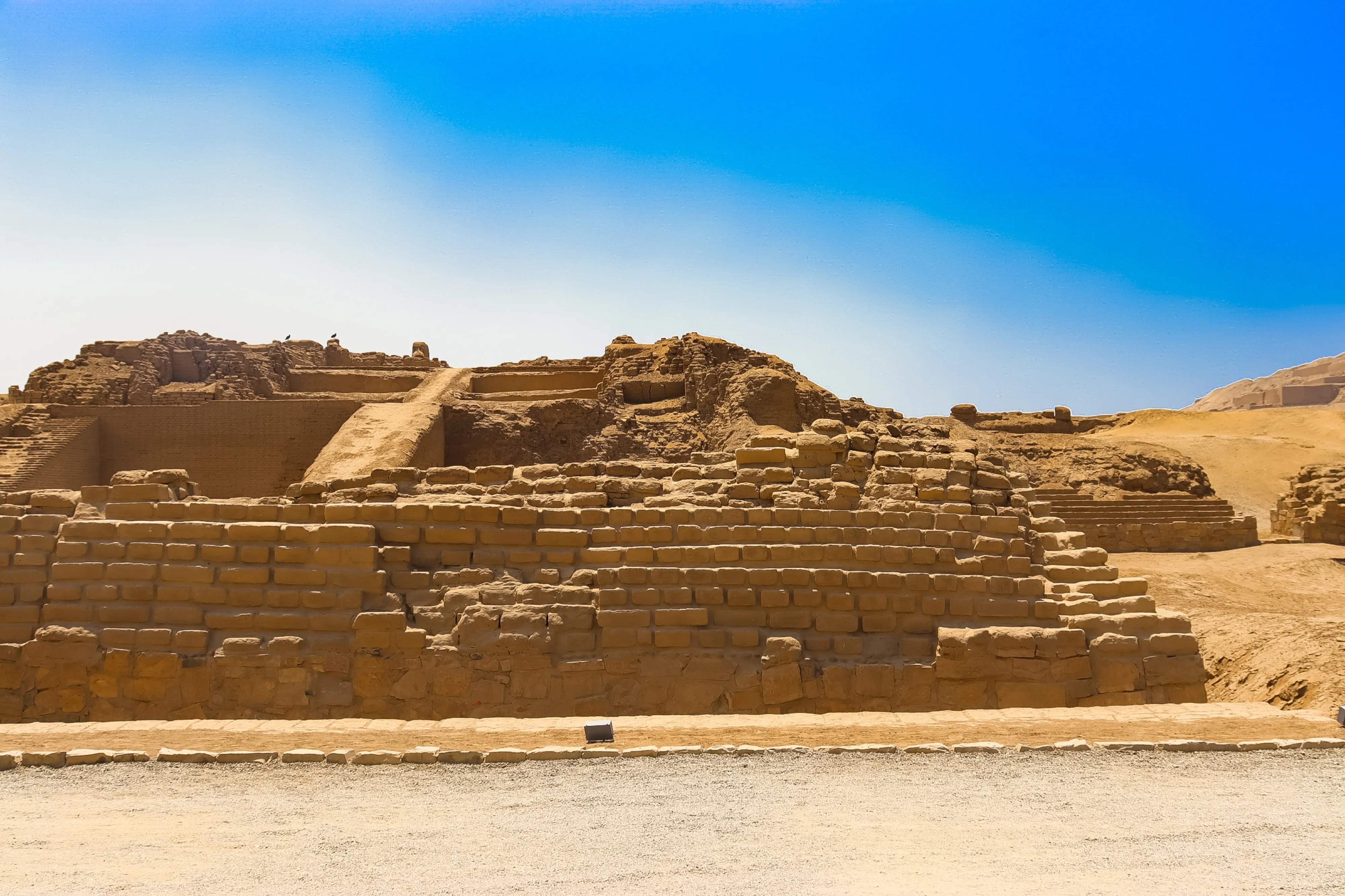 Adobe pyramids at Pachacamac, a coastal religious centre already ancient when the Incas reached it.
What makes it the right first archaeological site of a Peru trip is what happened next. The Incas reached the coast in the fifteenth century and did not replace the older cult. They absorbed it, adding a Temple of the Sun and a House of the Chosen Women alongside pyramids that were already centuries old. Seen in chronological order, from the earliest coastal cultures up to the Inca additions, the site quietly corrects the assumption most visitors carry into Peru: that Inca means ancient. The Inca empire was the last chapter, and a short one. Arriving at Machu Picchu already knowing that changes what you are looking at.
A Cuisine That Is Genuinely Part of the Country
Peruvian food is one of the great cuisines of the world, and Lima is its capital. Three of its restaurants are ranked among the best anywhere, which is the fact that travels. The more useful fact is that the soul of the cooking is not in those restaurants at all but in the markets and in the dishes everybody eats: ceviche, lomo saltado, causa, ají de gallina. A morning spent in a working market with a Peruvian chef, choosing the ingredients and then cooking the dishes yourself, is one of the most direct routes into the culture we know of, and it is the kind of morning people still talk about a year later.
The Practical Argument
Then there is the body. Lima sits at sea level. Cusco sits at 11,150 feet, and the standing advice is to give it a full, gentle day before anything strenuous, which we have set out in detail in how to plan the first days at altitude. A traveller who has spent two unhurried days at sea level, sleeping properly and eating well, arrives in the highlands in a different condition from one who has come off a long-haul flight, slept badly by the airport, and boarded a dawn connection. The altitude will still be the altitude, but the person meeting it is in better shape.
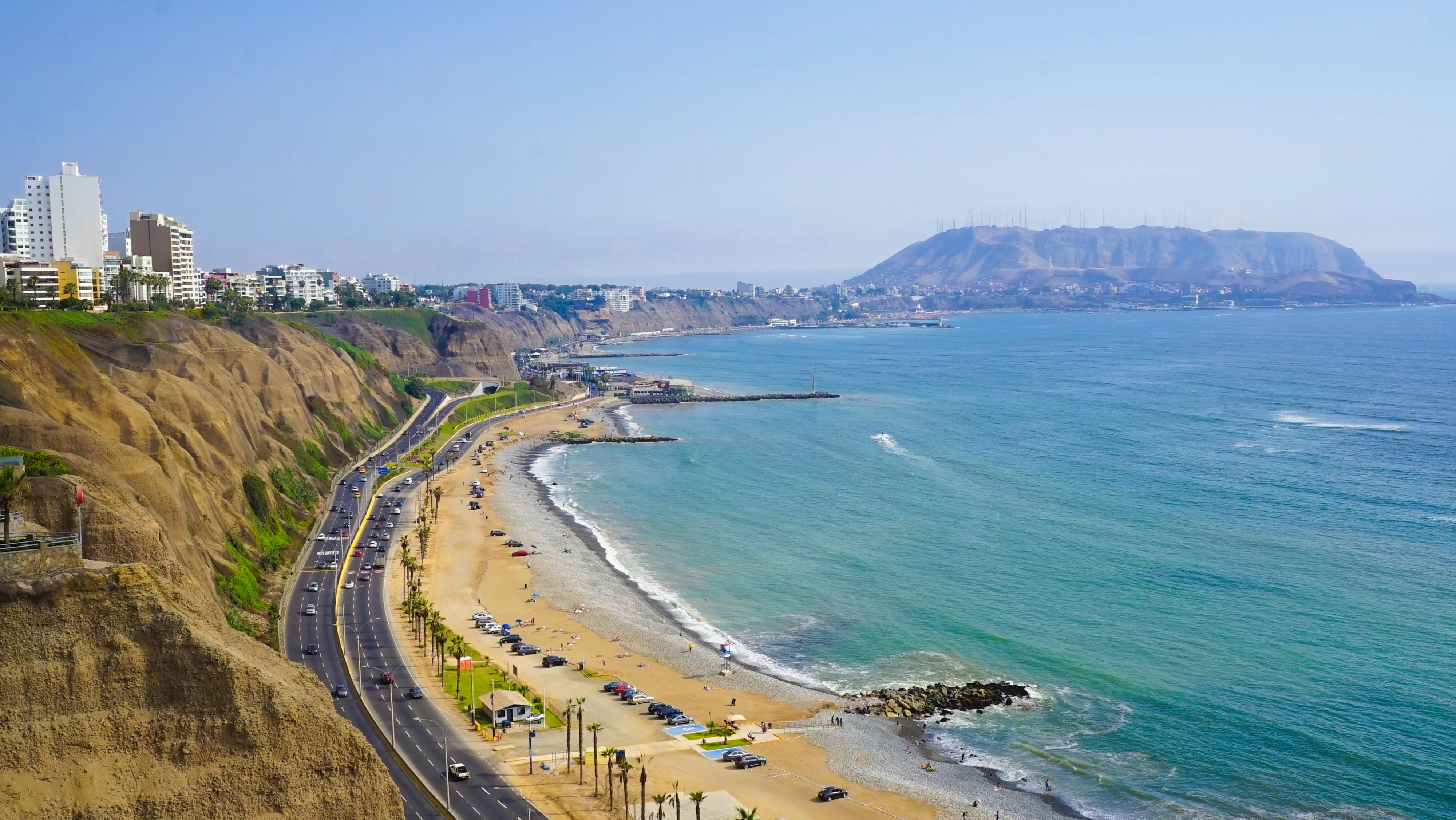
Two days is the number. Enough for a morning in the historic centre, a morning at Pachacamac, an afternoon in Miraflores or Barranco with the Pacific below you, and a proper dinner. This is the same argument we make everywhere, that depth beats distance, except that in Lima’s case the depth is nearly free, because the time comes out of a day most people were going to spend in transit anyway. It is also the sort of thing worth settling early, for the reasons set out in what has to be decided first.
If Peru is on your mind and the plan currently has one night in Lima on it, tell us what draws you to the country and we will show you what the second day buys.

Written by
Mano Chandra Dhas ›Founder of Coromandel Tours. In travel since 1975, from Singapore Airlines to Emirates and Carlson Wagonlit, he now curates private journeys through Colombia, Peru, India, and Nepal from his home in Bogotá. Many of the photographs on this site are his.