Nepal's Constitution Day, 20 September: The Country That Has No Independence Day
Almost every country in South Asia has an Independence Day. India has 15 August, Pakistan 14 August, Sri Lanka 4 February, Bangladesh 26 March. Nepal has none, and the reason is the single most useful fact a first-time visitor can carry into the country: Nepal was never colonised. There was no empire to leave, and so there is no morning of departure to mark.
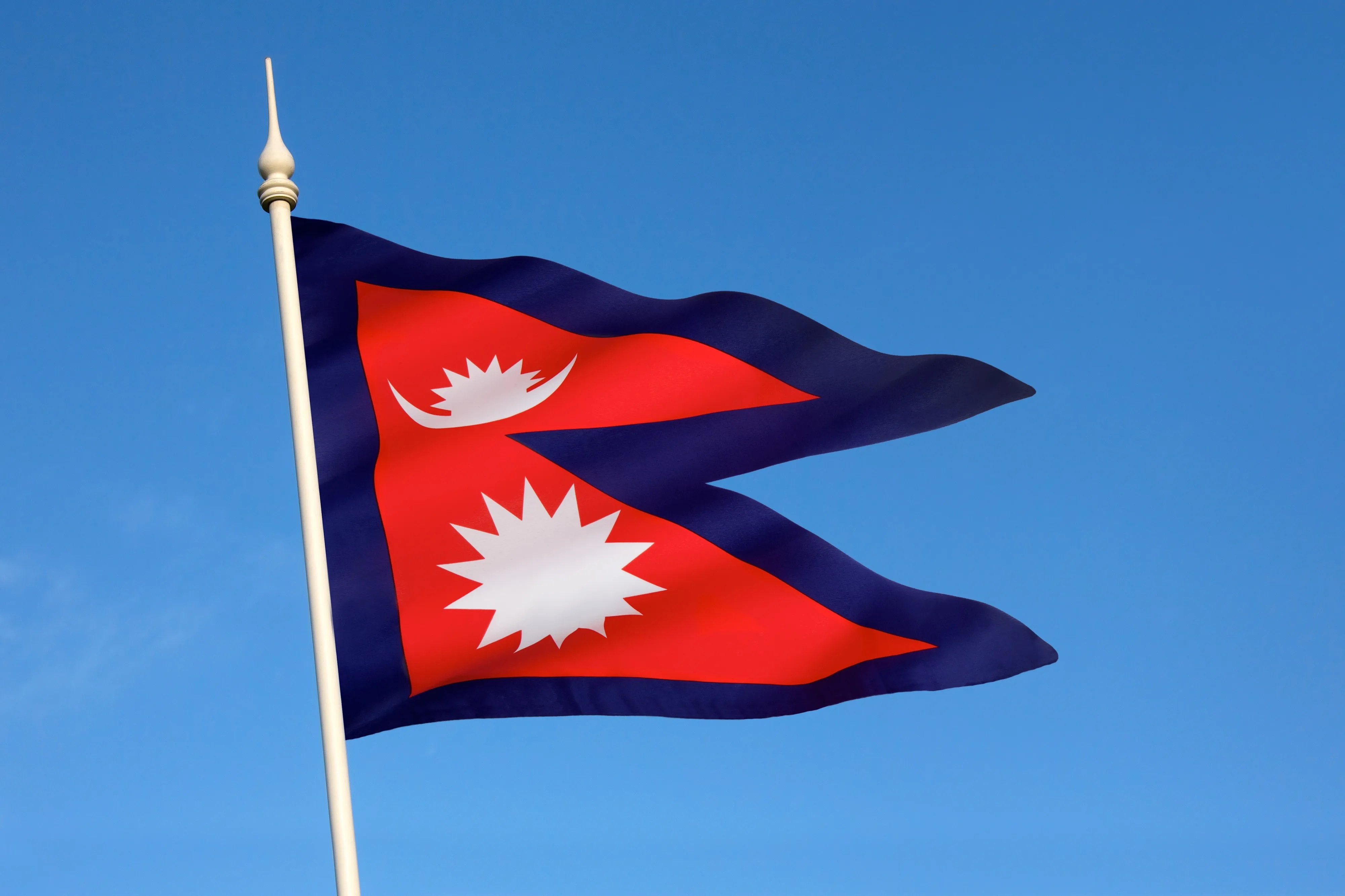
What Nepal marks instead is 20 September, Constitution Day, the national day. It commemorates the constitution promulgated on that date in 2015, which replaced the interim constitution of 2007, restructured the country as a federal republic of seven provinces, and completed a transition from monarchy that had taken most of a decade. It is a young holiday for an old country, and that combination is worth sitting with, because it is exactly the shape of Nepal itself.
Why the Absence Matters More Than the Date
It is easy to file “never colonised” as trivia. It is not trivia. It is the reason the Kathmandu Valley looks and behaves the way it does, and any traveller who has spent time in colonial cities elsewhere in the region will feel the difference within a day.
In much of South Asia, the encounter with empire produced a rupture. Court traditions were interrupted, patronage networks collapsed, craft guilds lost the clients who had sustained them, and a great deal of what survived did so as preserved heritage: cared for, catalogued, and to some degree stopped. Nepal had no such rupture. The Newar craftspeople of the valley, who built the temples and carried the bronze-casting and woodcarving traditions, worked through the centuries without a colonial administration reorganising the society around them.
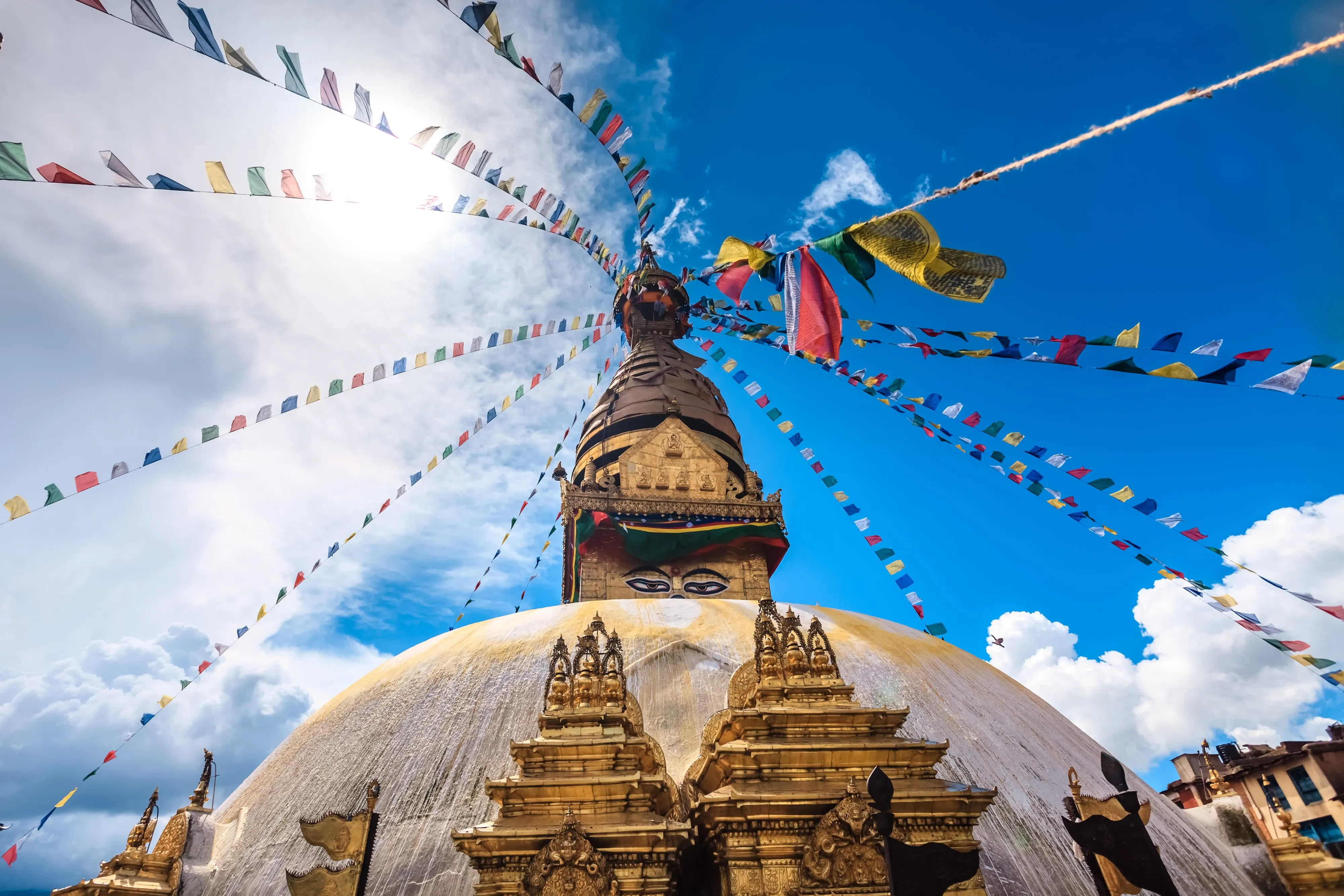
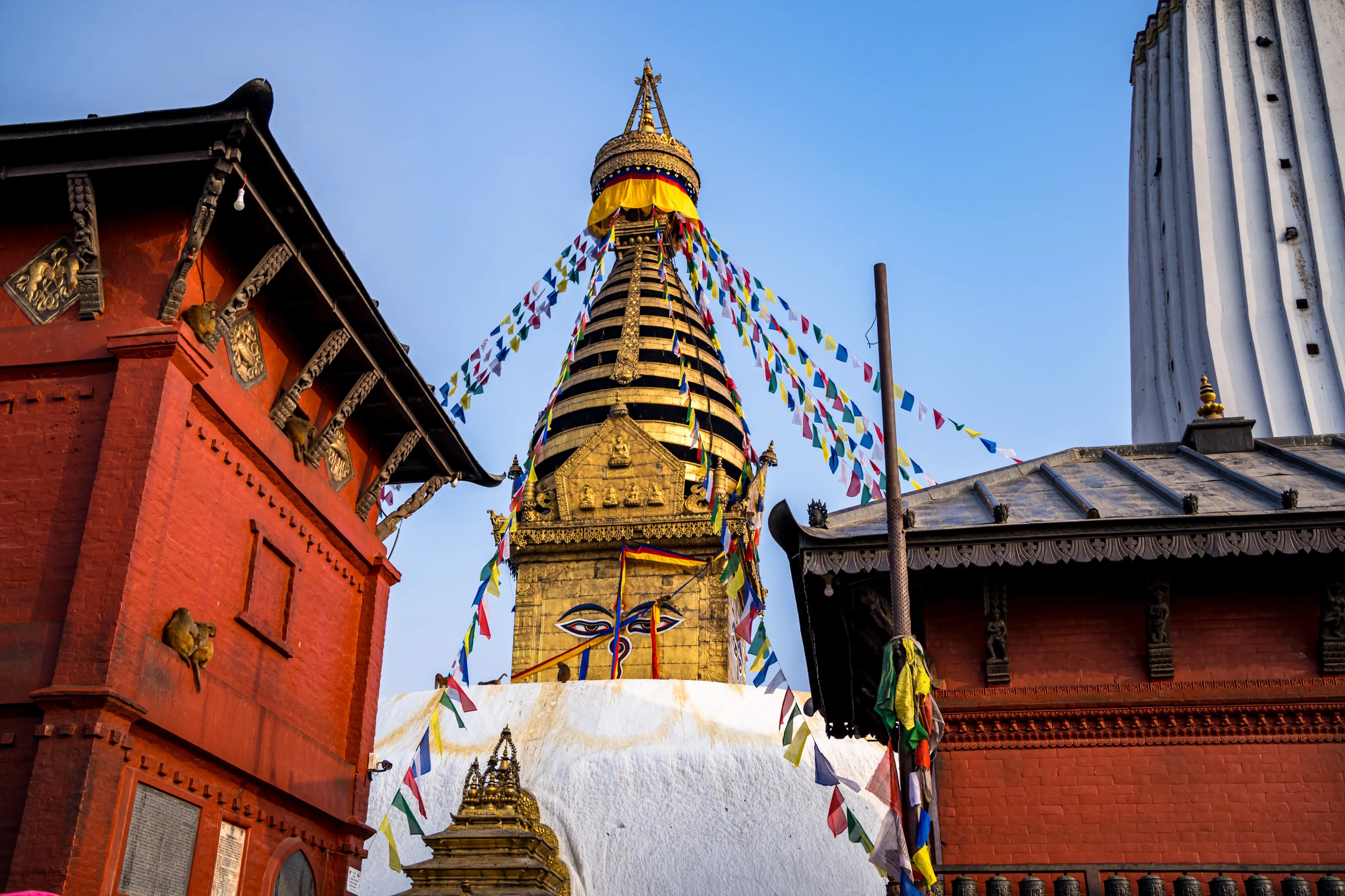 Swayambhunath, which pre-dates the draining of the valley, when this basin was still a lake.
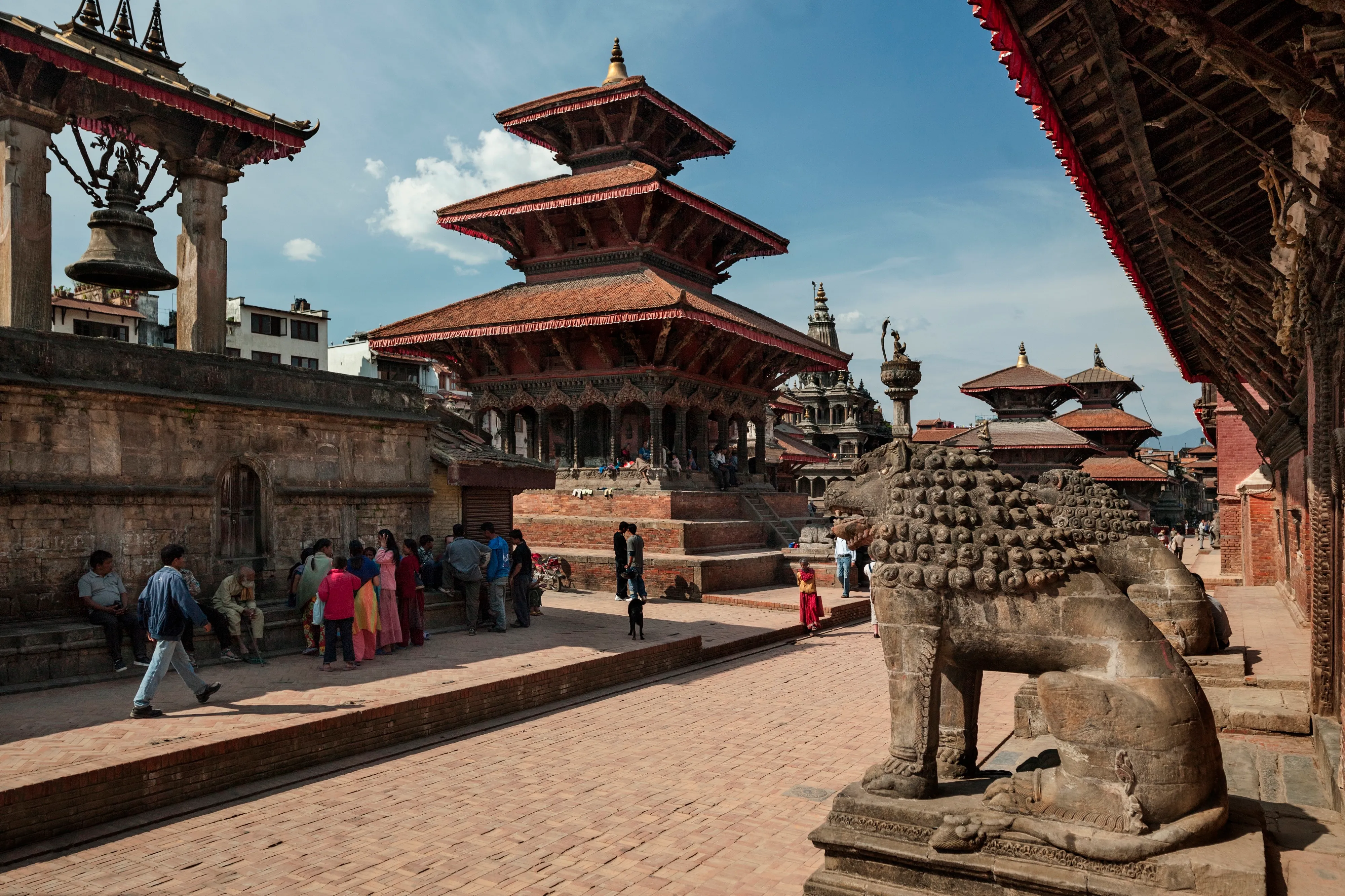
You can see the consequence directly. As we set out in the case for giving the valley more than a weekend, Bhaktapur is not a preserved monument inside a modern city but an old quarter still functioning much as it always has. Ritual at Pashupatinath is not a re-enactment. The living goddess in Kathmandu’s Durbar Square still receives visitors. This is heritage that was never interrupted, and that is a genuinely different thing from heritage that was interrupted and then restored.
There is a smaller sign of the same independence in something we have noted before on the Kathmandu page: Nepal keeps its own time, forty-five minutes off the hour at GMT+5:45. A country that never had its clocks set by anyone else still declines to round them off.
What 20 September Looks Like
The day itself is quieter than India’s 15 August or Peru’s Fiestas Patrias. It is a public holiday, so government offices and banks close, and there are official ceremonies and civic events in Kathmandu. It is a day of state rather than a street festival, and the constitution it marks remains genuinely debated inside Nepal, which is worth knowing before you form an opinion about it from a distance.
For a traveller the practical consequences are mild. Expect closures on the day, and note that Saturday is in any case the weekly holiday in Nepal. Nothing about 20 September should reshape an itinerary.
The Timing Is Better Than It Looks
Here is where the date earns a traveller’s attention. Nepal’s clear-sky windows are narrow, October to November and March to May, and 20 September sits right on the threshold of the better one. A trip that begins in the last week of September or the first week of October arrives as the monsoon clears and the Himalaya come back into view, and it does so before the October peak has filled every good guide and lodge.
That makes late September and early October one of the more intelligent times to be in Nepal, and it is a good illustration of the argument we made in what has to be decided first: the season decision drives everything, and Nepal has less room for error in it than anywhere else we work.
If you are thinking about Nepal for the autumn window, whether for the valley, for the mountains, or for the two kept properly separate as we have argued they must be, tell us what draws you and we will tell you honestly what that season can hold.

Written by
Mano Chandra Dhas ›Founder of Coromandel Tours. In travel since 1975, from Singapore Airlines to Emirates and Carlson Wagonlit, he now curates private journeys through Colombia, Peru, India, and Nepal from his home in Bogotá. Many of the photographs on this site are his.