On most Nepal itineraries the Kathmandu Valley appears twice, briefly, at either end. A day on arrival to recover from the flight and collect permits, and a day at the finish before flying home. In between sits the trek, which is what the trip was for.
We have argued before that this reflects a misunderstanding of what Nepal is, and that the cultural country centred on the valley deserves a serious traveller’s attention on its own terms. This piece is the practical version of that argument. What is actually in the valley, why a day cannot hold it, and what the difference between three days and six looks like.
The starting point is the thing most visitors do not realise until they arrive: this is not one city with sights scattered around it. It is three medieval cities sharing a single valley floor at roughly 4,600 feet, each of which was an independent kingdom with its own court, its own royal square, and its own artistic tradition. Between them they hold seven UNESCO monument zones.
Three Royal Squares, Three Characters
Kathmandu’s own Durbar Square holds the Hanuman Dhoka palace complex, a cluster of temples that includes the Vishnu Temple and Akash Bhairav, and the Kumari Ghar, home of the living goddess who still receives visitors. It is the busiest of the three and the one most visitors see, often the only one.
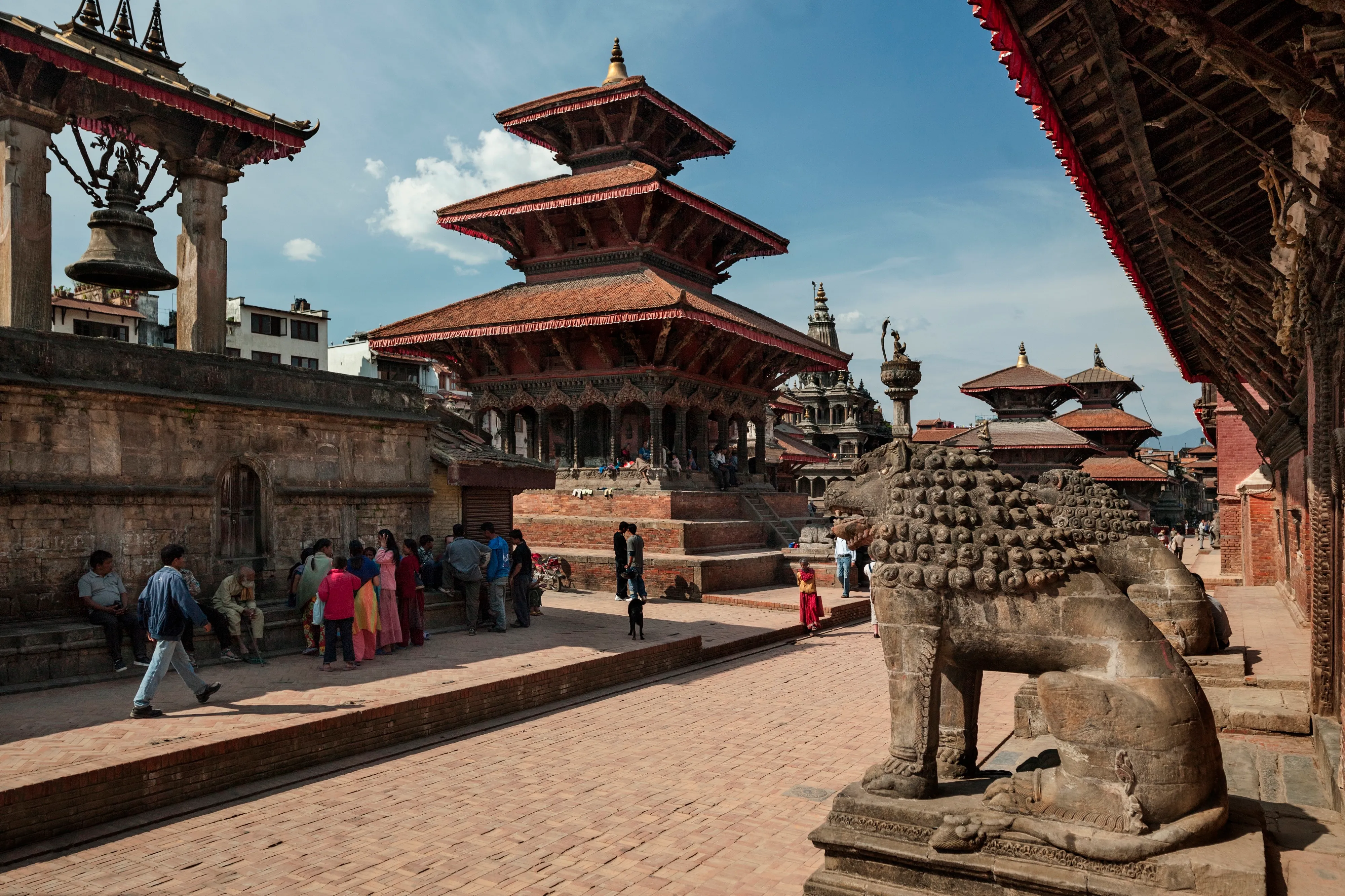
Patan, also called Lalitpur, is known as the City of Fine Arts, and its Durbar Square is the most concentrated of the three. Sundari Chowk, Keshav Narayan Chowk, Mulchowk, the twelfth-century Golden Temple, and the Baglamukhi Temple all sit within a short walk of one another. It is the square where the density of carving is highest and where an hour disappears fastest.
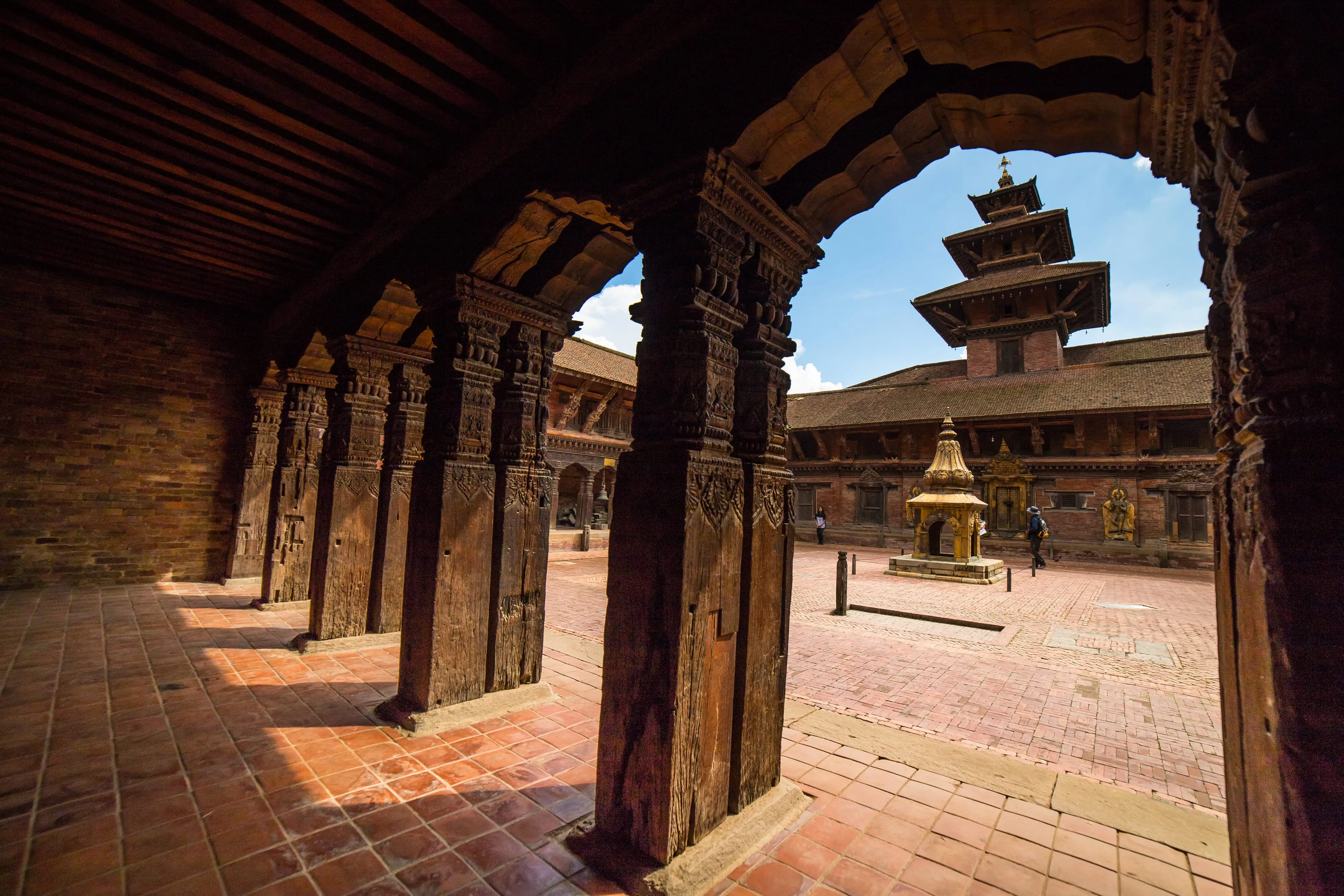 A palace courtyard in Patan. The Newar craftspeople who built these courtyards carried a bronze-casting and woodcarving tradition across centuries.
Bhaktapur is the smallest and the best preserved, a medieval town rather than a monument within a modern city. The Nyatapola and Bhairavnath temples, the Taleju Bhawani, and the Dattatreya stand in an old quarter that still functions much as it has for centuries, which is the point of going. In Kathmandu you look at the heritage. In Bhaktapur you walk through a place that is still using it.
Three squares in one day is possible and is a poor idea. It produces the sensation, familiar to anyone who has done four European cathedrals in an afternoon, of having seen a great deal and retained nothing.
What Lies Outside the Squares
The valley’s other great sites are not variations on the same theme, and they are what turn three days into five.
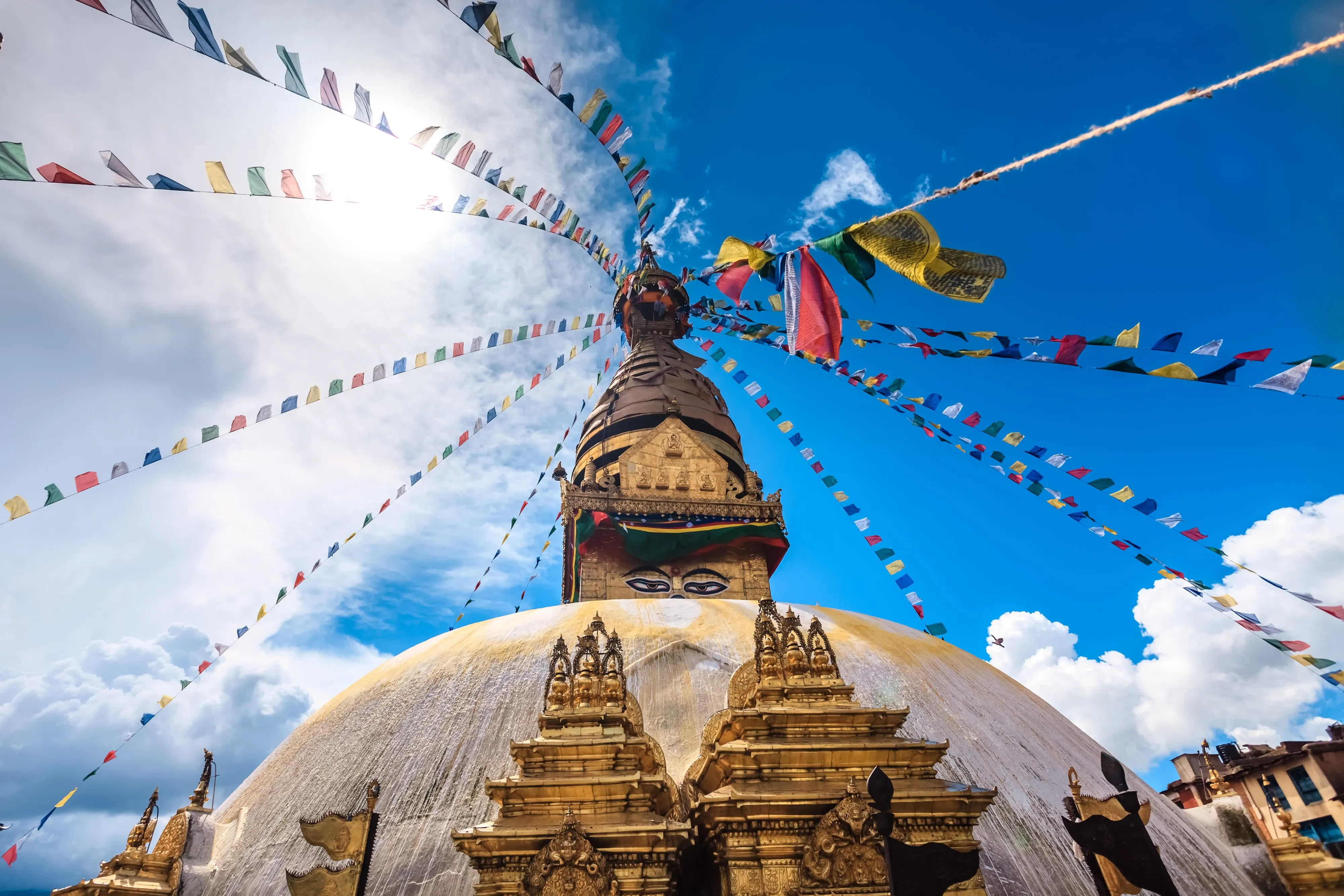
Swayambhunath sits on a hill above the city and pre-dates the valley’s drainage, from the era when this whole basin was still a lake. Boudhanath is a fifth-century stupa some 120 feet high, one of the largest in South Asia, and the centre of the valley’s Tibetan Buddhist life. Pashupatinath, on the banks of the Bagmati, is the most important Shiva temple in the country, with a gold and silver pagoda roof and cremation ghats running along the river. Only Hindus enter the inner temple, but the wider complex is open to all.
Pashupatinath is also the clearest case in the valley of timing mattering more than access. What you see there at half past seven in the morning and what you see at midday are two different places, which is the subject of an account of one such morning. No amount of planning produces that morning on demand. Being there early, unhurried, and with someone who knows what is happening in front of you, is the closest you get.
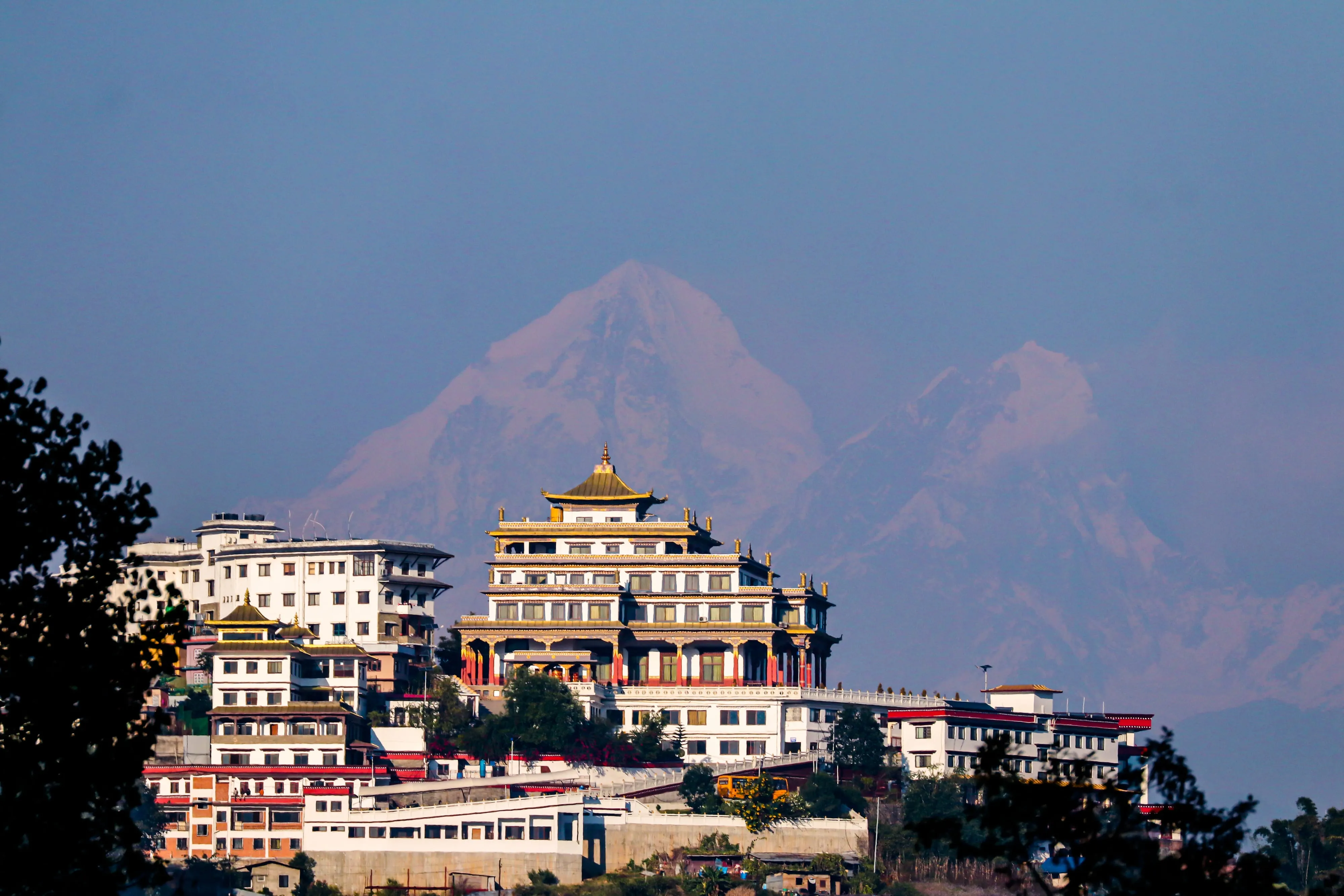 The monastery at Namo Buddha, beyond the valley rim. The Himalaya are visible from the valley without walking a step towards them.
Three Days, Five Days, and What the Difference Buys
Three days is the working minimum, and it means one day for each city, done properly, with the major sites outside the squares fitted around them. It is a real visit and it is not a rushed one, provided nothing else is competing for the time.
Five or six days is where the valley starts to give back something different. That is the range in which a full heritage circuit becomes possible, taking in all three Durbar Squares without compression, a sunrise from Nagarkot at 7,218 feet, Changu Narayan, which dates from 464 AD, and a morning of guided meditation at the monastery at Namo Buddha. The additions are not more temples. They are the change of register that comes from leaving the valley floor, and from having enough time that a morning can be spent slowly.
Two practical notes for whichever length you choose. The valley’s clear-sky windows are narrow, October to November and March to May, which is why Nepal is a country where the season decision has to come first. And the guide question is not a detail: as we have set out in why one guide cannot cover both Nepals, reading a carved temple strut and reading weather on a high pass are separate professions, trained separately. Valley days want the first kind.
If you are planning a trek and wondering whether to give the valley a week rather than a weekend, or planning a cultural trip through Nepal with no trek in it at all, tell us what interests you and we will tell you what each version of the trip can hold.

Written by
Mano Chandra Dhas ›Founder of Coromandel Tours. In travel since 1975, from Singapore Airlines to Emirates and Carlson Wagonlit, he now curates private journeys through Colombia, Peru, India, and Nepal from his home in Bogotá. Many of the photographs on this site are his.