On the morning of 26 August, a mass of rock and ice broke away from Langtang Lirung, the 23,711-foot peak on Nepal’s northern border with Tibet. It fell into the Lhende Khola, and what came down the valley was not a flood of water so much as a fast-moving wall of mud, rock, and ice that joined the Bhote Koshi at the border and ran on down the Trishuli towards the plains. Over its first 22 kilometres it travelled at around 190 kilometres an hour, which the International Centre for Integrated Mountain Development describes as among the fastest large debris flows ever documented.
As of 20 September, Nepal Police put the death toll at 1,451, with around 6,000 people still missing. Most of the dead have not yet been identified, and a great many families are still waiting for news. Anything practical we say below should be read with that in mind.
This is a travel update rather than a long article. It sets out what is known as of 23 September, which parts of Nepal are and are not affected, and how we are handling enquiries and bookings.
What Has Happened
The flood tore through the Nepal-China border crossing at Rasuwagadhi and the villages of Timure and Syabrubesi below it, destroying the Friendship Bridge, the dry port, and a series of hydropower plants along the river. The World Health Organization lists six districts as affected: Rasuwa, Nuwakot, Dhading, and Chitwan in Bagmati Province, and Gorkha and Tanahun in Gandaki Province. The damage is heaviest in the north, in Rasuwa and Nuwakot, but the river carried its toll a long way south, and more bodies have been recovered in Chitwan than in any other district.
In the days that followed, authorities on both sides of the border watched a new lake forming behind the debris, with Nepal’s disaster authority warning that it could burst. ICIMOD notes that a secondary flood did come through on 30 August, and that the valley is now so full of loose debris that “every monsoon downpour can remobilise” it.
Where Things Stand Now
The UK Foreign Office’s advice, still current as of 23 September, describes widespread damage in Rasuwa and the border area, with Gorkha, Nuwakot, and Dhading also affected, and warns that ground in the flood-hit areas may remain unstable. It does not advise against travel to Nepal as a whole. The US State Department has placed the Rasuwagadhi, Timure, and Syafrubesi area of Rasuwa, including the border crossing, under a “Do Not Travel” warning, and advises staying away from the banks of the Bhote Koshi, Trishuli, and Narayani rivers.
The Langtang region is effectively closed. The roads and bridges between Dhunche and Syabrubesi, the trailhead for the Langtang Valley, were destroyed, and there is no reliable way in by road. Langtang is not one of the treks we currently offer, but we mention it because it is the trek people most often ask about in this part of Nepal.
The roads to Pokhara and Chitwan are open again. The Prithvi Highway, the main road west from Kathmandu to Pokhara and the route most travellers take down to Chitwan, was cut at Krishnabhir by a flood-triggered landslide. After 18 days, two-way traffic resumed on 18 September on a new gravel track built above the destroyed section, and traffic was also allowed back onto the Narayangadh to Mugling road towards Chitwan. Several stretches between Kathmandu and Mugling are still down to a single lane, so the drive is slower than usual.
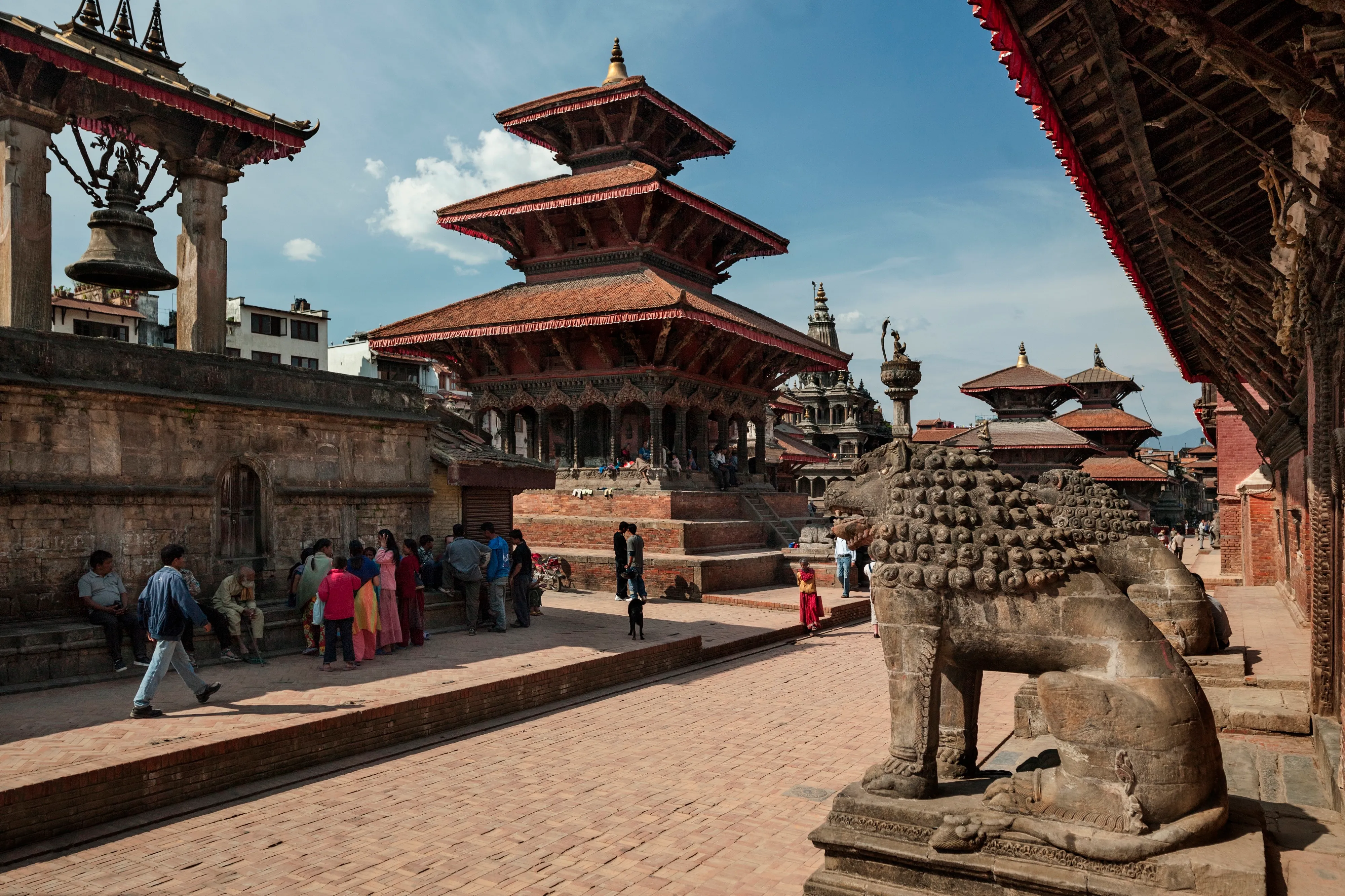
Kathmandu, Pokhara, Chitwan, and Lumbini were not damaged by the flood. The Kathmandu Post reported on 8 September that hotels in Sauraha, the gateway to Chitwan National Park, are open but running below five per cent occupancy as bookings are cancelled, and that the Lumbini Development Trust has stated that the floods have not affected the greater Lumbini area. The Nepal Tourism Board’s message has been blunt: “Nepal is not closed.”
The overland routes into Tibet are disrupted. The Kerung crossing at Rasuwagadhi, the main road route between Nepal and Tibet, is out of action. China closed the older Tatopani crossing to imports and exports on 31 August because of landslide risk, while still allowing people to cross, and it has since been used to bring travellers back from the Tibetan side, including several hundred Nepalis who had been stranded near Kerung. Anyone planning an overland journey from Kathmandu to Tibet or Mount Kailash this season should expect that route to be unavailable.
What Our Partner in Kathmandu Is Telling Us
The partner company we work with in Nepal wrote to Mano this week, and the picture from the ground matches the reporting above. The roads from Kathmandu to Chitwan and to Pokhara were damaged by the flood and are now fine to travel. The destruction is concentrated in the north, along the corridor to the Tibet border, where the villages and the hydropower project were badly hit. The Kerung crossing remains closed, and Tatopani has been used for people returning from Tibet. The rest of the country, in their words, is fine to travel, and they have had groups travelling in the country without interruption since August.
What This Means for Visiting Nepal
Nepal’s autumn trekking season runs from October into November, and nearly every trip we arrange falls well outside the flood corridor. The Kathmandu Valley itself was not touched. The Everest Base Camp and Kala Pattar treks reach the Khumbu, far to the east, by road to Manthali and a flight to Lukla. The Poon Hill, Mardi Himal, and Kori Danda treks start from Pokhara in the Annapurna foothills, and the circuit through Lumbini, Pokhara, and Chitwan moves between its stops largely by air.
That said, the situation around the flood zone is still changing, and heavy rain can bring down fresh landslides on any mountain road. So rather than issue a blanket verdict, anyone who enquires about Nepal, or who already has a trip booked, will be told the current position at the time: which roads are open, whether a trek’s access route is running normally, and whether anything on the itinerary should change. If a drive looks unreliable, a domestic flight can often stand in for it, and if a route should be avoided, we will say so and suggest an alternative.
There is one more thing that must be clearly stated. Tourism is a large part of how Nepal earns its living, and the hotels, guides, and drivers in Pokhara and Chitwan are losing a season’s income to cancellations prompted by a disaster that did not reach them at all. For anyone who was already thinking of going, travelling as planned is one of the most direct ways to help the people of Nepal.
If you are considering Nepal in the coming months, or you already have it in a plan, simply get in touch and we will tell you where things stand. We will update this page as the situation develops.
Sources
This update draws on the International Centre for Integrated Mountain Development (ICIMOD), the World Health Organization, the UK Foreign, Commonwealth and Development Office, the US State Department, The Kathmandu Post, Radio Nepal, The Tribune, Al Jazeera, and NepYork, which in turn cite Nepal Police, Nepal’s National Disaster Risk Reduction and Management Authority, the Department of Roads, and the Nepal Tourism Board, together with a first-hand report from our partner company in Kathmandu.
Last updated on 23 September 2026. Figures are taken from official and press reports and may change as the recovery continues.

Written by
Mano Chandra Dhas ›Founder of Coromandel Tours. In travel since 1975, from Singapore Airlines to Emirates and Carlson Wagonlit, he now curates private journeys through Colombia, Peru, India, and Nepal from his home in Bogotá. Many of the photographs on this site are his.