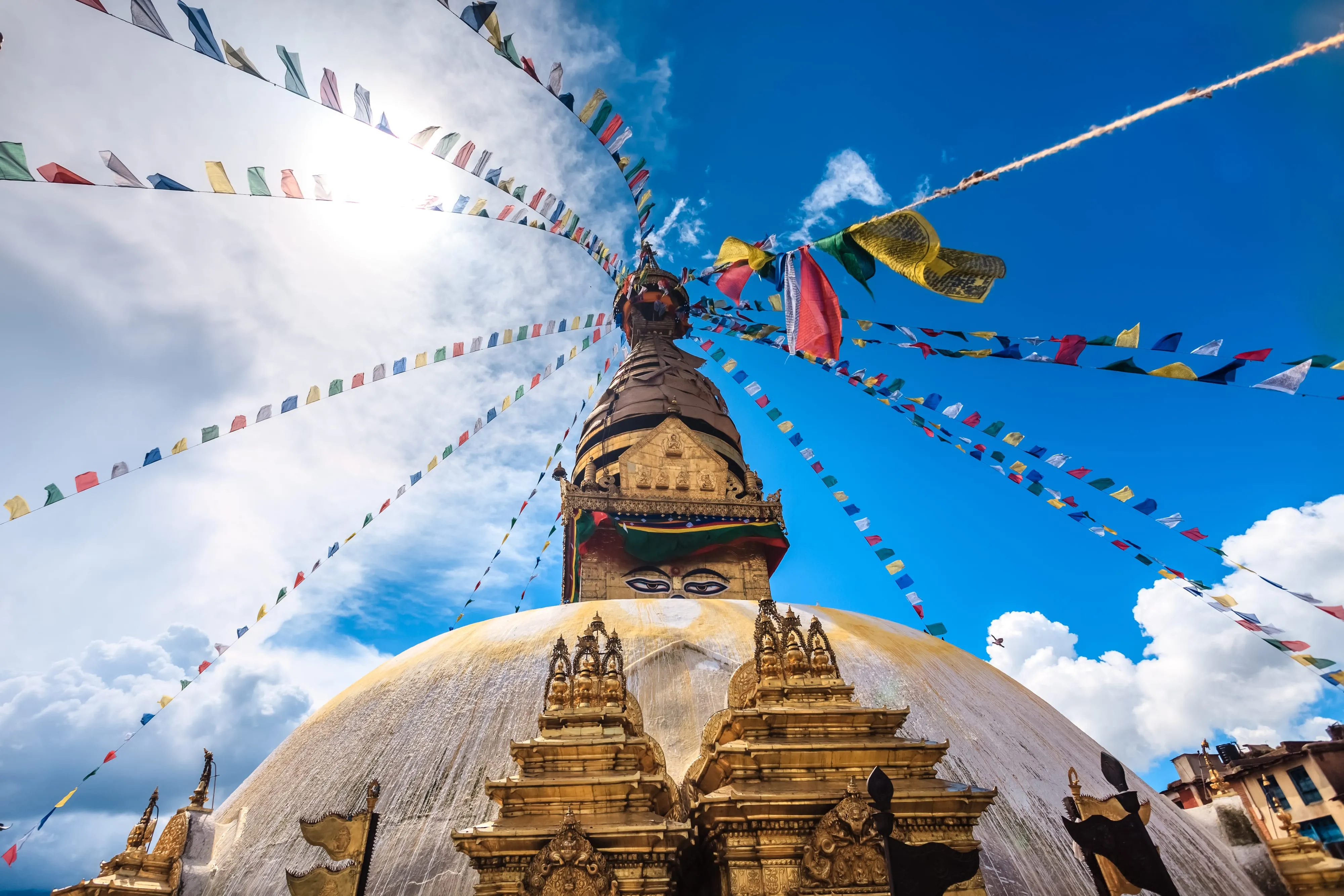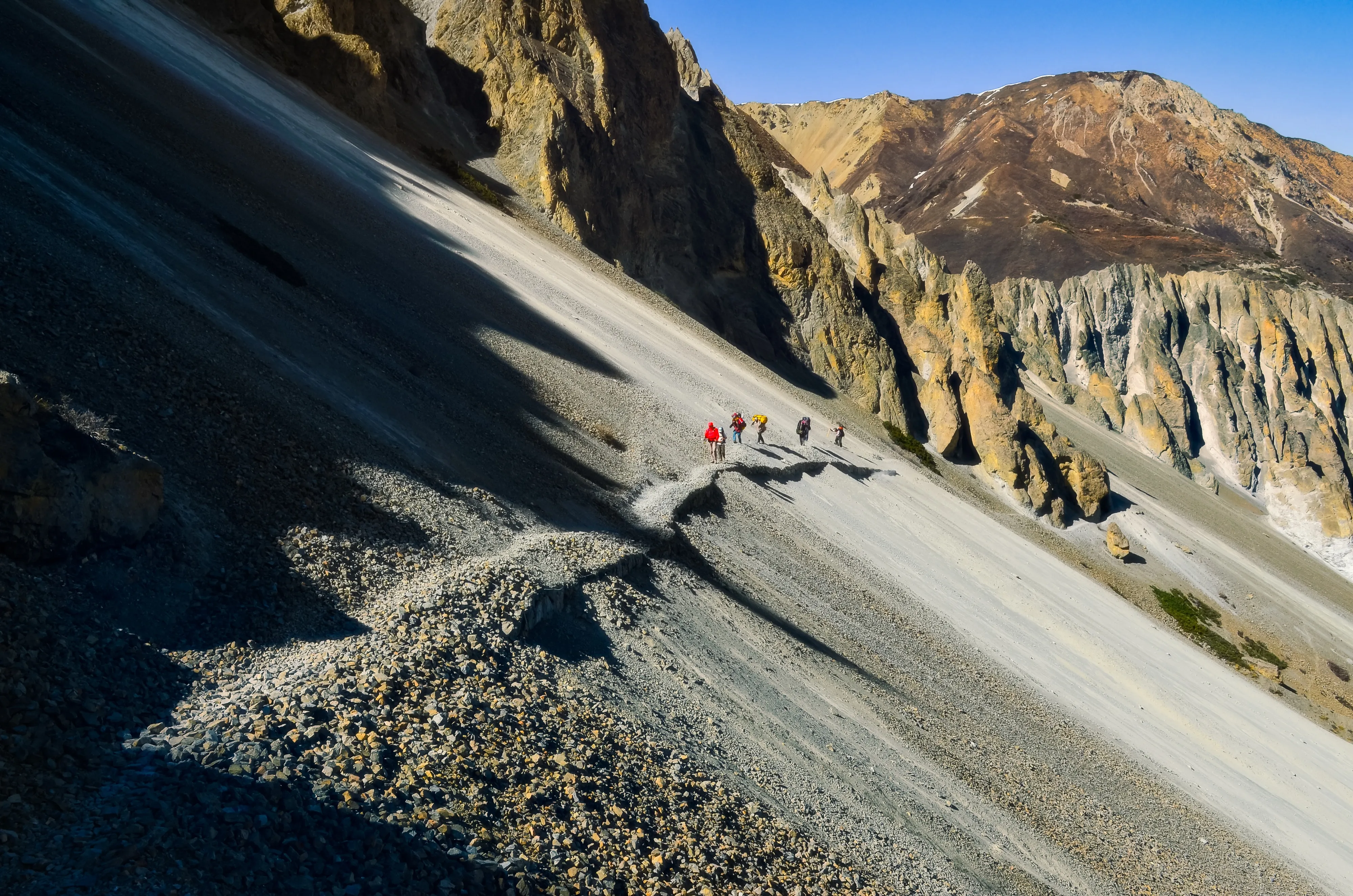
Almost everyone arrives at Nepal with the same sentence in their head, and it contains the words Everest Base Camp. It is a reasonable place to start. It is a poor place to finish, because for a great many people it is the wrong trek, and the reasons have nothing to do with fitness or ambition. They are much the same reasons first-time visitors misread Nepal in general.
Two things decide which Nepal trek suits you, and neither is the mountain. The first is how many days you can give it. The second is how high you are prepared to sleep, which is a different question from how far you can walk. Everything else, the views, the villages, the lodges, follows from those two answers.
Here are the seven routes we work with, arranged by the first question.
Seven Days: Two Very Different Weeks
The shortest options are not lesser versions of the long ones. They are different propositions.
The Kathmandu Valley Trek is the gentlest thing in the catalogue and the only one with no altitude concern at all. Seven days walking the valley rim through Chisapani, Nagarkot, Dhulikhel, and Namo Buddha, with lodges throughout, a night at a monastery, and a high point of 7,218 feet at Nagarkot for the Himalayan skyline at a distance. It is the one trek here you can do year round, and the one to choose if the walking is meant to sit alongside the culture rather than replace it. The rim you are walking encloses three medieval cities rather than one, which is rather the point of going.
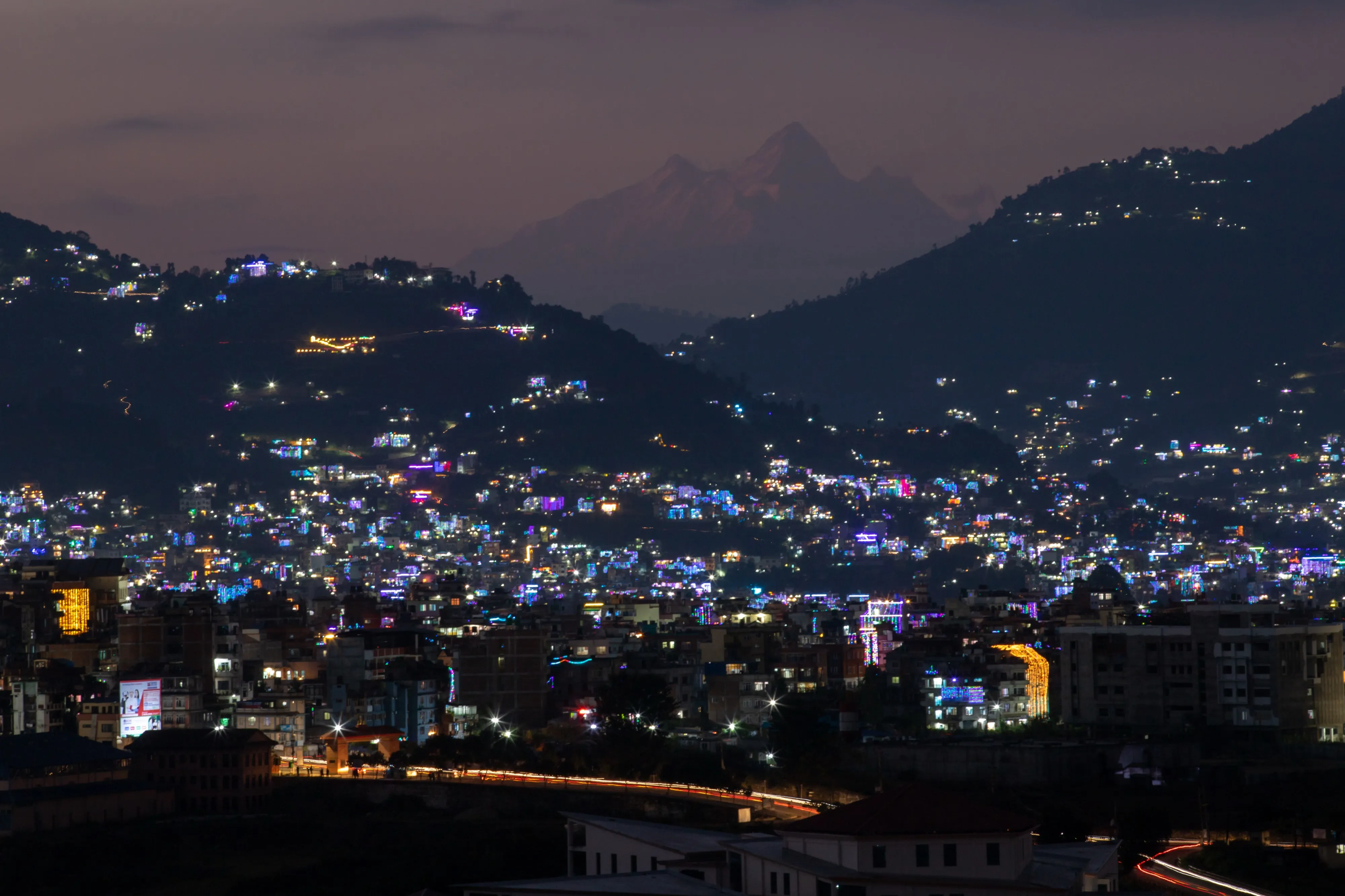 The valley from its rim at dusk, with the Himalaya behind. The Kathmandu Valley Trek never leaves this altitude band.
The Mardi Himal Short Trek uses the same seven days completely differently. It runs from Pokhara up through rhododendron forest to High Camp at 11,811 feet, above the tree line, with close views of Annapurna South, Hiunchuli, and Fishtail, and an optional day pushing on towards Mardi Himal Base Camp. This is a real mountain trek compressed into a week. If you have seven days and you want height rather than heritage, this is the one.
Eleven Days: The Classic and the Quiet One
At eleven days two routes open up, and the choice between them is essentially a choice about company.
The Poon Hill Trek is the classic short Annapurna route and the most popular trek in this list for good reason: sunrise from Poon Hill at 10,531 feet with Fishtail, the Annapurna range, and Dhaulagiri laid out in front of you, reached through rhododendron forest on the climb to Ghorepani. What makes the eleven-day version worth more than the trek alone is that it folds in the Kathmandu Valley: Durbar Square, Patan, Bhaktapur, Changu Narayan, and Panauti. You come home having seen the mountains and the civilisation below them, which is the argument we have made before about Nepal being two countries.
The Kori Danda Trek is the same length and a different world. It heads from Pokhara into the Sikles region, which is walked by a fraction of the numbers, climbing to the ridge at Kori Danda at 12,467 feet with a day excursion down to Kapuche Lake at 6,890 feet. It is graded for beginners and it goes higher than Poon Hill, which surprises people. Choose it if the idea of sharing a sunrise viewpoint with a crowd is the part that puts you off.
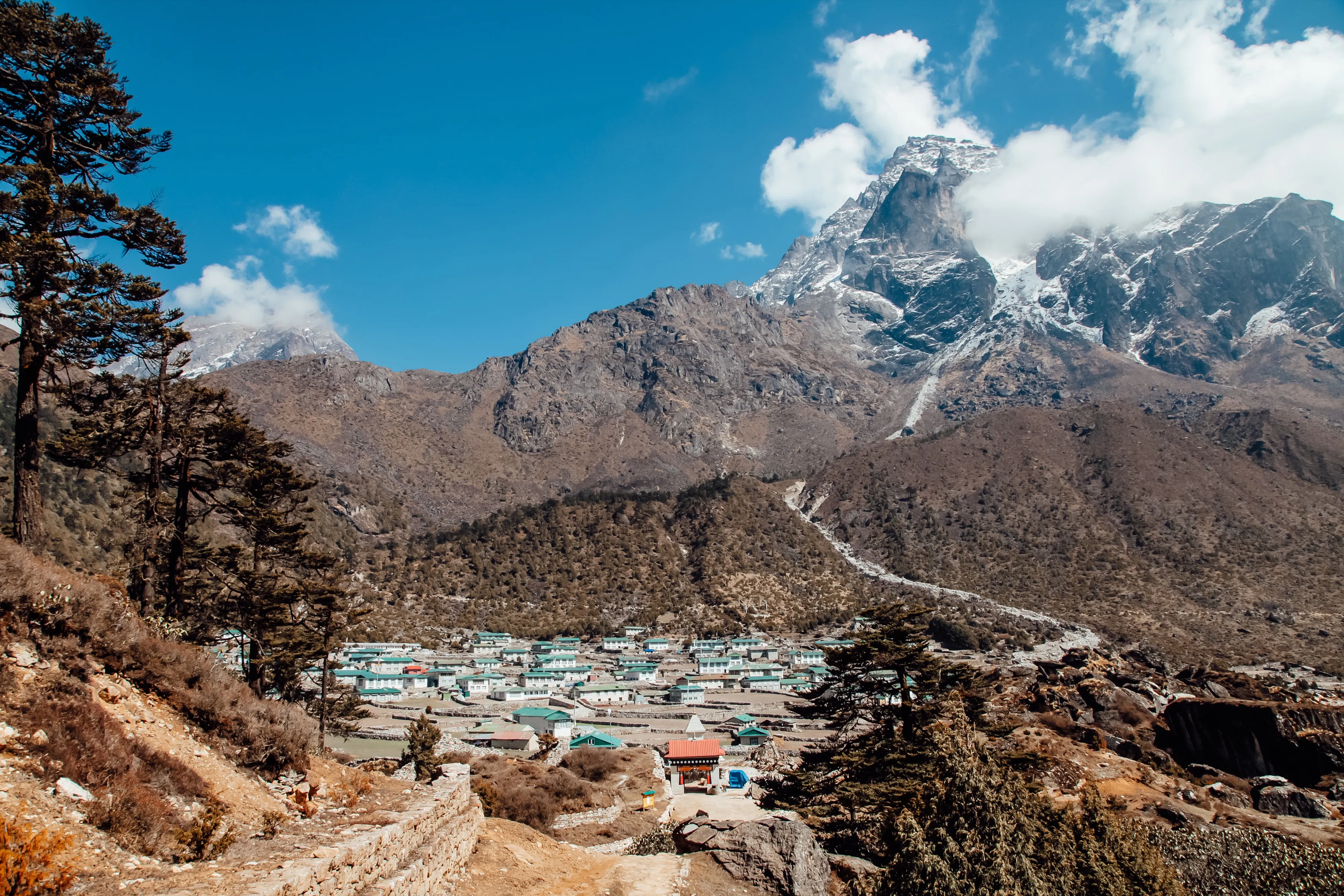 Lodge villages like this are where the nights are spent on every route here. None of these seven treks is a camping trip.
Fifteen Days: The Everest Decision
Two routes reach the Khumbu, both fifteen days, both graded moderate, and the difference between them is precise and worth understanding.
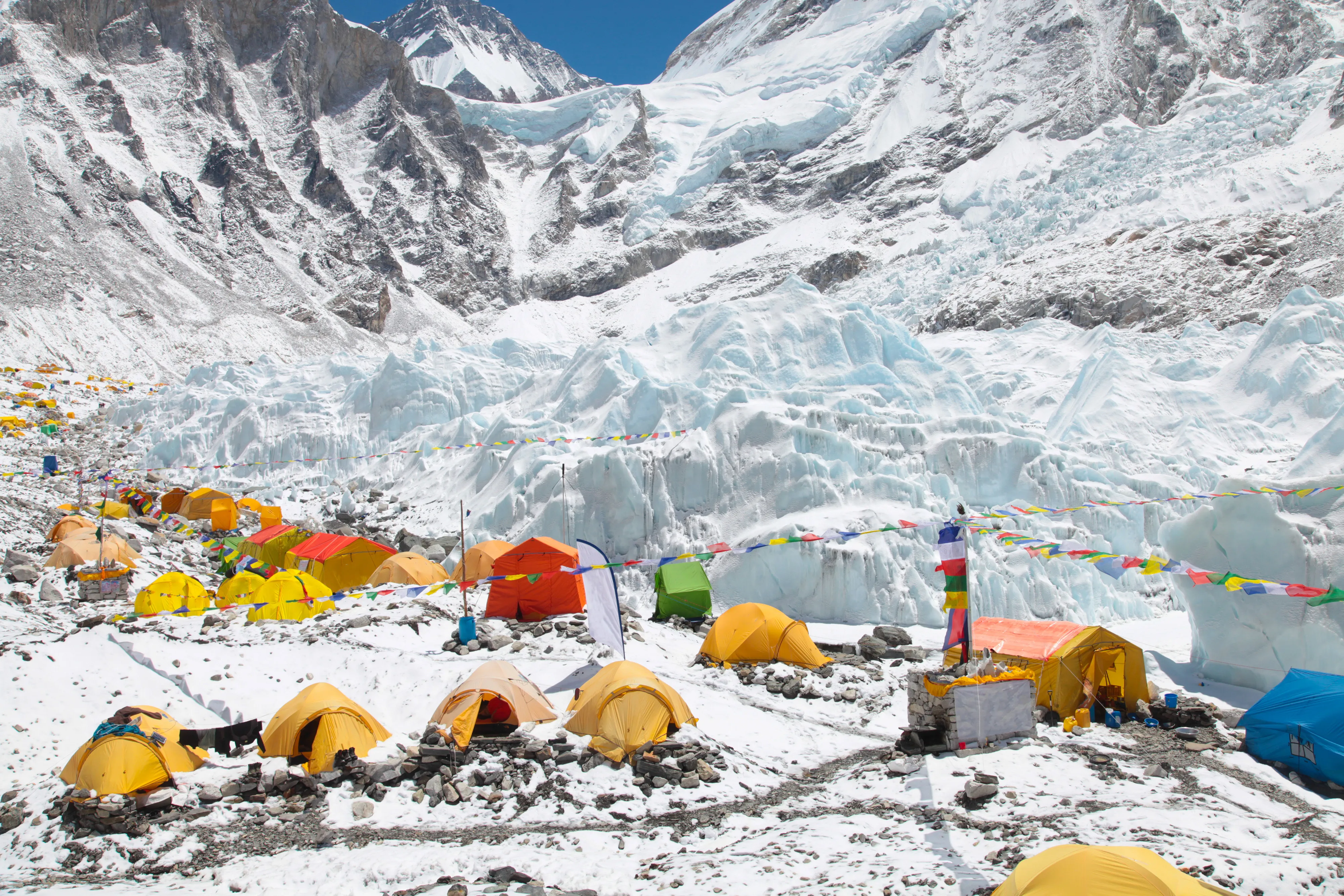 Base Camp at the foot of the Khumbu Icefall. This is the part the fifteen-day variant does not include.
Everest Base Camp is the one everyone means. It flies into Lukla, climbs through Namche Bazaar at 11,286 feet, Tengboche and its monastery at 12,979 feet, and Dingboche at 14,370 feet, with rest days at Namche and Dingboche built in specifically to acclimatise. The pay-off is two-part: Base Camp itself at the foot of the Khumbu Icefall, and the half-day climb to Kala Pattar for the Everest panorama.
The Kala Pattar Trek is a variant on the same fifteen days, routed via Khumjung at 12,402 feet and Chhukung at 15,518 feet. That routing buys you an extra acclimatisation stage and sidesteps the busiest middle section of the main trail. What it gives up is the Base Camp morning: it climbs to Kala Pattar at 18,225 feet for the same panorama, but does not walk to Base Camp itself.
So the honest framing is this. If standing at Base Camp is the thing you have pictured for years, take the first. If what you actually want is the view, with better acclimatisation and fewer people on the trail, the variant is the better trek and most people are surprised to hear it.
Both are serious. Both reach altitudes where personal insurance covering high-altitude trekking and helicopter evacuation is not optional, and both tour pages say so plainly.
Eighteen Days: The Long Way Round
The Manaslu Circuit is the longest and the quietest, a full circuit of the eighth highest mountain in the world, from subtropical valley floor at Machha Khola at 2,854 feet up to the Larke La pass at 16,732 feet and down again. Along the way are Manaslu Base Camp at 15,748 feet and a view into Tibet at 16,404 feet from Samdo.
Two practical things set it apart. The region is restricted, so the permit requires a minimum group size and has to be arranged well in advance, which is not a formality to leave late. And the lodges are simpler than on the Annapurna and Everest trails, because far fewer people come. Prior trekking experience is strongly recommended, and the route stays above 11,000 feet for several nights running.
The Second Question: How High Will You Sleep
Note what happens to the grading. Four of these seven are graded for beginners, and one of those, Kori Danda, reaches 12,467 feet. The three graded moderate are the two Everest routes and Manaslu. Difficulty in Nepal is far more about sustained altitude and consecutive days than about technical walking.
That is why the honest first question is never “how fit are you”. It is “how many days do you have, and have you slept above 12,000 feet before”. Someone with ten days and no altitude history is far better served by Poon Hill or Kori Danda than by a compressed run at the Khumbu, and anyone who tells you otherwise is selling a mountain rather than a trip. Knowing which is which is most of what you are paying a guide for.
When to Go
Six of the seven run in spring and autumn: roughly mid-March to late May, and mid-September to late November. Those are the windows, and they are the windows for a reason. The Kathmandu Valley Trek is the exception and runs year round, which makes it the answer for anyone whose dates will not bend.
One point of detail that catches people out on every one of these routes: meals on trek are not included in the trek price. That is standard for Nepal and it is stated on every tour page, but it is worth knowing before you compare prices against an operator who has folded them in.
If you are weighing two of these against each other, that is exactly the conversation worth having before you book flights. Tell us how many days you have and we will tell you which of the seven actually fits, including when the answer is none of them this year.

Written by
Mano Chandra Dhas ›Founder of Coromandel Tours. In travel since 1975, from Singapore Airlines to Emirates and Carlson Wagonlit, he now curates private journeys through Colombia, Peru, India, and Nepal from his home in Bogotá. Many of the photographs on this site are his.